Category: Uncategorized
Most Recent

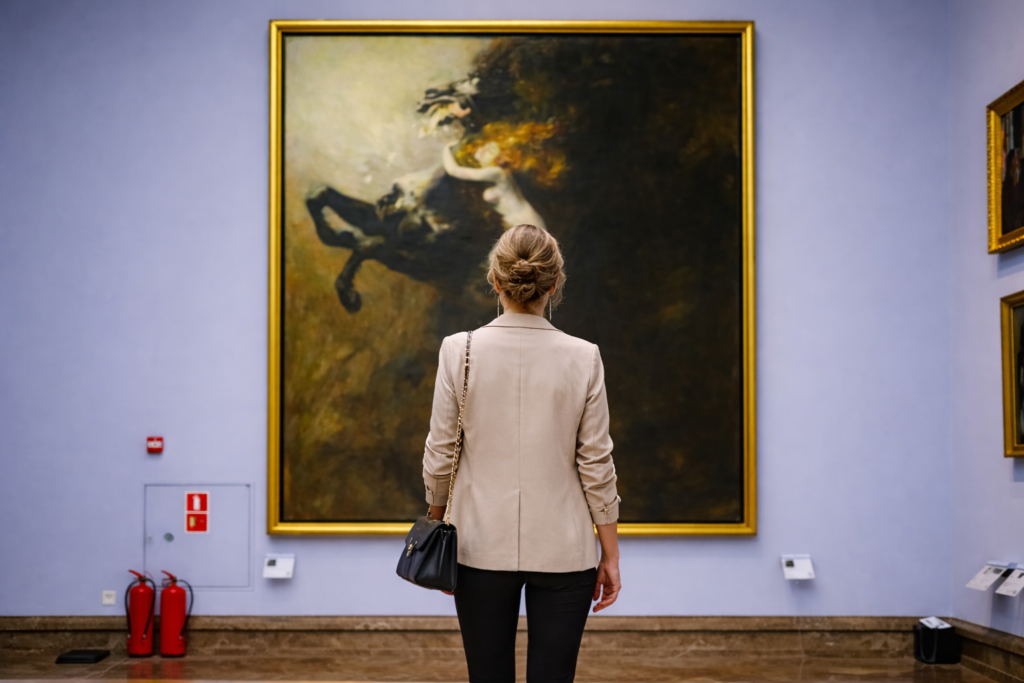
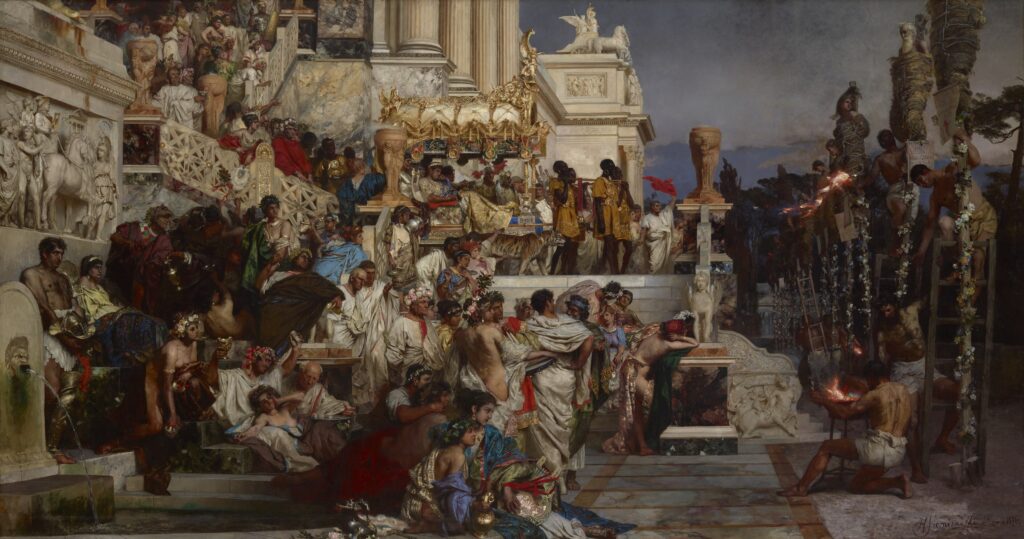
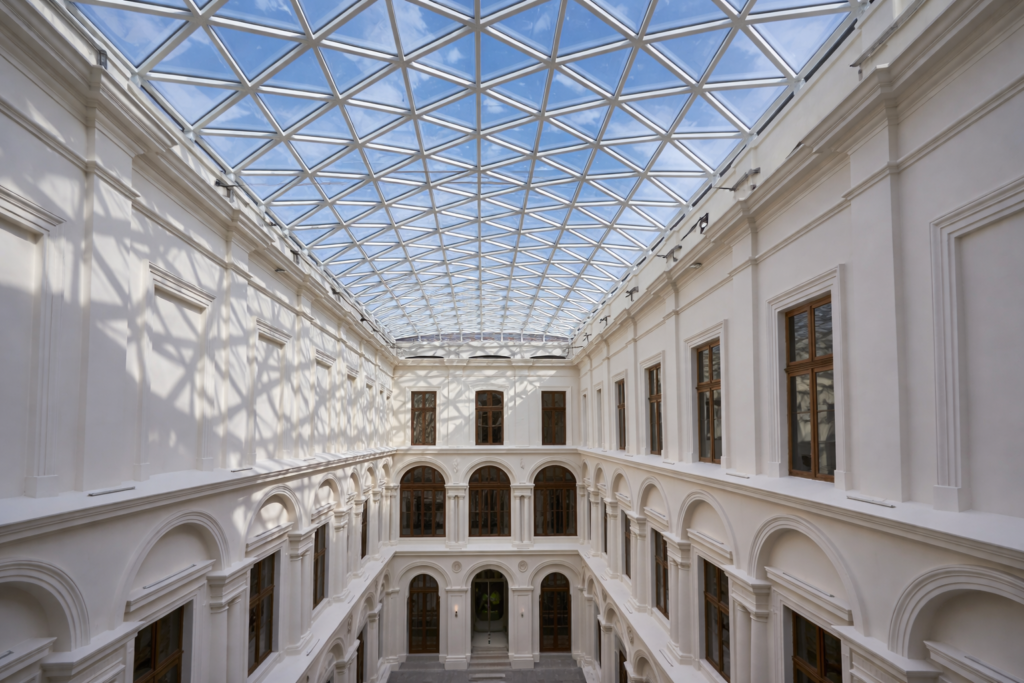
The Gallery of 19th-Century Polish Art is located on the upper floor of the Cloth Hall in the Main Market Square. It forms part of the National Museum in Krakow and is one of the most important collections of Polish art from this period.
The exhibition presents a broad overview of 19th-century painting and sculpture, a time when Poland was under partitions and artists played a key role in preserving national identity through their work.
Among the highlights are paintings by some of Poland’s most renowned artists, including Jan Matejko, known for his large-scale historical scenes, as well as works by artists of the Young Poland movement, who introduced more symbolic and expressive styles.
The gallery is arranged thematically, allowing visitors to follow the development of artistic trends, from Romanticism and realism to more modern approaches at the end of the century.
Visiting the gallery offers not only an artistic experience but also a deeper understanding of Polish history and culture during a period when the country did not exist as an independent state.
Practical tip: Combine your visit with a walk through the Cloth Hall below – it provides an interesting contrast between historic trade and artistic heritage in one place.
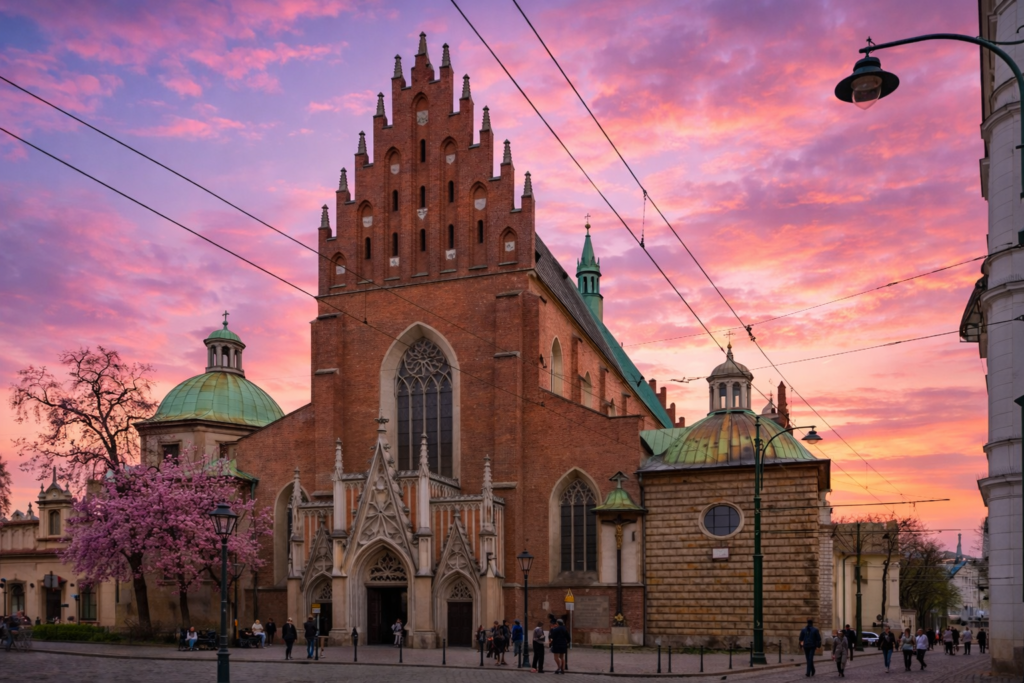
The Dominican Basilica, officially known as the Basilica of the Holy Trinity, is one of the most important and historically significant churches in Krakow. Located just off the Main Market Square on Stolarska Street, it has been a centre of religious life since the 13th century.
The church belongs to the Dominican Order, which played a key role in the development of education, preaching, and intellectual life in medieval Krakow. Over the centuries, the basilica was rebuilt and expanded, combining a Gothic structure with later architectural elements.
Inside, the basilica offers a spacious and relatively simple interior compared to other richly decorated churches in Krakow. This reflects the character of the Dominican Order, focused on contemplation and teaching.
One of the most notable features is the series of side chapels, each with its own style and historical background. The basilica is also known for its good acoustics and occasionally hosts concerts of sacred and classical music.
Despite its central location, the church provides a calm and reflective space, often used by locals as well as visitors.
Practical tip: Step inside even for a few minutes – the contrast between the busy streets outside and the quiet interior is very noticeable.
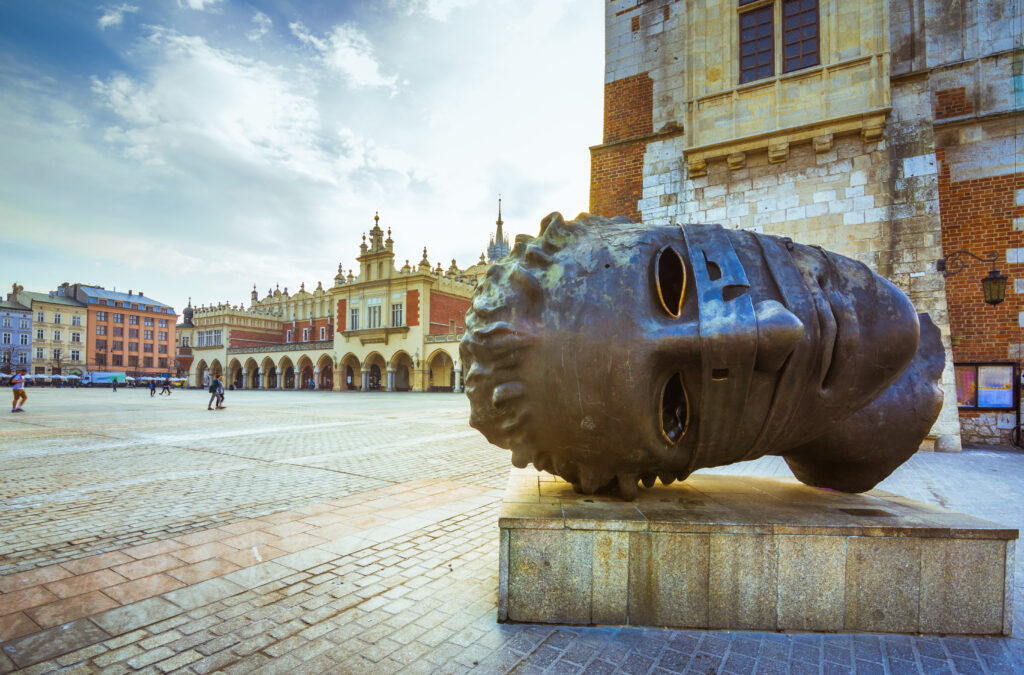
Eros Bendato is one of the most unusual and recognisable sculptures in Krakow, located on Szczepański Square, just a short walk from the Main Market Square. Its distinctive form immediately draws attention and often surprises visitors.
The sculpture was created by Polish artist Igor Mitoraj and represents the head of Eros, the Greek god of love. The figure is wrapped in bandages, with empty eye openings, giving it a mysterious and somewhat fragmented appearance.
Rather than being just a monument to observe, Eros Bendato is designed as an interactive sculpture. Visitors can step inside the hollow structure, making it both a piece of art and a space to experience from within.
The work is often interpreted as a symbol of incomplete beauty, vulnerability, or the passage of time. Its classical references combined with a modern, slightly surreal form make it stand out among Krakow’s more traditional monuments.
Today, the sculpture has become a popular photo spot and a well-known meeting point, especially among younger visitors and locals.
Practical tip: Visit early in the morning if you want to take photos without crowds, as the sculpture is very popular throughout the day.
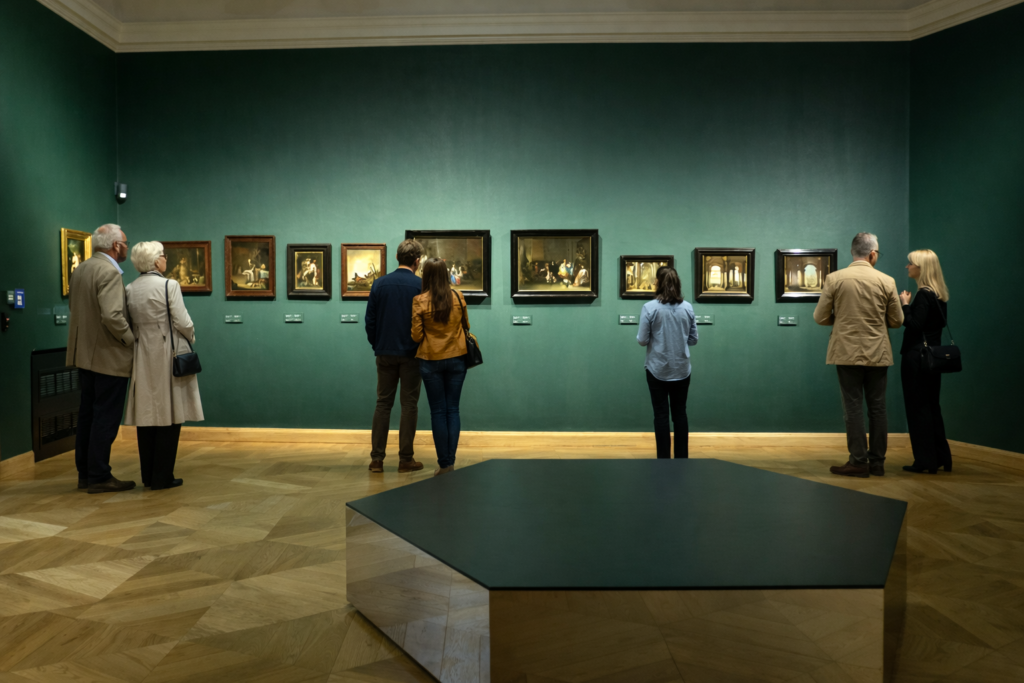
The Czartoryski Museum is one of the most important museums in Krakow and one of the oldest museum collections in Poland. Located near the Old Town, it houses an exceptional collection of art and historical artefacts gathered by the Czartoryski family.
The museum was founded by Princess Izabela Czartoryska, one of the most important figures in Polish cultural history. She created the collection at the turn of the 19th century as a way to preserve national heritage during the time of the partitions of Poland, establishing what is considered the first public museum in the country.
Over time, the collection was expanded by her descendants and eventually moved to Krakow, where it became part of the city’s cultural landscape. Today, it represents a unique combination of European art and Polish historical heritage.
The most famous work in the museum is Leonardo da Vinci’s Lady with an Ermine, one of the most valuable artworks in Poland. The collection also includes works by other European masters, as well as manuscripts, weapons, and decorative arts.
After extensive renovation, the museum reopened with a modern exhibition layout that presents the collection in a clear and engaging way, combining traditional displays with contemporary presentation techniques.
Visiting the Czartoryski Museum offers a deeper insight into both European art history and Poland’s cultural identity, making it a key stop for those interested in art and history.
Practical tip: Book your ticket in advance, especially if you want to see Lady with an Ermine, as entry slots can fill up quickly.

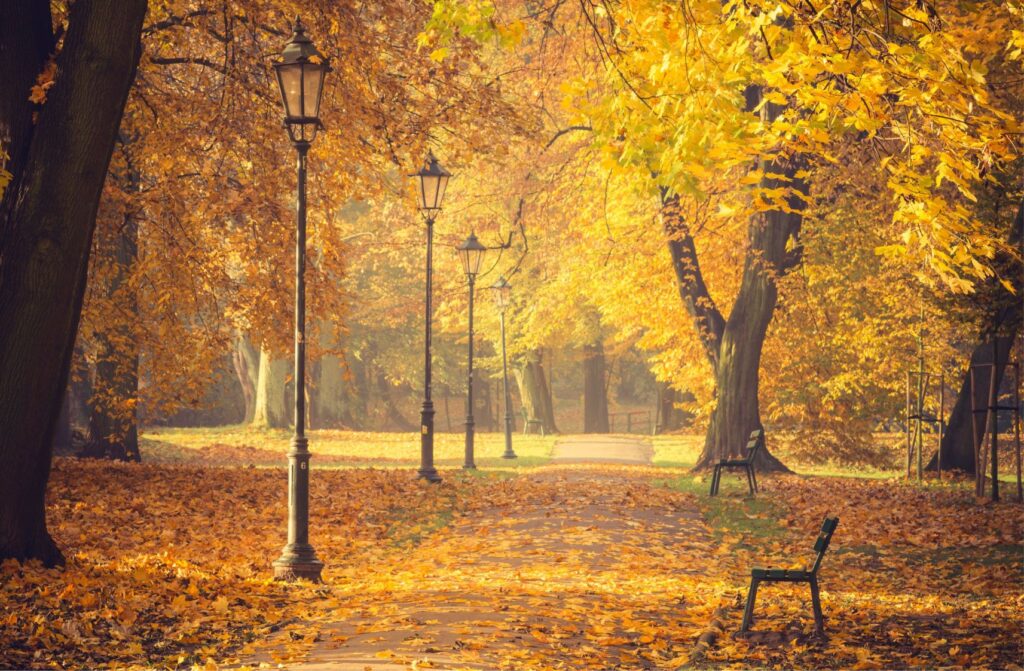
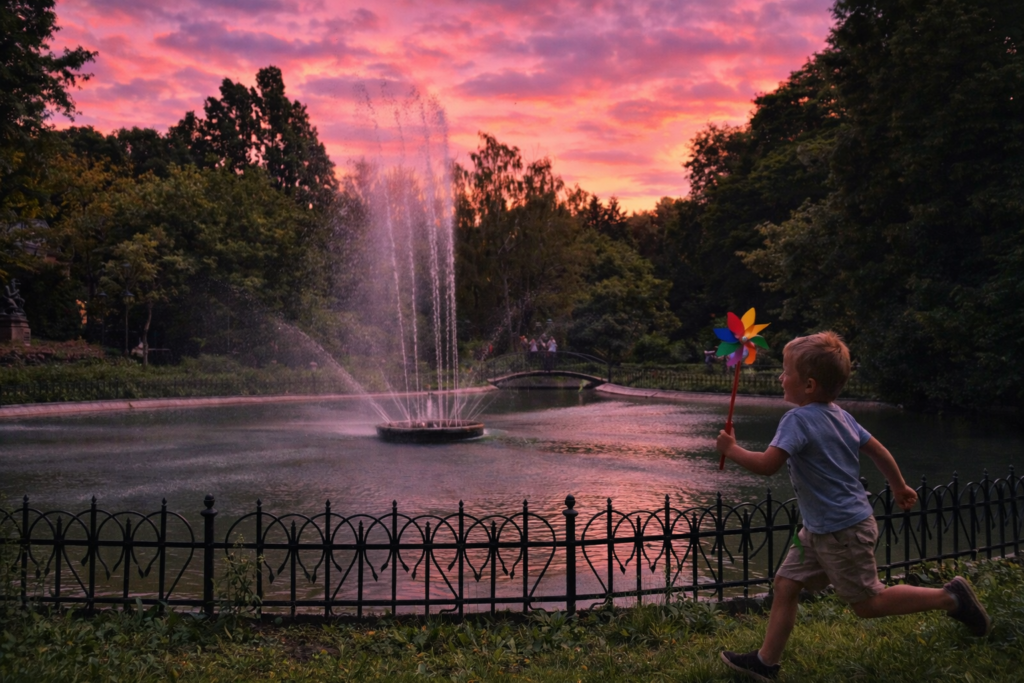
Planty Park is a green belt surrounding Krakow’s Old Town, created in the 19th century on the site of the former medieval city walls. Today, it forms a natural boundary of the historic centre and is one of the most pleasant walking areas in the city.
The park stretches for several kilometres, encircling the Old Town with tree-lined paths, gardens, and small squares. It offers a calm and shaded alternative to the busy streets inside the historic centre, making it popular with both locals and visitors.
Along the route, you will find monuments, fountains, and fragments of the original fortifications, especially near the Barbican and St. Florian’s Gate. The park also connects many key landmarks, serving as a convenient and scenic walking route between different parts of the city.
Planty changes with the seasons, from blooming flowers in spring and summer to colourful leaves in autumn and a quieter atmosphere in winter. This makes it a pleasant place to visit throughout the year.
Walking through Planty allows you to experience Krakow at a slower pace while still staying close to its most important attractions.
Practical tip: Use Planty as a natural walking route around the Old Town – it is often more relaxing than the busier streets inside the centre.
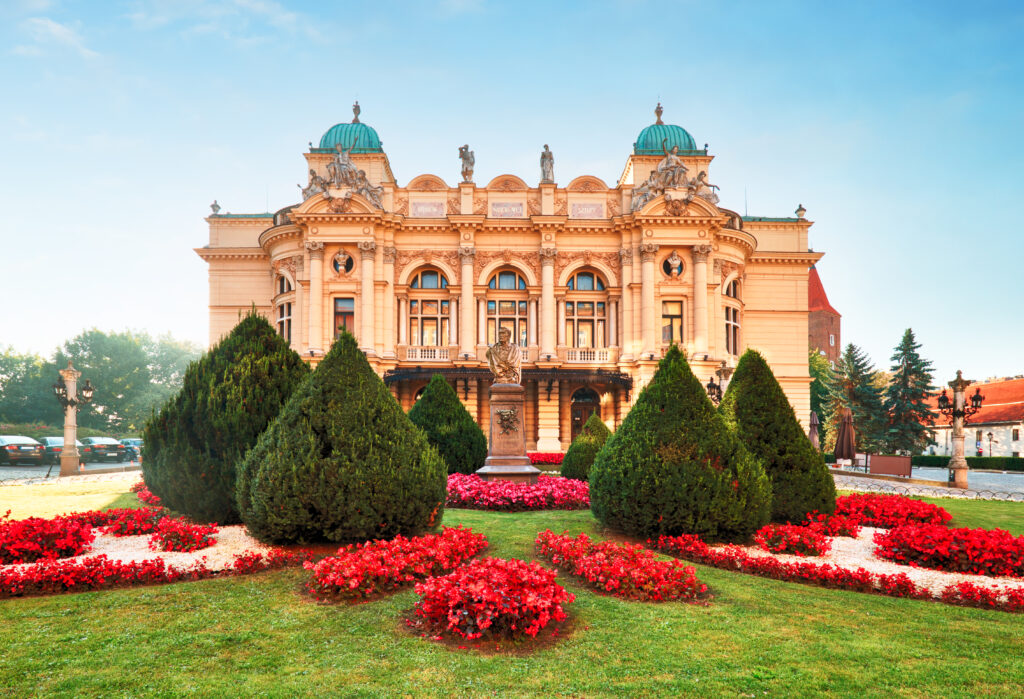
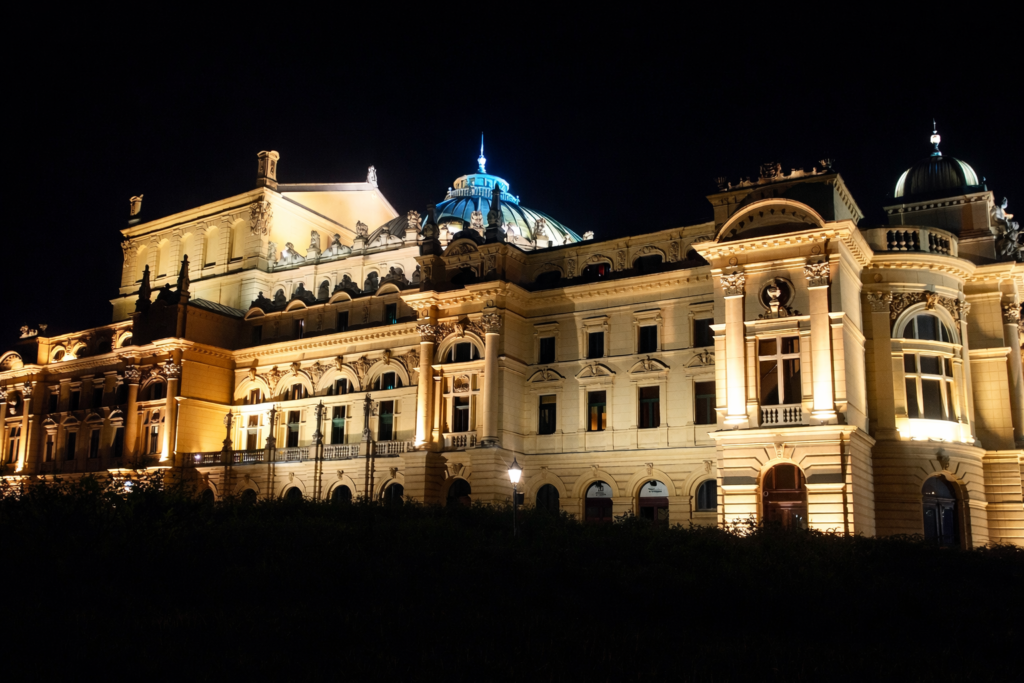
The Juliusz Słowacki Theatre is one of the most important and prestigious theatres in Krakow, located near the Old Town, close to St. Florian’s Gate. Opened in 1893, it is considered one of the finest examples of eclectic architecture in Poland.
The building immediately stands out with its richly decorated façade, featuring elements of Baroque and Renaissance styles. Its elegant design reflects the cultural ambitions of Krakow at the end of the 19th century, when the city was experiencing a period of artistic revival.
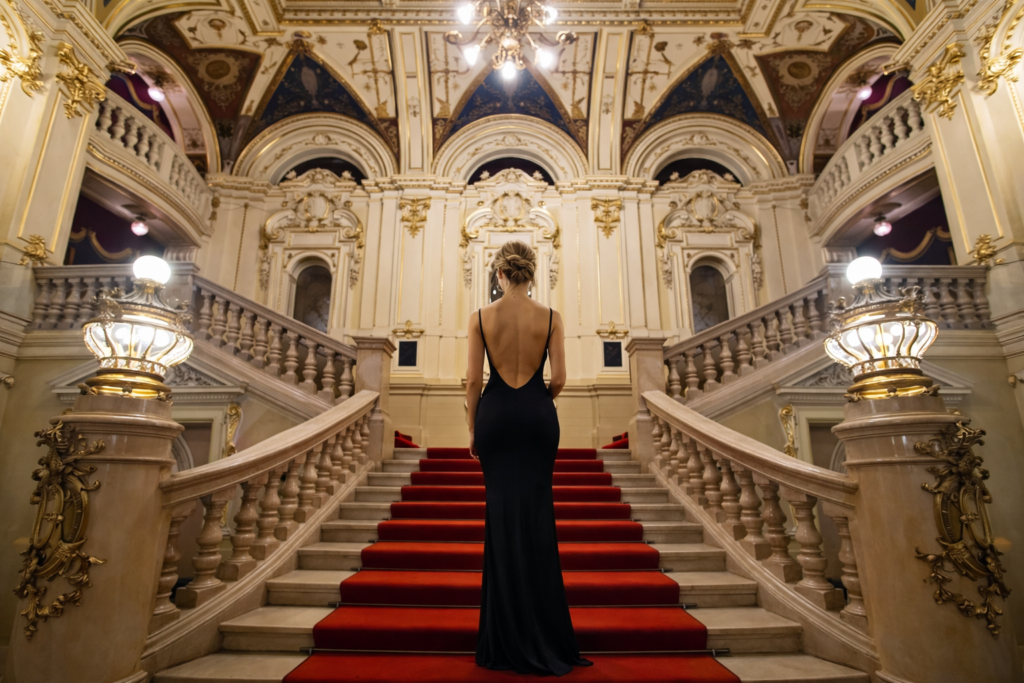
The interior of the theatre is equally impressive, with ornate staircases, chandeliers, and a beautifully decorated auditorium. It has hosted some of the most important theatrical performances in Polish history and remains an active cultural venue to this day.
The theatre is named after Juliusz Słowacki, one of Poland’s most influential Romantic poets, whose works played a key role in shaping national identity during the partitions of Poland.
Today, the Juliusz Słowacki Theatre continues to offer a wide repertoire, from classical drama to modern productions, making it a central part of Krakow’s cultural scene.
Practical tip: Even if you do not plan to attend a performance, it is worth walking by in the evening when the building is illuminated and looks particularly impressive.
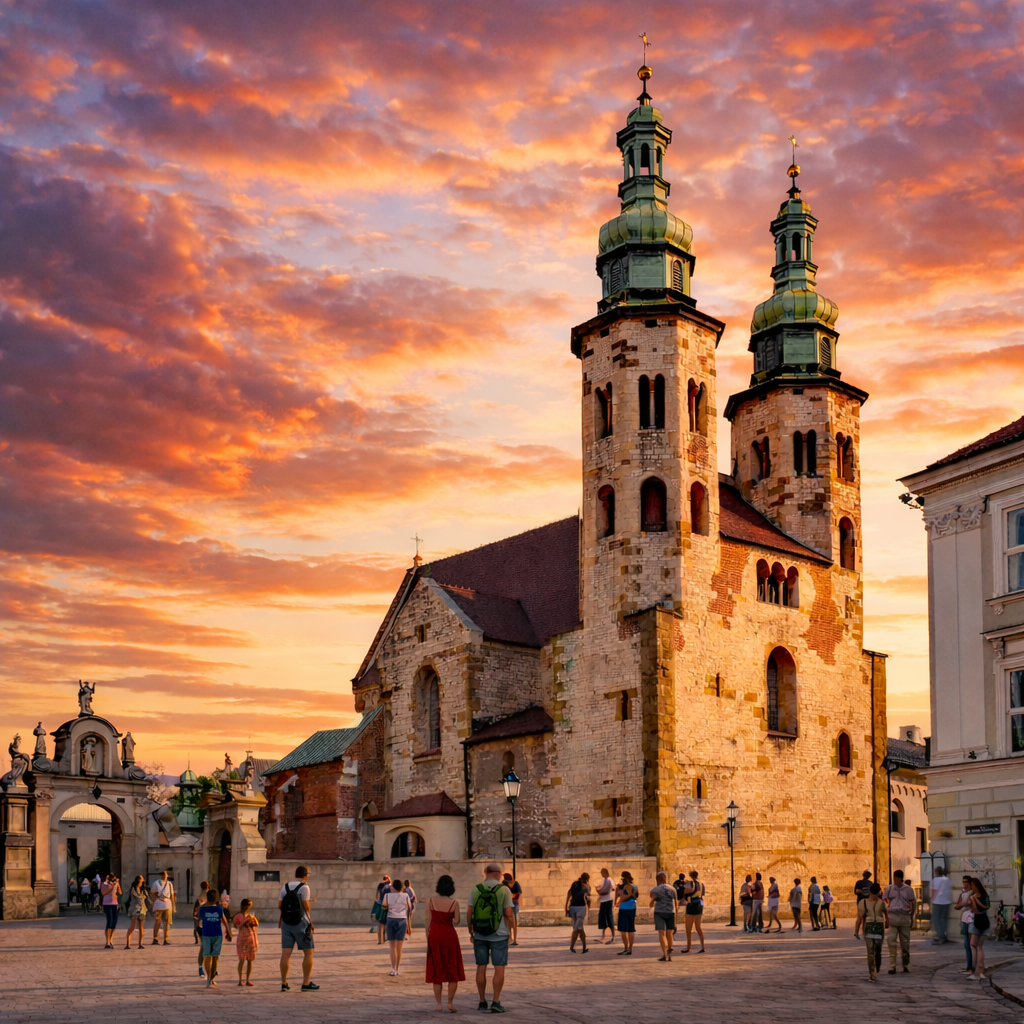
St. Andrew’s Church is one of the oldest and best-preserved Romanesque buildings in Krakow, located on Grodzka Street near the Church of St. Peter and St. Paul. Its fortress-like appearance immediately sets it apart from other churches in the city.
The church was built in the 11th century and originally served not only a religious function but also a defensive one. Its thick walls, narrow windows, and compact structure were designed to protect people during times of invasion, and it is believed that it successfully withstood attacks, including the Mongol raids.
From the outside, the building retains its Romanesque character, with simple forms and massive towers. In contrast, the interior was later redesigned in the Baroque style, creating a striking difference between the exterior and the richly decorated inside.
Over the centuries, the church became part of a convent belonging to the Poor Clares, and it remains connected to a monastic community to this day. This adds a quieter, more contemplative atmosphere compared to other churches along the busy Royal Route.
St. Andrew’s Church is an important example of how early medieval architecture has survived in Krakow, offering a rare glimpse into the city’s defensive past.
Practical tip: Take a moment to compare this church with the neighbouring Baroque Church of St. Peter and St. Paul – the contrast highlights the evolution of architecture in Krakow.
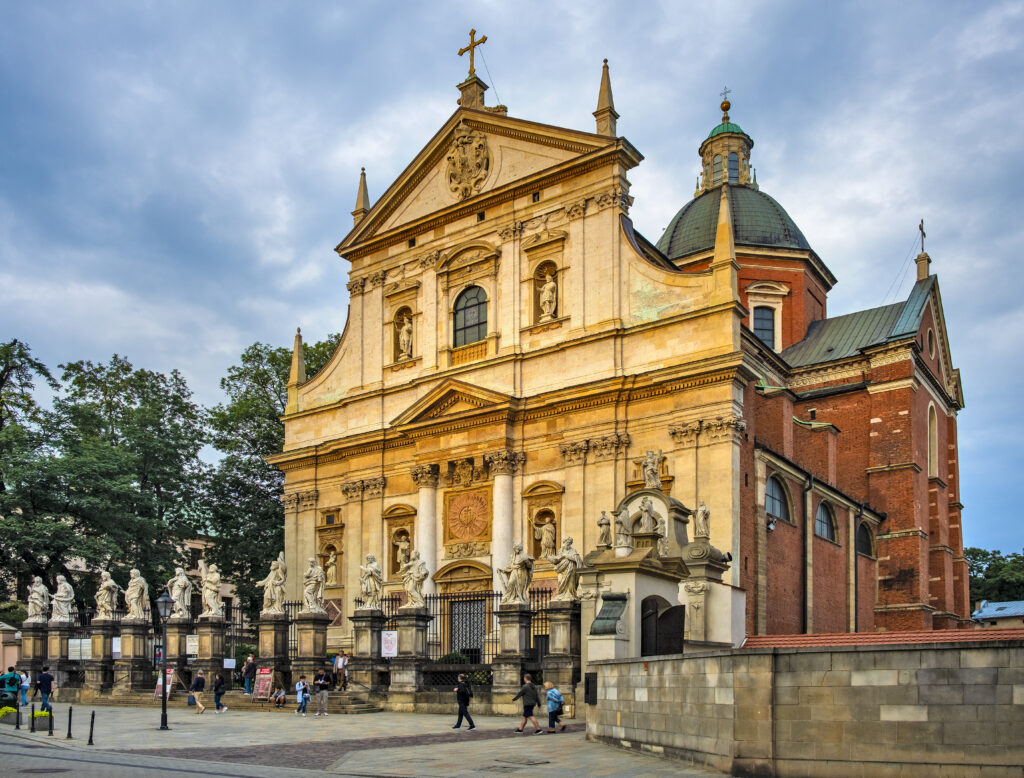
The Church of St. Peter and St. Paul is one of the most impressive Baroque churches in Krakow, located on Grodzka Street along the Royal Route. Its monumental façade immediately stands out, making it one of the most recognisable religious buildings in the Old Town.
The most distinctive feature of the church is the row of statues in front of the entrance, representing the twelve apostles. These figures create a dramatic introduction to the building and are one of the most photographed elements along Grodzka Street.
Inside, the church is known for its spacious and harmonious Baroque interior. One of its most interesting elements is the Foucault pendulum, which demonstrates the rotation of the Earth and combines science with the historic setting of the church.
The church is also an important cultural venue, regularly hosting classical music concerts thanks to its excellent acoustics. These performances add a different dimension to the space, allowing visitors to experience it not only as a place of worship but also as a concert hall.
Beneath the church is the National Pantheon of Poland, where notable Polish figures are buried. This gives the site additional national and historical significance beyond its architectural value.
Overall, the Church of St. Peter and St. Paul combines architecture, science, music, and history, making it one of the most multifaceted landmarks in Krakow.
Practical tip: If possible, visit during a concert – the acoustics of the interior make it one of the best places in Krakow to experience classical music.
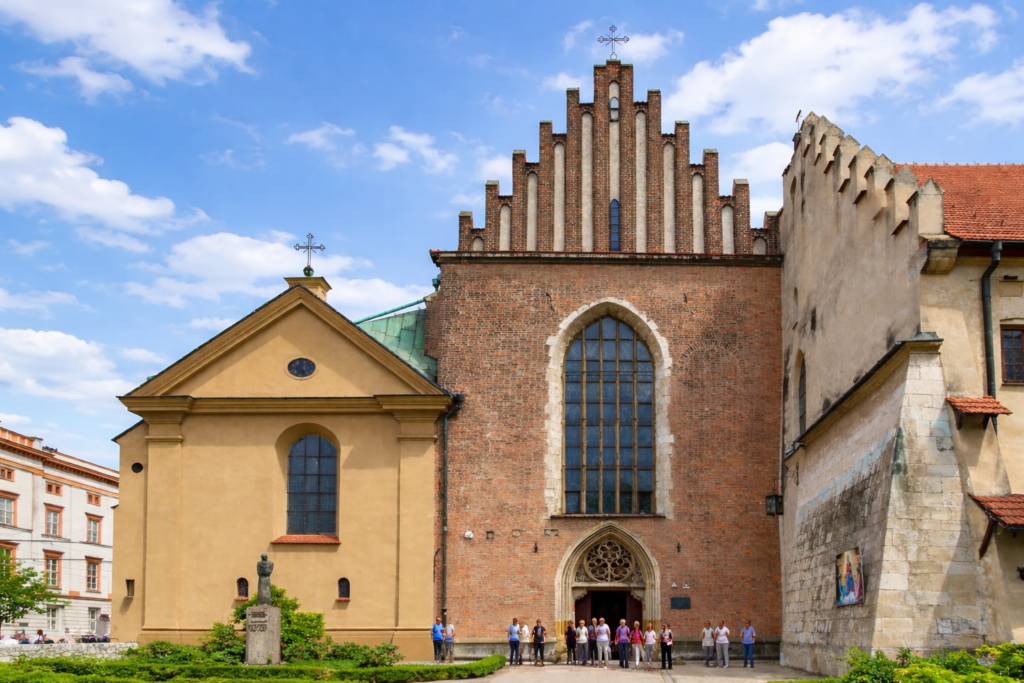
St. Francis of Assisi Basilica is one of the most distinctive churches in Krakow, located on Franciszkańska Street, just opposite the Papal Window. Although its exterior is relatively modest, the interior is considered one of the most unique in the city.
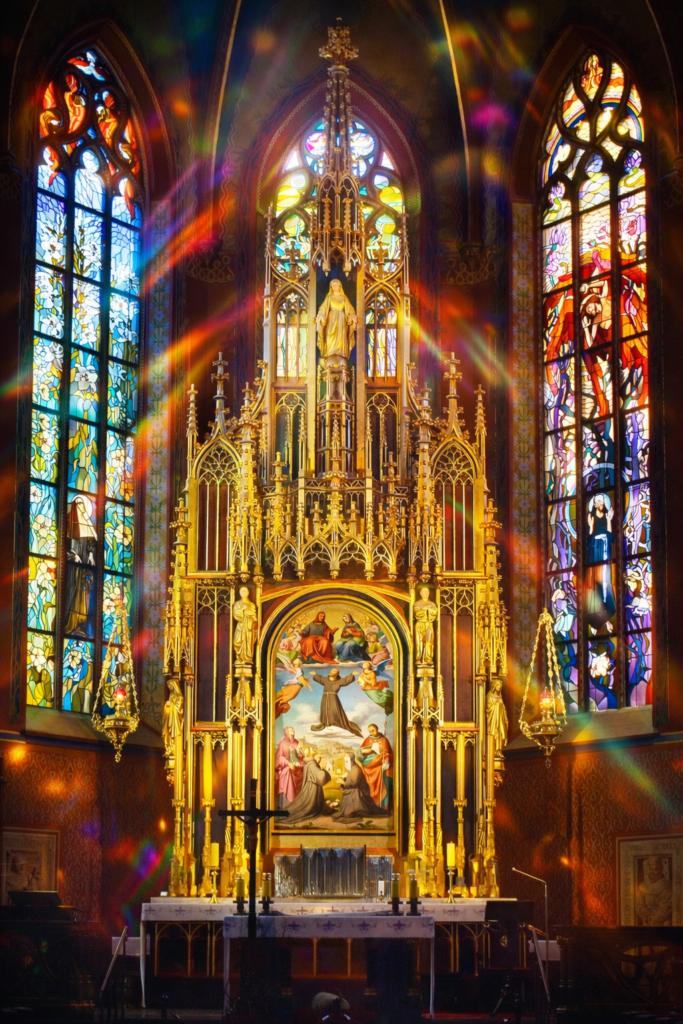
The church is best known for its remarkable polychrome decoration and stained glass windows created by Stanisław Wyspiański, one of Poland’s most important artists. His designs fill the space with organic forms, floral motifs, and vibrant colours, creating an atmosphere that is very different from traditional church interiors.
Another important feature is the faithful replica of the Shroud of Turin, which attracts visitors interested in religious history and symbolism. It adds a deeper, more reflective dimension to the visit.
The basilica is also associated with Krakow’s Christmas traditions. Every year, the square in front of the church hosts a living nativity scene, where real animals and performers recreate the Nativity. This seasonal event is one of the most characteristic Christmas experiences in the city.
Dedicated to St. Francis of Assisi, the church reflects values of simplicity and spirituality, which contrast with the rich artistic expression found inside.
Practical tip: Visit during daylight hours to fully appreciate the stained glass windows by Wyspiański, when the light enhances their colours and details.
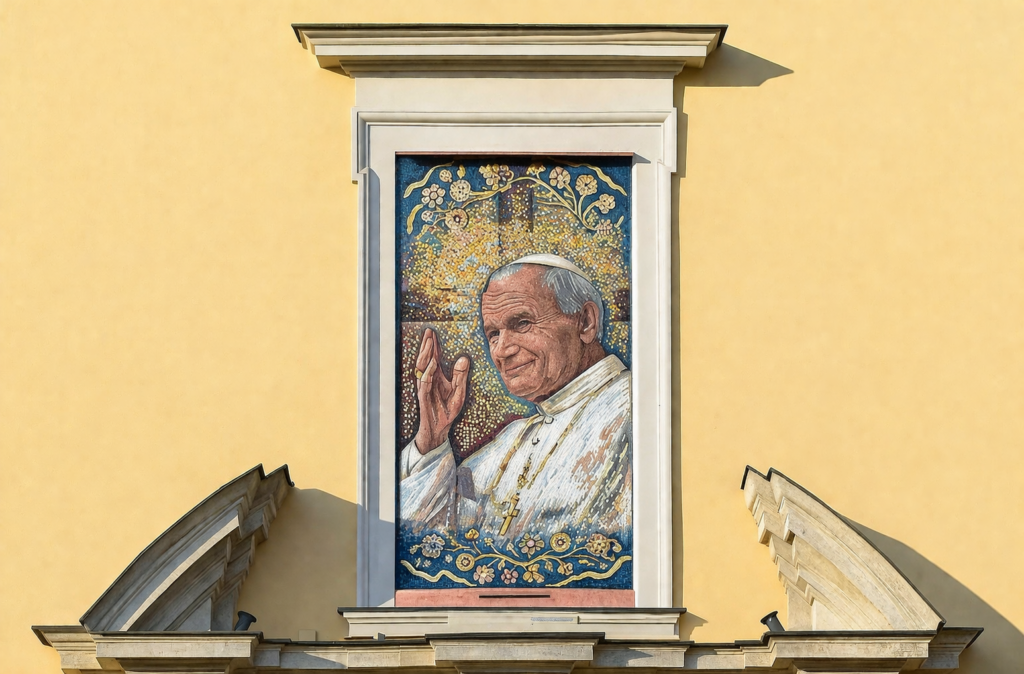
The Papal Window is one of the most symbolic and meaningful places in Krakow, located on Franciszkańska Street, just a short walk from the Main Market Square. It is part of the Archbishop’s Palace, where Karol Wojtyła lived before becoming Pope John Paul II.
The window became widely known during the pontificate of John Paul II, when he would appear here to meet with crowds gathered below during his visits to Krakow. These informal evening meetings, filled with conversation, reflection, and a sense of closeness, became a unique tradition.
For many visitors, the Papal Window is not just a historical site, but a place of remembrance and connection to one of the most influential figures in modern Polish history. It continues to attract both pilgrims and tourists who come to reflect on his legacy.
The building itself remains an important religious and administrative centre, but the window has taken on a symbolic role, representing the relationship between the pope and the people.
Today, the area in front of the Papal Window often becomes a gathering place during anniversaries and important events related to John Paul II, maintaining its role as a space of collective memory.
Practical tip: Visit in the evening for a quieter and more reflective atmosphere, when the space is less crowded and more in line with its historical character.
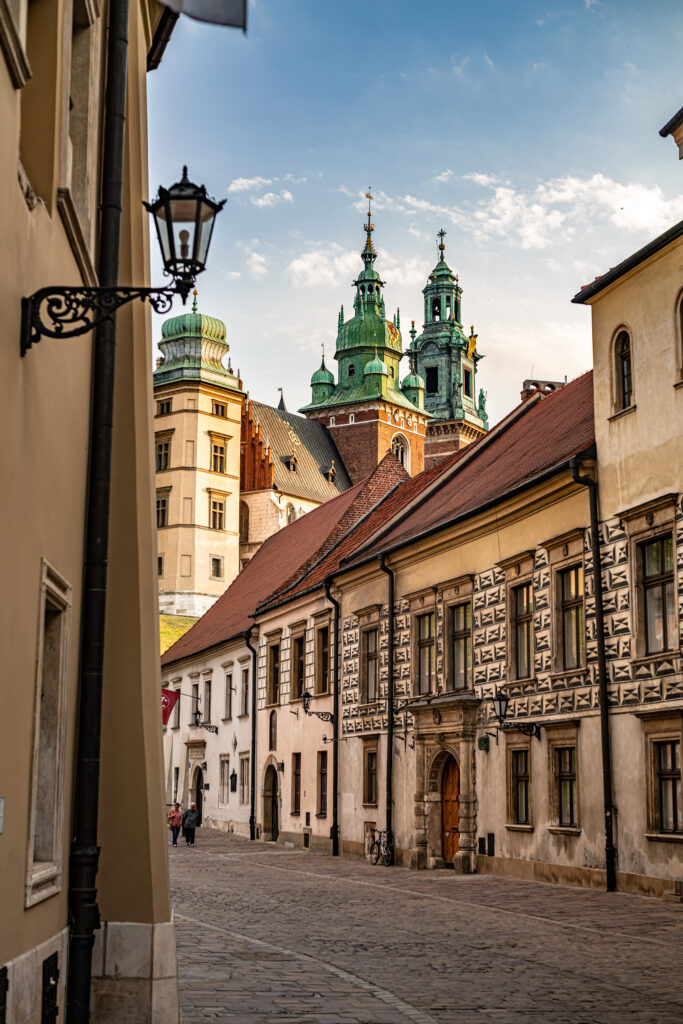
Kanonicza Street is one of the oldest and most atmospheric streets in Krakow, located just at the foot of Wawel Hill. It forms part of the Royal Route and is known for its quiet, historic character, very different from the busier streets of the Old Town.
The street dates back to medieval times and takes its name from the canons of Wawel Cathedral, who lived here for centuries. These high-ranking clergy members occupied the surrounding townhouses, making the area one of the most prestigious addresses in Krakow.
Today, Kanonicza Street is considered one of the most picturesque streets in Krakow. Its well-preserved Renaissance and Baroque buildings, decorative portals, and historic details create a unique architectural ensemble that has changed very little over time.
One of the most notable buildings is the House of Jan Długosz, a historic residence associated with the famous Polish chronicler and historian. It reflects the importance of the street as a centre of intellectual and religious life in medieval Krakow.
A popular and scenic way to reach Wawel Hill is to turn off Grodzka Street, pass through St. Mary Magdalene Square, and continue along Kanonicza Street. This route is often considered one of the most atmospheric approaches to the castle, offering a quieter and more historic perspective compared to the main tourist path.
Many of the buildings now house museums, boutique hotels, and cultural institutions. The street is also connected to the life of Pope John Paul II, who lived nearby before becoming pope, adding an important modern historical layer to the area.
Despite its central location, Kanonicza Street remains relatively calm, making it an ideal place for a slower walk and a closer look at Krakow’s architectural heritage.
Practical tip: Visit in the early morning or evening to fully appreciate the atmosphere, when the street is at its quietest and most atmospheric.
Grodzka Street is one of the oldest and most important streets in Krakow, forming a central part of the Royal Route that leads from the Main Market Square to Wawel Hill. For centuries, it has been a key axis of the city, connecting political, religious, and cultural landmarks.
The street follows the line of an even older trade route that existed before the city was formally laid out in the 13th century. Today, walking along Grodzka Street means passing through layers of Krakow’s history, with major monuments located one after another along its length.
Among the most important sites are St. Peter and St. Paul Church, the first Baroque church in Krakow, known for its monumental façade and statues of the apostles. Nearby stands St. Andrew’s Church, a rare example of Romanesque architecture with a fortress-like structure dating back to the 11th century.
Further along, you will find St. Giles’ Church, a small and often overlooked building associated with pilgrims, as well as the Archdiocesan Museum, connected to the life of Pope John Paul II. The route also passes All Saints Square, a historic space linked to the city’s administration.
At the southern end, Grodzka Street leads directly towards Wawel Hill, with the Wawel Royal Castle and Cathedral forming the final and most significant point of the Royal Route.
In addition to its monuments, the street is lined with historic townhouses, shops, and restaurants, creating a lively atmosphere throughout the day. Despite its commercial character, it remains one of the most historically significant routes in Krakow.
Practical tip: Walk this street slowly on your way to Wawel – it is not just a route, but one of the most concentrated sequences of historic sites in Krakow.
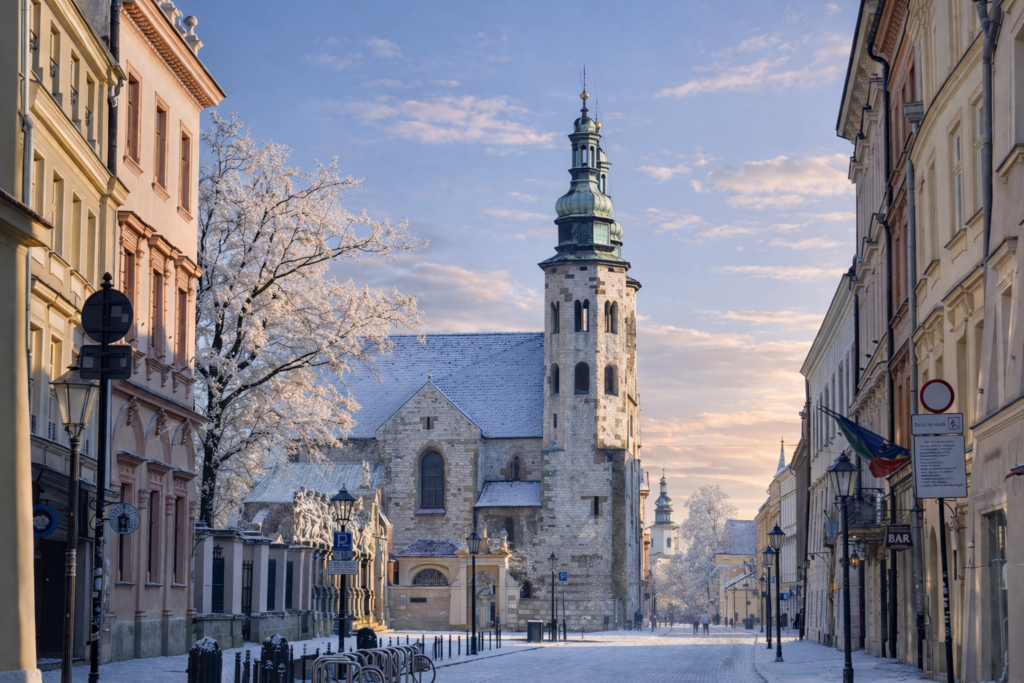
Szczepański Square (Plac Szczepański) is a central square located just off the Main Market Square, offering a quieter and more local atmosphere while still being in the heart of Krakow’s Old Town.
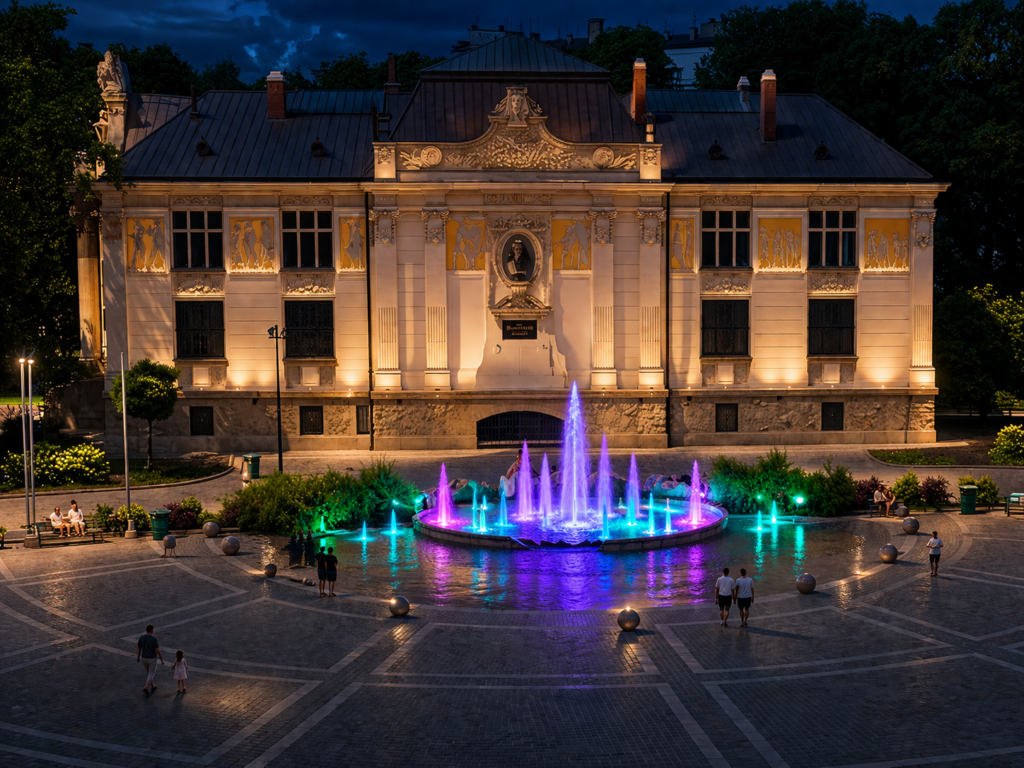
The square takes its name from the former Church of St. Stephen (Św. Szczepan), which once stood here before being demolished in the 19th century. Today, the open space is surrounded by elegant townhouses and notable buildings, including the Palace of Fine Arts (Pałac Sztuki), an important exhibition venue.
Plac Szczepański has a distinctly cultural character. It is often used for art events, temporary exhibitions, and smaller gatherings, making it feel more refined and less commercial than the Main Market Square.
The square is also known for its cafés and restaurants, many of which have outdoor seating in warmer months. This makes it a popular spot to relax, meet friends, or take a break while exploring the Old Town.
Although less crowded, it remains an important part of Krakow’s urban layout, connecting nearby streets and attractions while offering a different pace and atmosphere.
Practical tip: This is a good place to stop for a coffee or meal if you want to stay close to the Main Market Square but avoid the busiest areas.
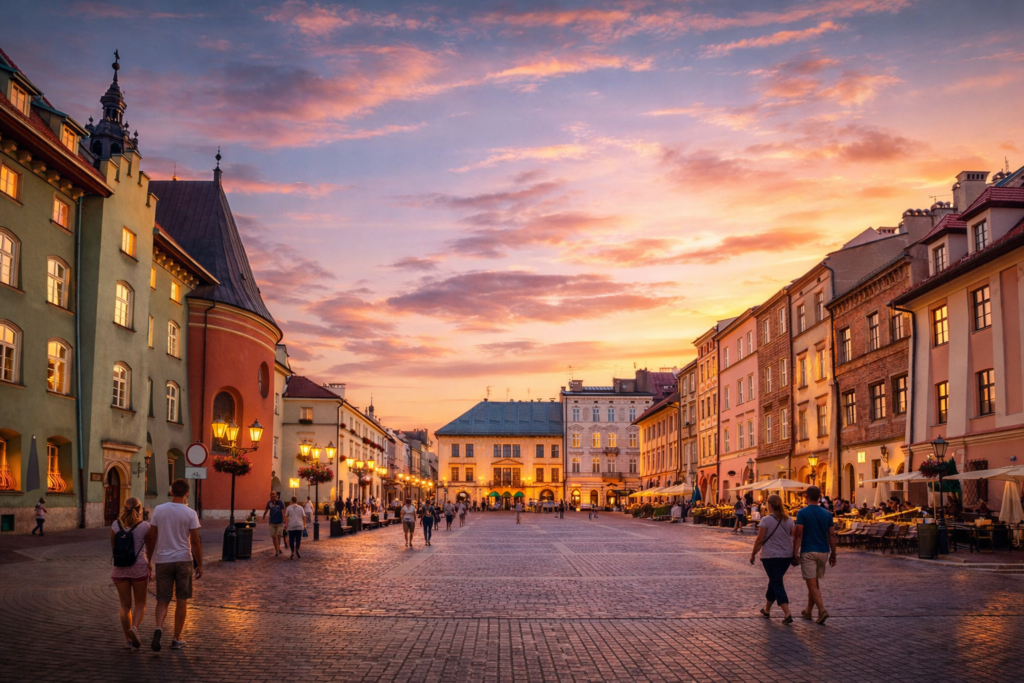
Small Market Square (Mały Rynek) is a quieter square located just next to the Main Market Square, slightly hidden from the main tourist routes. Despite its central location, it offers a more relaxed atmosphere compared to the busy Rynek Główny.
The square dates back to the medieval layout of the city and historically served as a supplementary market space. Over time, it became surrounded by townhouses and local establishments, giving it a more intimate character.
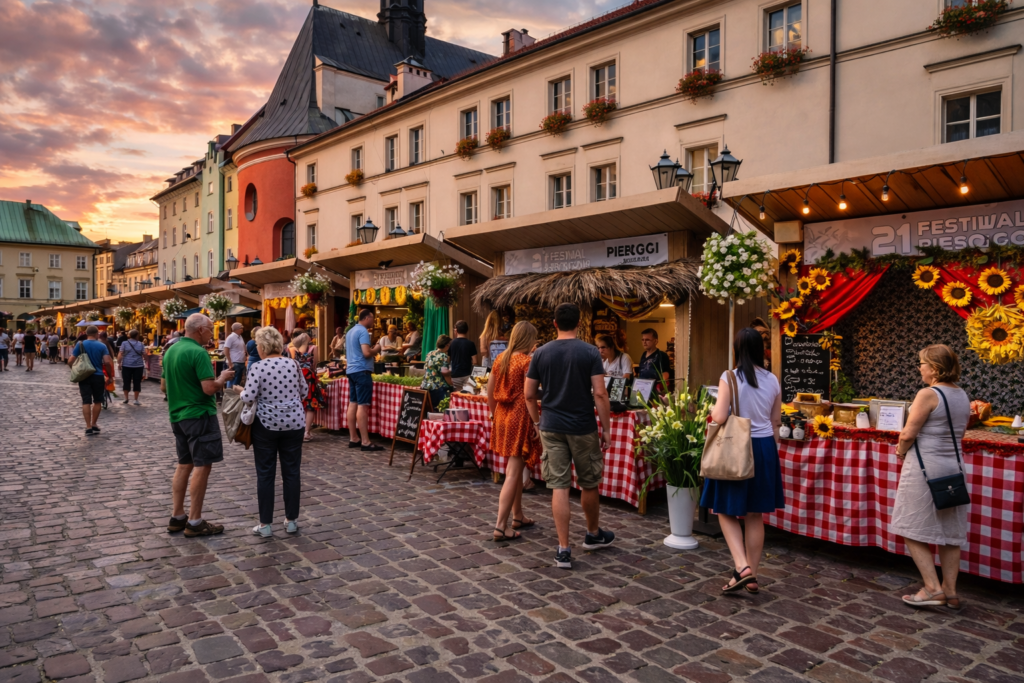
Today, Mały Rynek is often used as a venue for smaller events, local markets, and seasonal festivals. One of the most popular is the Pierogi Festival, where visitors can try a wide variety of traditional Polish dumplings. Throughout the year, the square regularly hosts cultural events that feel more local and less crowded than those on the main square.
Because of its scale and atmosphere, it is a good place to take a short break while exploring the Old Town, especially if you are looking to step away from the busiest areas.
Practical tip: If you are visiting during a festival or event, it is worth stopping by in the evening, when the atmosphere becomes more lively but still less overwhelming than the Main Market Square.
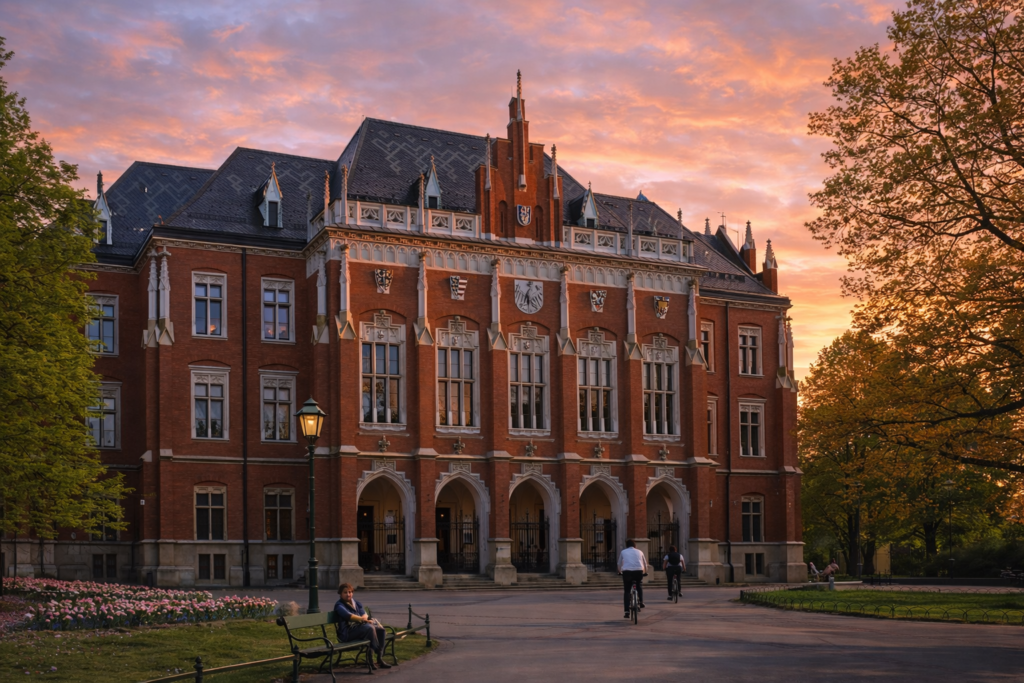
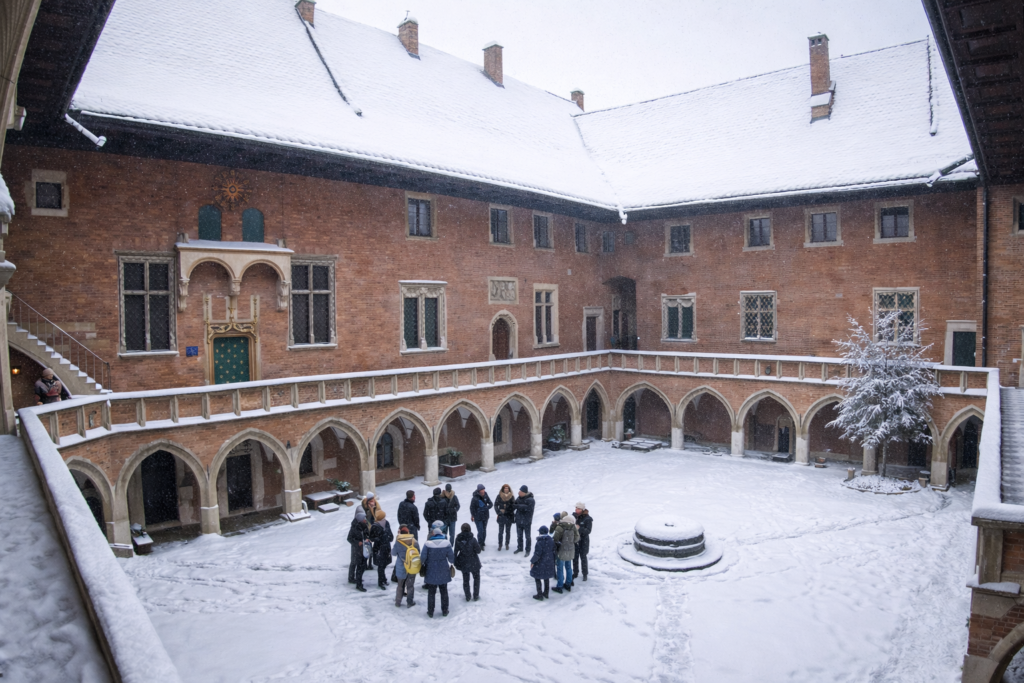
The Jagiellonian University (Uniwersytet Jagielloński) is one of the oldest universities in Europe, founded in 1364 by King Casimir the Great. For centuries, it has been one of Poland’s most important academic institutions and a key part of Krakow’s intellectual and cultural life.
The university is closely integrated with the Old Town, with many of its historic buildings located just a short walk from the Main Market Square. Walking through these spaces offers insight into the academic traditions that have shaped the city for generations.
For visitors, several key locations stand out:
Collegium Maius: The oldest surviving university building and one of the most important landmarks. Its Gothic courtyard, arcades, and historic interiors house a museum displaying academic instruments, manuscripts, and artefacts. This is where :contentReference[oaicite:1]{index=1} studied in the 15th century.
Collegium Novum: The main administrative building of the university, located near Planty Park. It is known for its Neo-Gothic architecture and historical significance, including memorials related to events during World War II.
University Quarter: The surrounding streets, filled with smaller colleges and faculty buildings, create a distinct academic atmosphere. Walking through this area gives a sense of continuity between medieval scholarship and modern education.
Jagiellonian University Museum: Located within Collegium Maius, it offers a deeper look into the history of the university and its role in European science and culture.
Exploring the Jagiellonian University allows you to see a different side of Krakow – one shaped not only by trade and politics, but also by learning, research, and intellectual tradition.
Practical tip: Visit the courtyard of Collegium Maius around the hour to see the historic clock display, which features moving figures connected to the university’s history.
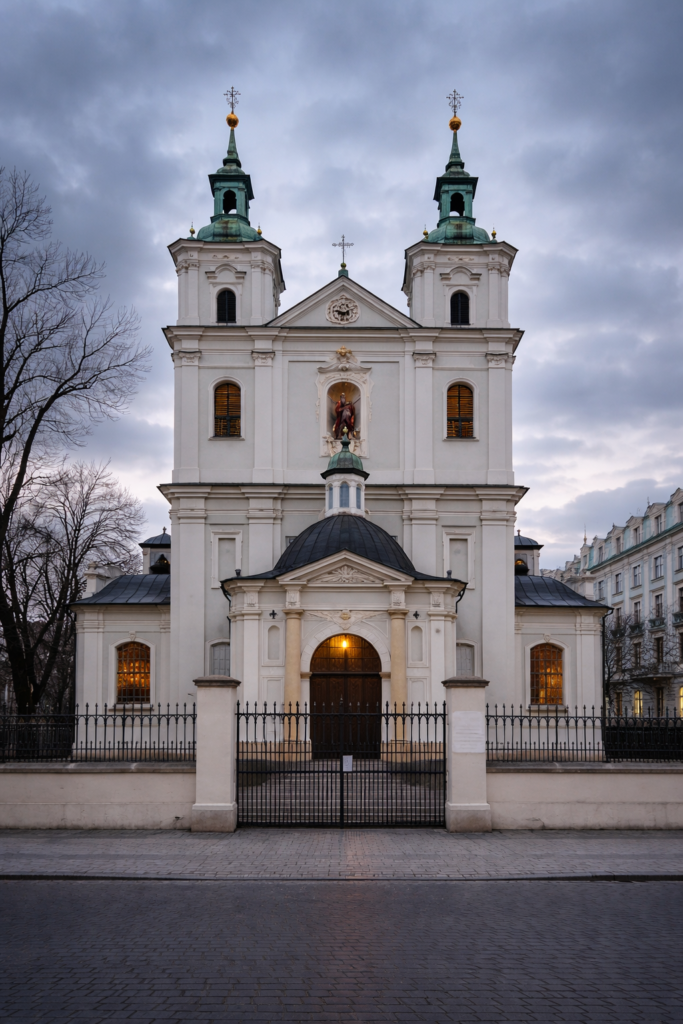
St. Florian’s Church is a historic church located at the northern end of Krakow’s Old Town, on Matejko Square, just beyond St. Florian’s Gate. It marks the beginning of the Royal Route, the traditional ceremonial path used by Polish kings entering the city.
The church dates back to the 12th century and is dedicated to Saint Florian, the patron saint of firefighters and one of the protectors of Krakow. According to tradition, relics of the saint were brought to this site in 1184, which contributed to the church’s early importance.
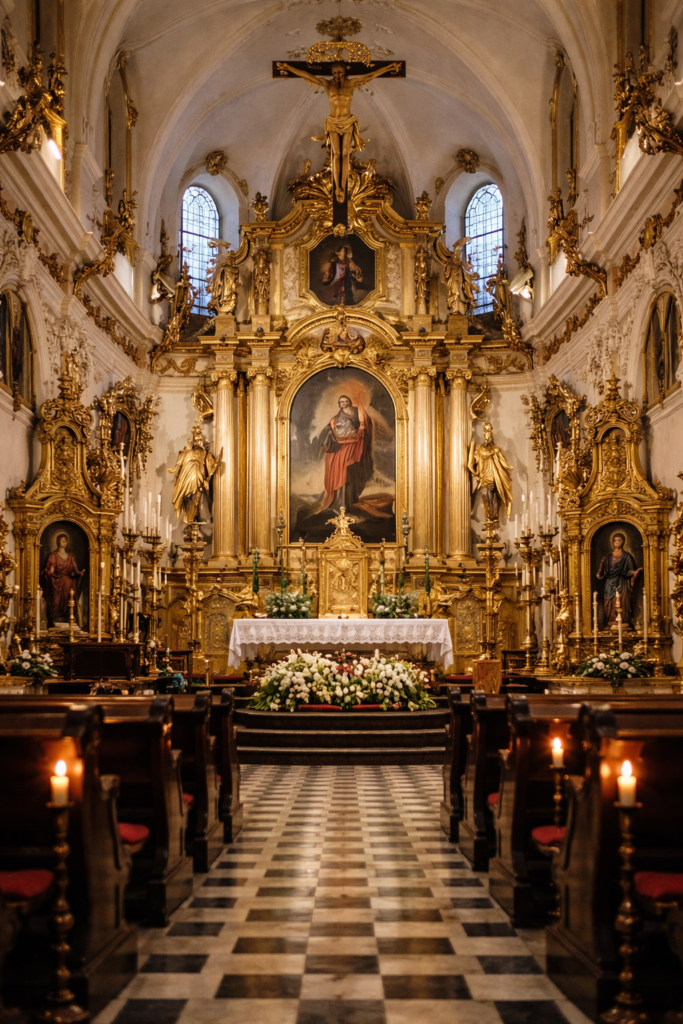
Over the centuries, the building was rebuilt and expanded, resulting in its current Baroque appearance. The interior reflects this later style, with decorative altars and religious artwork typical of the period.
St. Florian’s Church also holds modern historical significance. In the 20th century, Karol Wojtyła – later :contentReference[oaicite:1]{index=1} – served here as a young priest, making it an important site for those interested in his life and legacy.
Today, the church remains an active place of worship and a meaningful stop along the Royal Route, connecting Krakow’s early medieval origins with its later religious and cultural history.
Practical tip: The church is located just outside the main tourist flow, making it a quieter place to visit compared to the busy Main Market Square.
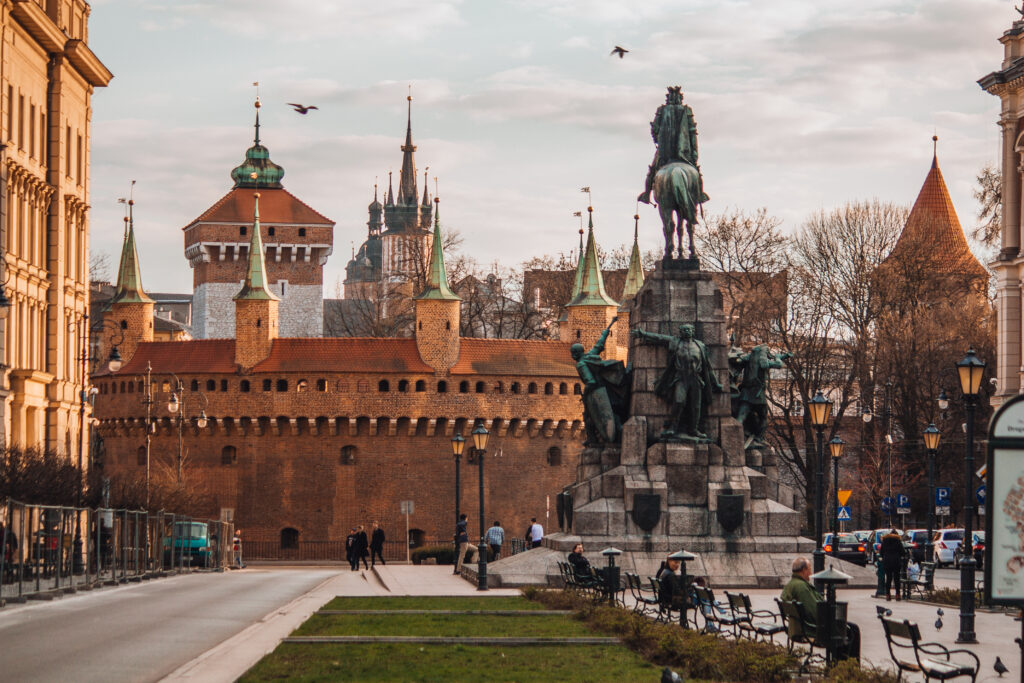
Matejko Square (Plac Matejki) is a historic square located just outside the northern edge of Krakow’s Old Town, near the Barbican and St. Florian’s Gate. It serves as a transitional space between the medieval centre and the later parts of the city.
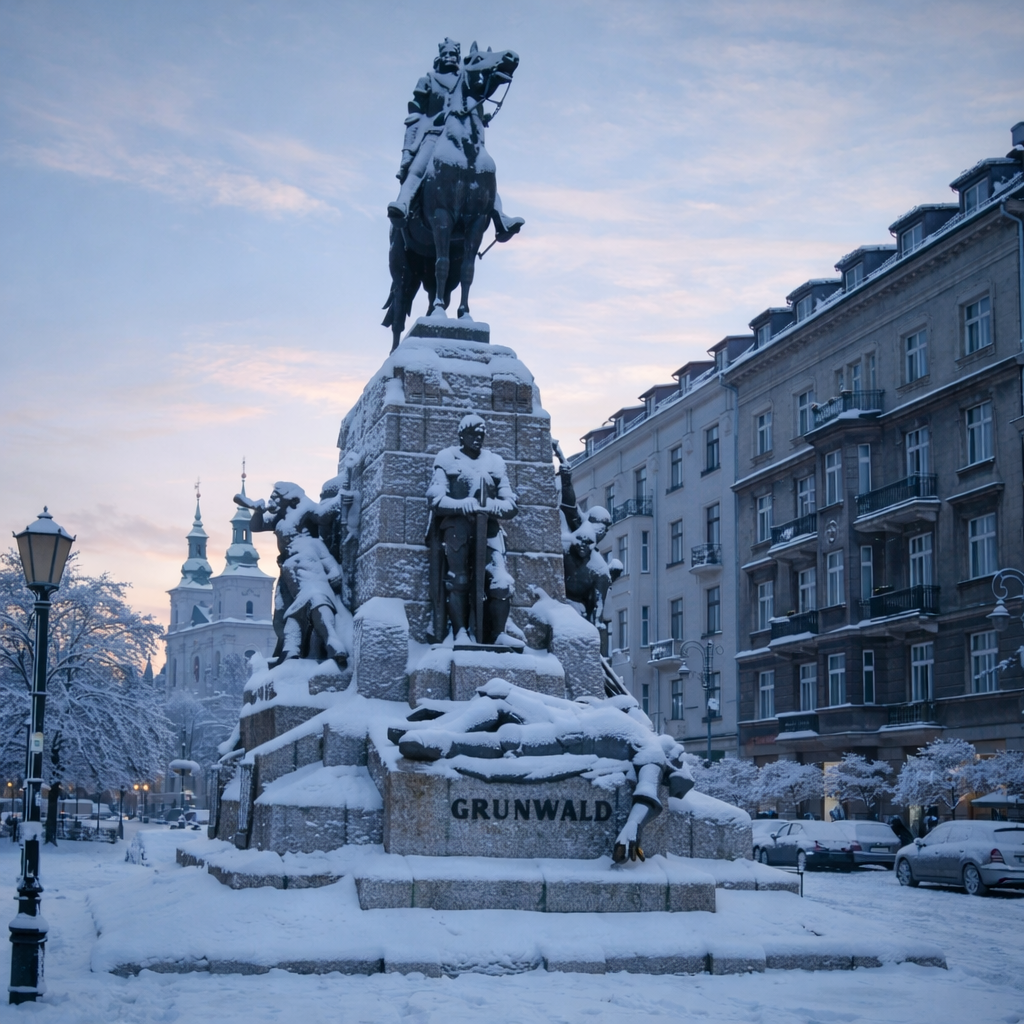
The square is named after Jan Matejko, one of Poland’s most renowned painters, known for his large-scale historical works depicting key moments in Polish history. At the centre of the square stands the Grunwald Monument, commemorating the victory over the Teutonic Order at the Battle of Grunwald in 1410.
Unveiled in 1910 to mark the 500th anniversary of the battle, the monument is one of the most important patriotic symbols in Krakow. It features a dynamic composition of figures, with King Władysław Jagiełło on horseback as the central element.
Matejko Square is also surrounded by significant buildings, including the Academy of Fine Arts and historic townhouses. Its location makes it an important junction, connecting the Old Town with routes leading towards the railway station and other districts.
While often less crowded than the Main Market Square, it offers a broader, more open perspective and highlights Krakow’s national history and artistic heritage.
Practical tip: This is a convenient starting point if you are entering the Old Town from the main train station, as it leads directly towards St. Florian’s Gate and Floriańska Street.
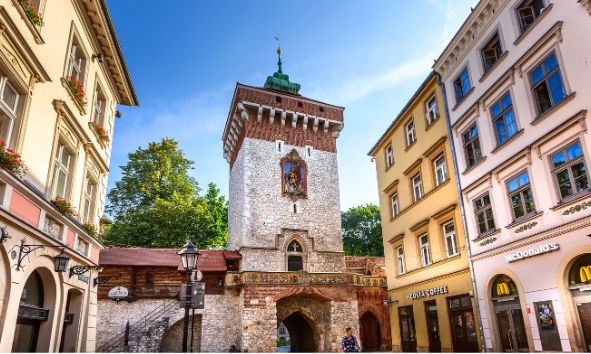
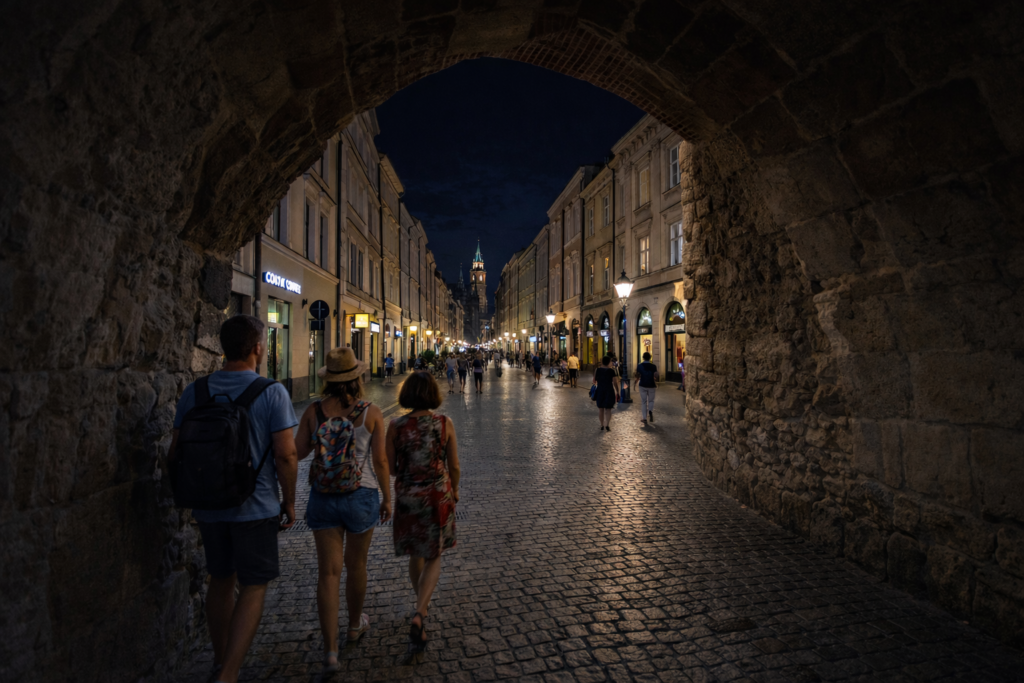
St. Florian’s Gate is one of the most important surviving elements of Krakow’s medieval fortifications and the main entrance to the Old Town from the north. Built in the 14th century, it once formed part of a larger defensive system protecting the city.
The gate stands at the end of Floriańska Street and marks the beginning of the Royal Route – the ceremonial path used by Polish kings entering the city. Its strategic location made it a key checkpoint for both trade and defence.
The structure rises to a height of over 30 metres and is topped with a distinctive Baroque roof added in later centuries. Originally connected to the Barbican by a fortified passage, the gate was designed to work as part of a coordinated defensive line.
Above the passageway, you will find an image of St. Florian, the patron saint of Krakow, from whom the gate takes its name. Over time, the space beneath the gate has also become a place for local artists to display and sell their work.
Today, St. Florian’s Gate is not only a historical landmark but also a symbolic entrance to Krakow’s Old Town, linking the medieval past with the modern city.
Practical tip: Passing through the gate from the Barbican side offers one of the most classic approaches into the Old Town and is a good way to follow the historic Royal Route.
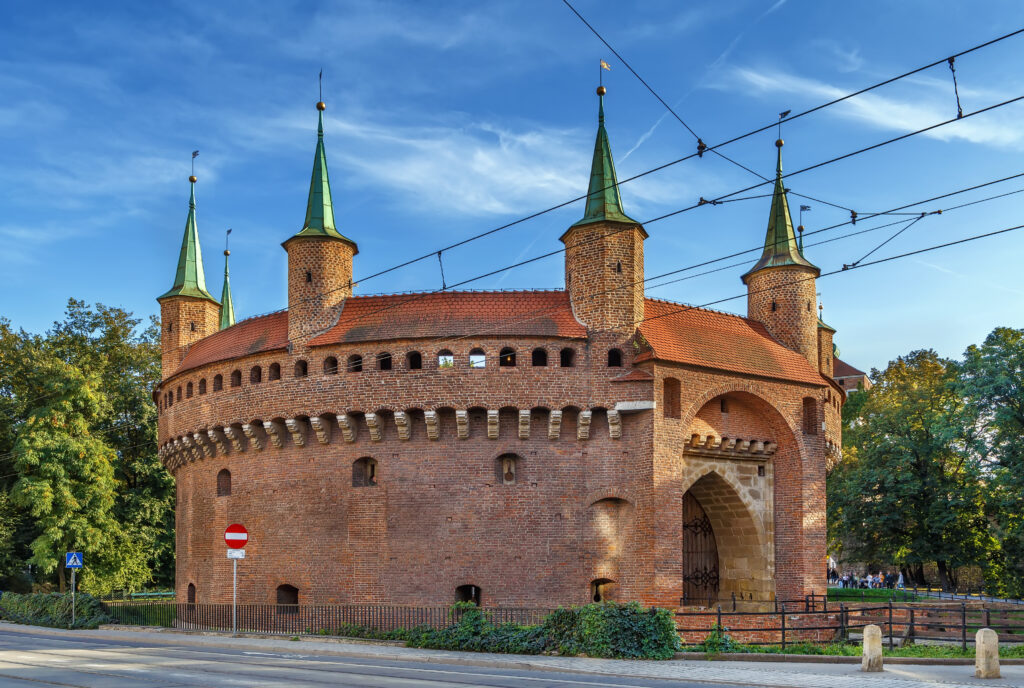
The Krakow Barbican is one of the best-preserved medieval defensive structures in Europe and a key part of the city’s former fortification system. Built around 1498, it served as a protective outpost guarding the northern entrance to Krakow.
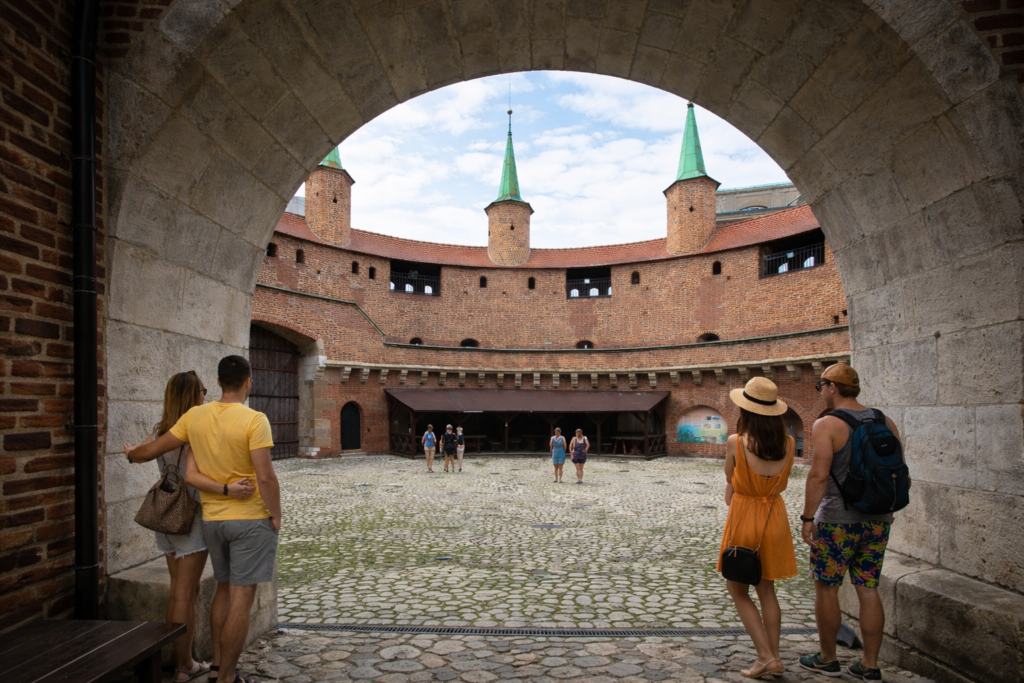
The structure is circular in shape, with thick brick walls, defensive towers, and narrow openings designed for archers. It was once connected to the city walls and St. Florian’s Gate by a covered passage, forming a strategic defensive line against potential attacks.
Surrounded by a moat and equipped with multiple layers of protection, the Barbican played an important role in safeguarding the city. Although Krakow’s fortifications were largely dismantled in the 19th century, the Barbican survived and remains a rare example of this type of military architecture.
Today, it stands just outside the Old Town, offering insight into how the city was once defended. The interior is sometimes open to visitors and used for exhibitions or historical displays.
Walking around the Barbican allows you to better understand the scale and complexity of Krakow’s medieval defences, especially when combined with a visit to nearby sections of the former city walls.
Practical tip: Combine your visit with a walk through St. Florian’s Gate and along the Planty Park to follow the outline of the old city walls.
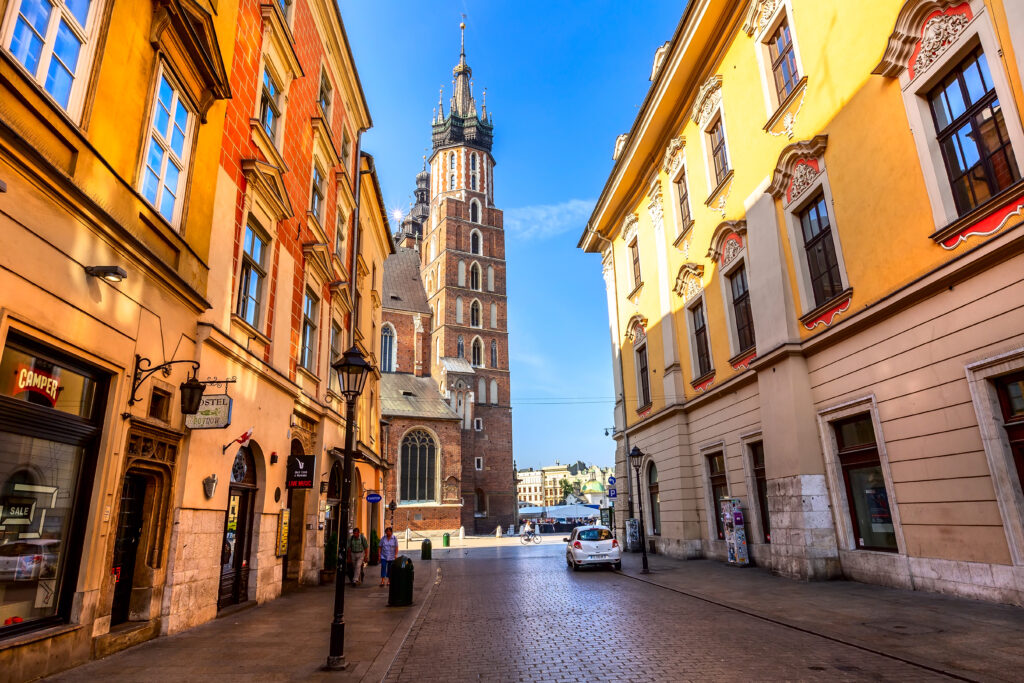
Floriańska Street is one of the main historic streets in Krakow, leading directly from the Main Market Square to St. Florian’s Gate. It forms part of the Royal Route – the traditional ceremonial path once used by kings during processions through the city.
The street dates back to the medieval layout of Krakow and has remained one of its most important and recognisable routes ever since. Lined with historic townhouses, it reflects centuries of architectural changes, from Gothic foundations to later Renaissance and Baroque façades.
Today, Floriańska Street is a lively pedestrian zone filled with shops, cafés, restaurants, and hotels. While it is one of the busiest streets in the Old Town, it still preserves elements of its historical character, especially in the details of the surrounding buildings.
Walking along Floriańska Street offers a natural transition from the open space of the Main Market Square towards the medieval city walls. At the end of the street, you reach St. Florian’s Gate – one of the original entrances to the fortified city.
Despite its commercial atmosphere, the street remains an essential part of Krakow’s identity, combining history, daily life, and tourism in a single, continuous space.
Practical tip: If you want to experience the street with fewer crowds, visit early in the morning before most shops and tour groups arrive.
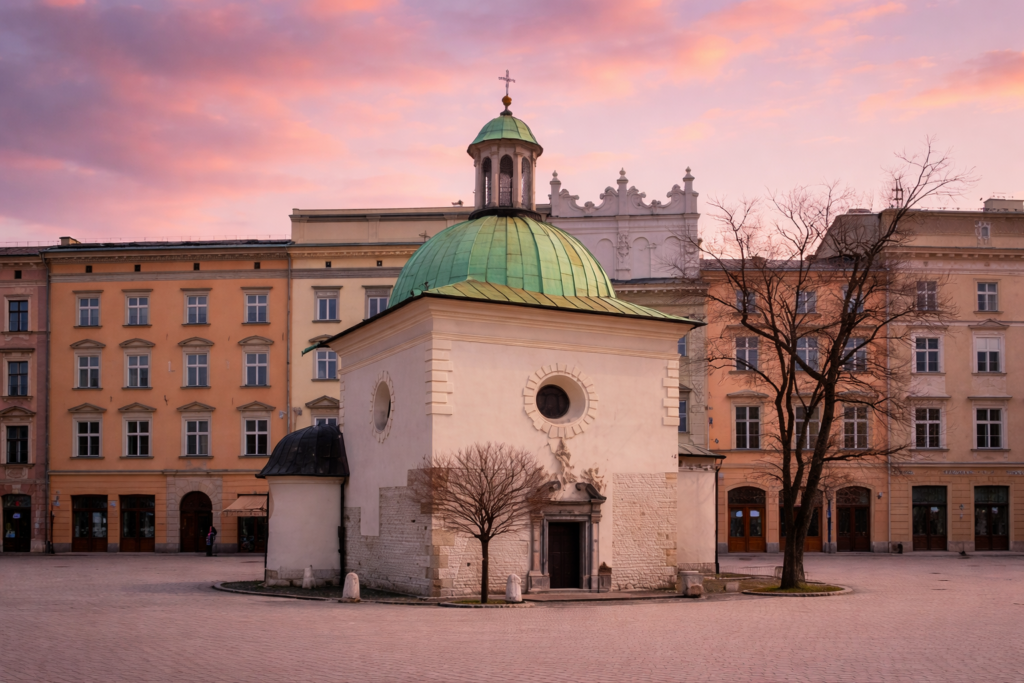
Located on the Main Market Square, St. Adalbert’s Church is one of the oldest stone churches in Krakow and a small but historically significant landmark. Its modest size contrasts with the surrounding buildings, yet it holds a unique place in the city’s early history.
The origins of the church date back to the 11th century, making it older than most of the structures around the square. According to tradition, the site is connected to the missionary work of Saint Adalbert (Wojciech), who is believed to have preached here during his travels through the region.
Over the centuries, the church was rebuilt and modified, resulting in a mix of architectural styles. While its core structure reflects Romanesque origins, later elements introduce Baroque features, giving it its current appearance.
Due to rising ground levels in the square over time, the church now appears slightly sunken compared to its surroundings. This visible difference highlights how Krakow has developed in layers, with newer surfaces built over the medieval city.
Today, St. Adalbert’s Church stands as a quiet reminder of Krakow’s earliest religious and architectural heritage, often overlooked despite its central location.
Practical tip: Look for the church near the Cloth Hall – its lower position relative to the square makes it easy to miss at first glance.
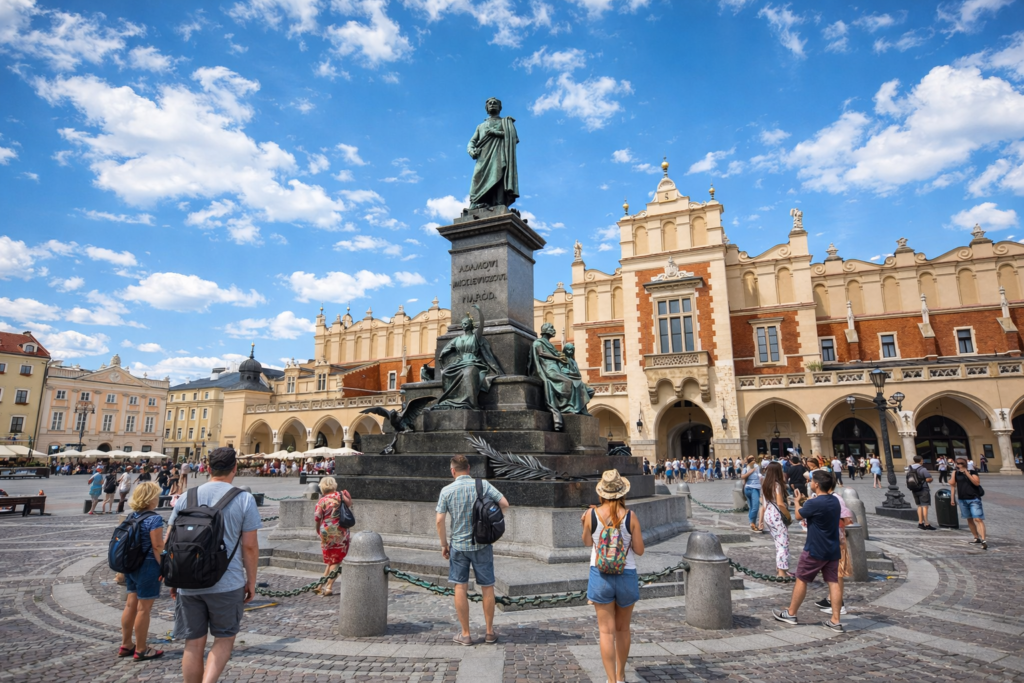
Located in the centre of the Main Market Square, the Adam Mickiewicz Monument is one of the most recognisable meeting points in Krakow. It is dedicated to Adam Mickiewicz, Poland’s most celebrated Romantic poet and a key figure in Polish literature.
The monument was unveiled in 1898 to mark the 100th anniversary of Mickiewicz’s birth. Designed by sculptor Teodor Rygier, it presents the poet standing atop a pedestal, surrounded by allegorical figures representing the Homeland, Science, Poetry, and Courage.
Over the years, the monument has become more than just a tribute – it functions as a natural gathering place for locals and visitors. It is commonly used as a meeting point due to its central location and visibility from all sides of the square.
The statue also carries historical significance. During World War II, it was destroyed by the occupying forces and later reconstructed and reinstalled in 1955, restoring its place in the urban landscape.
Today, the Adam Mickiewicz Monument remains both a cultural symbol and a practical landmark, connecting Krakow’s literary heritage with everyday life in the city.
Practical tip: If you arrange to meet someone in the Old Town, “by the Mickiewicz statue” is one of the most commonly used and easily understood locations.
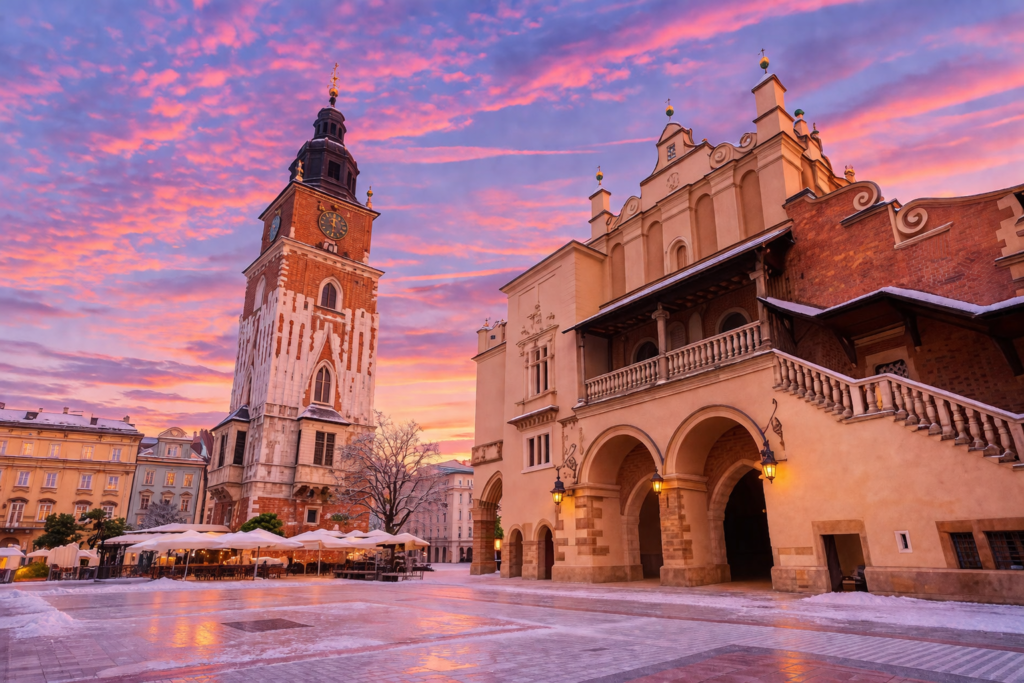
Standing on the Main Market Square, the Town Hall Tower is the only remaining part of the former city hall, which was demolished in the 19th century. Today, it serves as a visible reminder of Krakow’s medieval administrative centre.
The tower was built in the 14th century and originally formed part of a larger complex that included council chambers, courtrooms, and administrative offices. Its Gothic structure reflects the importance of Krakow as a political and economic hub at the time.
One of the tower’s most distinctive features is its slight tilt, caused by strong winds and structural shifts over the centuries. Despite this, it has remained stable and continues to be one of the recognisable elements of the Main Market Square.
Visitors can climb to the top of the tower, where a viewing platform offers panoramic views over the Old Town, including the square, surrounding streets, and nearby landmarks. Inside, the interiors include historic spaces and occasional exhibitions.
The Town Hall Tower is not only a historical landmark but also a practical vantage point, offering a different perspective on Krakow’s urban layout and architecture.
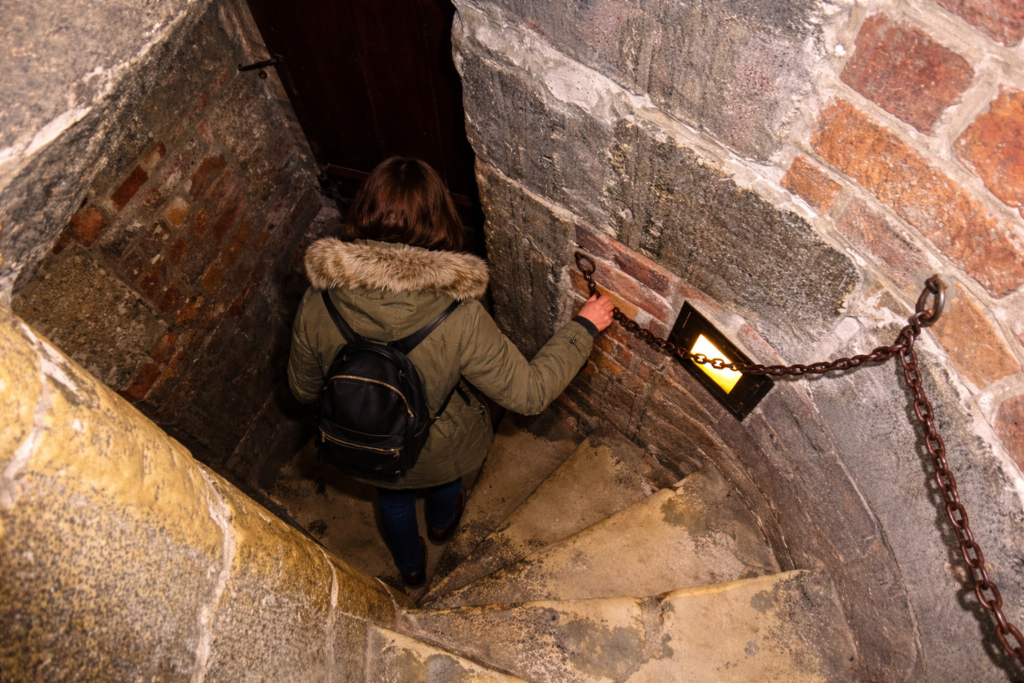
Practical tip: The staircase to the top is narrow and consists of several levels, so comfortable footwear is recommended when planning a visit.
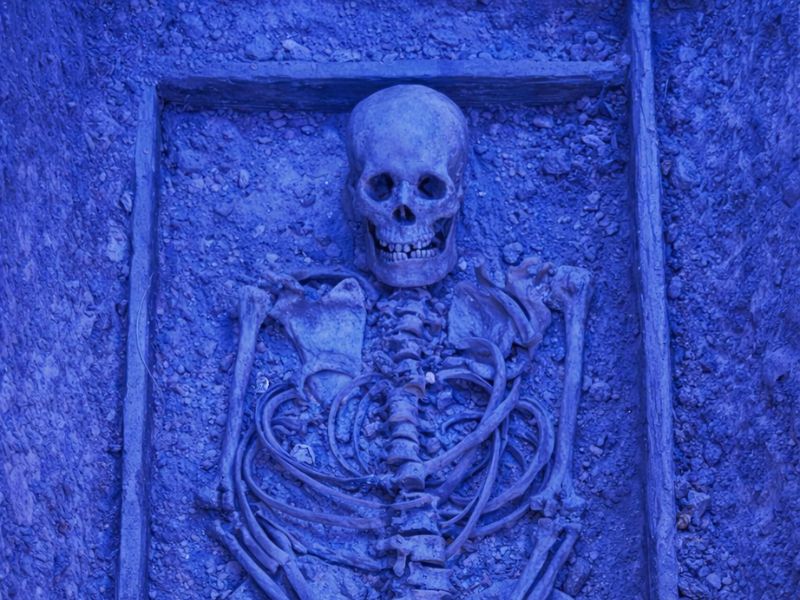
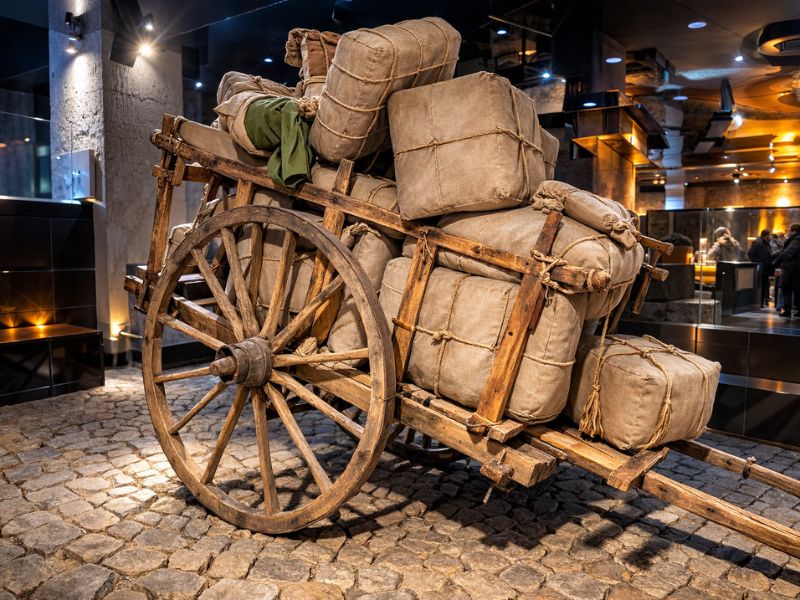
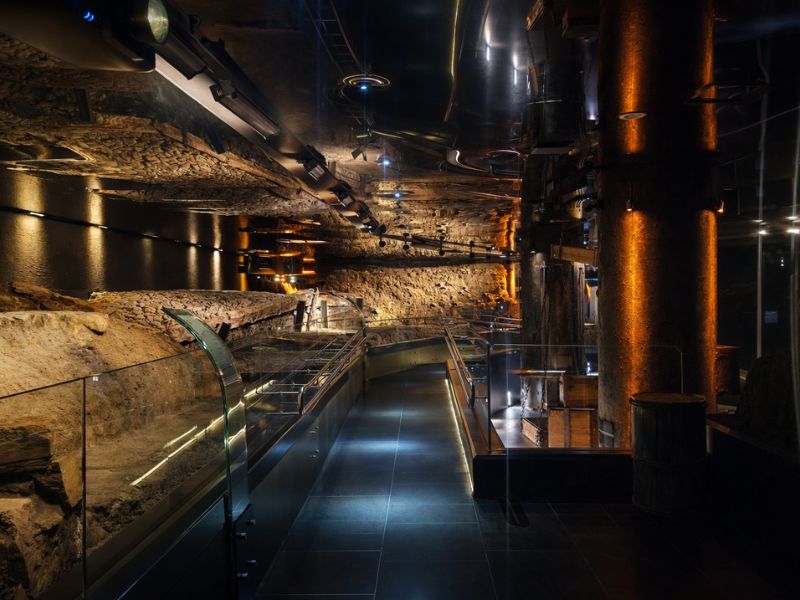
Located beneath the Main Market Square, the Rynek Underground Museum offers a unique opportunity to explore Krakow at a level that is normally hidden from view. The exhibition is built around original archaeological remains, allowing you to walk through preserved fragments of the medieval city.
The museum was created after extensive excavations carried out in the early 21st century, which revealed layers of streets, market stalls, and everyday objects dating back to the Middle Ages. Instead of removing these findings, the space was transformed into a modern underground exhibition.
Inside, you will find a combination of authentic relics and multimedia displays that help reconstruct life in medieval Krakow. Interactive installations, sound effects, and visual projections are used to present trade, craftsmanship, and daily routines in a way that is accessible and engaging.
One of the most distinctive aspects of the museum is the contrast between the historic remains and the contemporary presentation. Glass walkways allow you to look directly at the original structures below, while digital elements provide additional historical context.
Visiting the Rynek Underground Museum adds another dimension to exploring the Old Town, offering a deeper understanding of how the city developed over centuries – quite literally beneath your feet.
Practical tip: Entry is limited to specific time slots, so booking in advance is recommended, especially during peak tourist seasons.
Located in the centre of the Main Market Square, the Cloth Hall is one of the most iconic buildings in Krakow and a lasting symbol of the city’s medieval trading power. Its origins date back to the 13th century, when Krakow became an important stop on international trade routes.
The building was originally designed as a covered market where merchants sold cloth, spices, silk, leather, and other valuable goods brought from across Europe and beyond. Over time, it evolved into a key commercial hub, connecting Krakow with cities such as Venice and Istanbul.
The current form of the Cloth Hall reflects a Renaissance redesign from the 16th century, giving it its distinctive arcaded façade and elegant proportions. The long central hall is lined with stalls that continue the trading tradition, now offering souvenirs, amber jewellery, handicrafts, and local products.
Above the market level, you will find a branch of the National Museum, showcasing 19th-century Polish art. The upper gallery provides a quieter contrast to the busy atmosphere below and offers insight into the country’s cultural heritage.
Walking through the Cloth Hall today is less about shopping and more about experiencing continuity – a place where commerce has existed for centuries in almost the same location. It remains one of the most recognisable and frequently visited landmarks in Krakow.
Practical tip: The stalls inside often sell similar products, so it is worth walking through the entire hall before making a purchase to compare quality and prices.
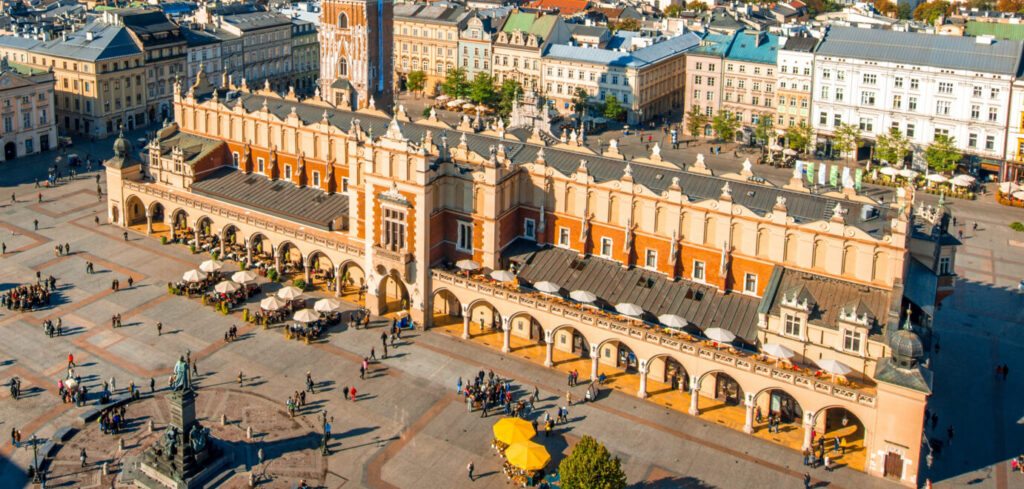
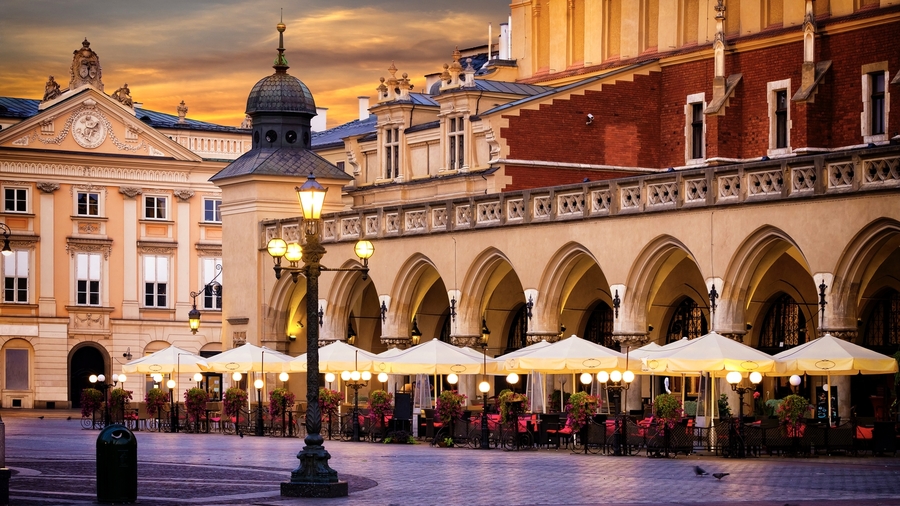
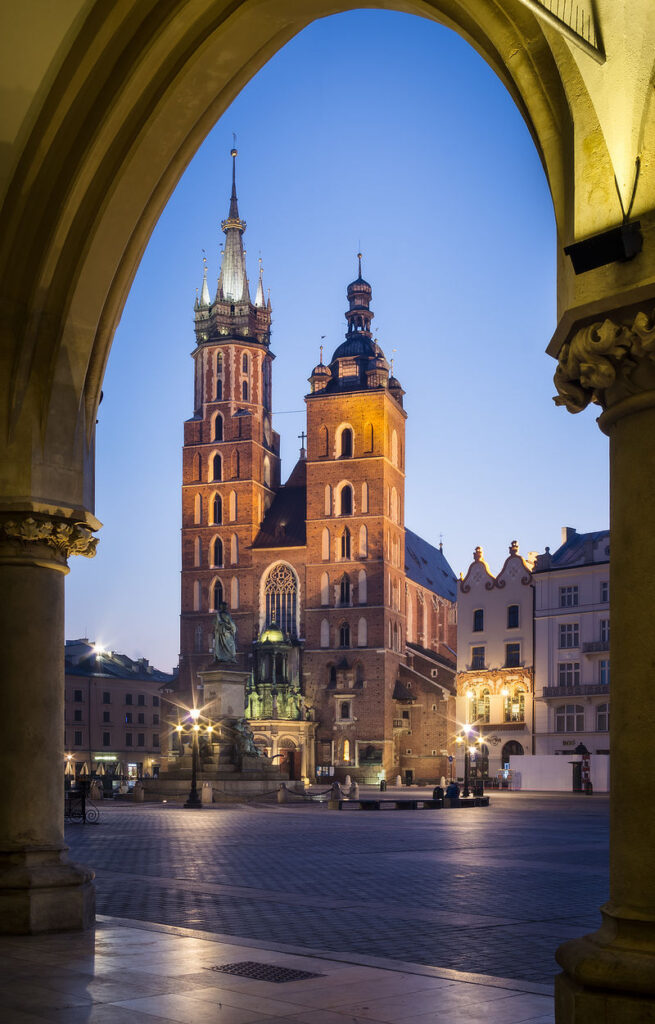
Located in the heart of the Old Town, Main Market Square is the central square of Krakow and one of the largest medieval market squares in Europe. Laid out in 1257, it has served as the city’s main gathering place for centuries and remains the focal point of everyday life.
The square is surrounded by historic townhouses, palaces, and churches that reflect different architectural styles and periods. At its centre stands the Cloth Hall, a Renaissance building that once functioned as a key trading hub along European merchant routes. Today, it houses souvenir stalls, handicrafts, and an art gallery on the upper floor.
Main Market Square is also home to several of Krakow’s most important landmarks. On one side, you will find St. Mary’s Basilica with its distinctive towers, while nearby stands the Town Hall Tower – the only remaining part of the former city hall. Underground, the Rynek Underground Museum reveals archaeological layers of the medieval city.
Throughout the year, the square hosts major events, including seasonal markets, cultural festivals, and public celebrations. In winter, it transforms into one of the most popular Christmas markets in Central Europe, while in warmer months it becomes a lively space filled with cafés, street performers, and visitors.
Spending time here allows you to experience Krakow’s atmosphere in a natural way – whether sitting at a café, walking between historic landmarks, or simply observing the rhythm of the city. It is often the starting point for exploring the Old Town and beyond.
Practical tip: If you want to take photos or explore more comfortably, visit early in the morning before the crowds arrive, or later in the evening when the square is beautifully illuminated.

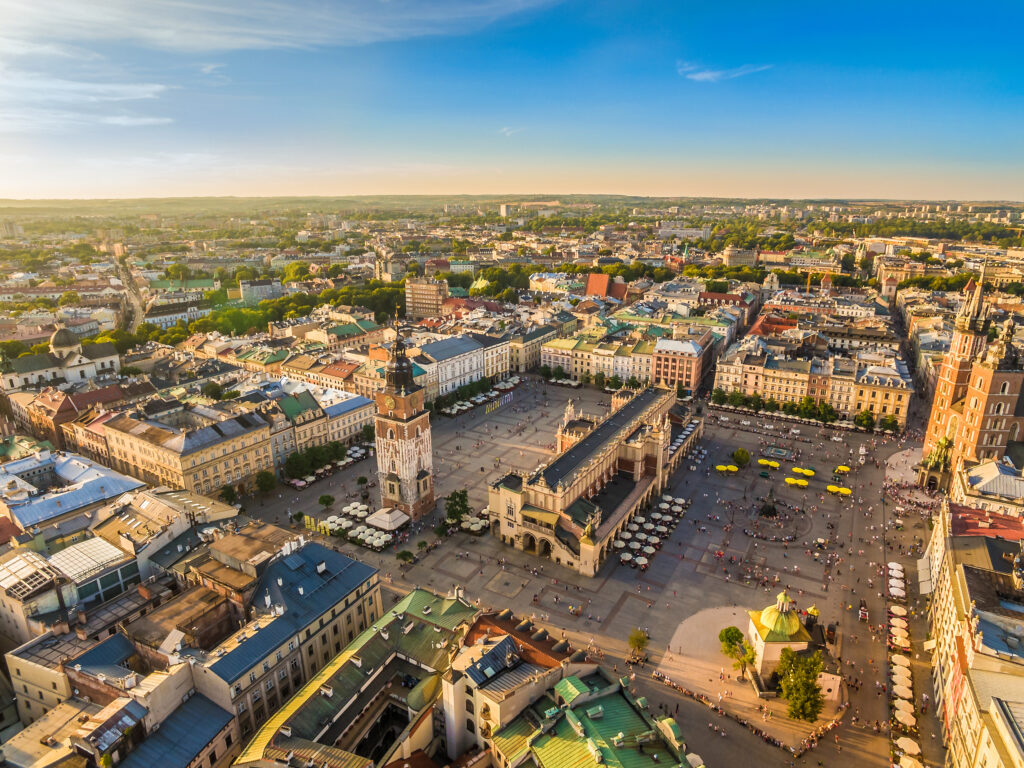
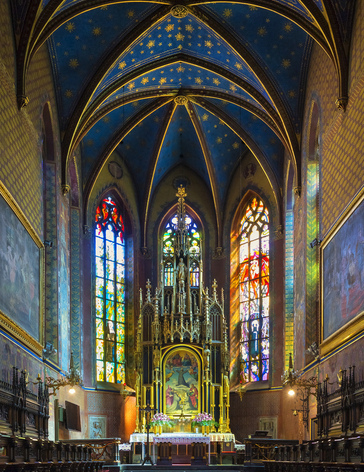
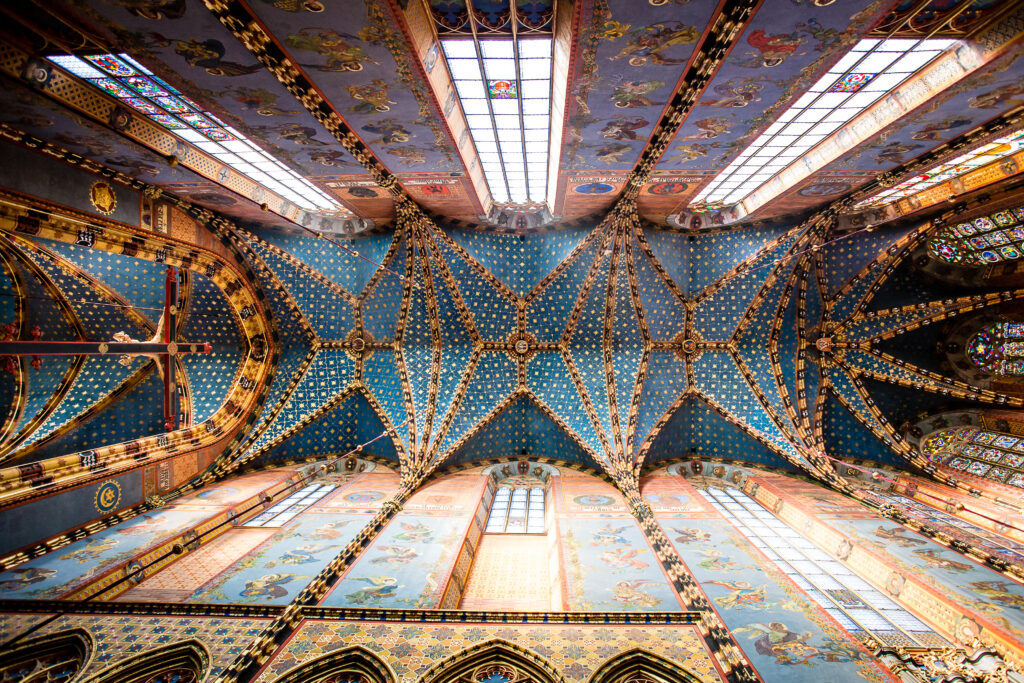
Located on the Main Market Square, St. Mary’s Basilica is one of the most recognisable landmarks in Krakow. Its two uneven towers and distinctive Gothic form make it impossible to miss.
The church dates back to the 14th century and has played an important role in the city’s history ever since. Inside, you will find one of the most impressive works of medieval art in Europe – the wooden altarpiece created by Veit Stoss.
Every hour, a trumpet signal known as the Hejnał Mariacki is played from the taller tower. The melody ends abruptly, commemorating a legendary watchman who was interrupted while warning the city of an attack.
Visiting the basilica is a good way to understand both the artistic heritage and traditions of Krakow. It is also one of the key stops when exploring the Old Town.
Practical tip: The entrance to the church is located from the side of the square, not directly from the main front façade.