Looking for the best day trip from Krakow? From historic sites and underground wonders to mountain landscapes and family attractions, there are many unforgettable places you can visit within a day from the city.
Beyond Krakow – Day Trips & Escapes
Auschwitz-Birkenau
One of the most important memorial sites in Europe, preserving the history of the former Nazi concentration and extermination camp Auschwitz-Birkenau.
Auschwitz-Birkenau is one of the most important memorial sites in Europe and one of the most meaningful places to visit in Poland. The former German Nazi concentration and extermination camp is preserved today as a Memorial and Museum, visited by people who want to better understand the scale of the Holocaust and Nazi crimes.
This is not a typical sightseeing stop. For most visitors, it is a serious and emotional experience, and it is best approached with enough time, the right expectations, and respect for the character of the place.
Auschwitz I and Birkenau
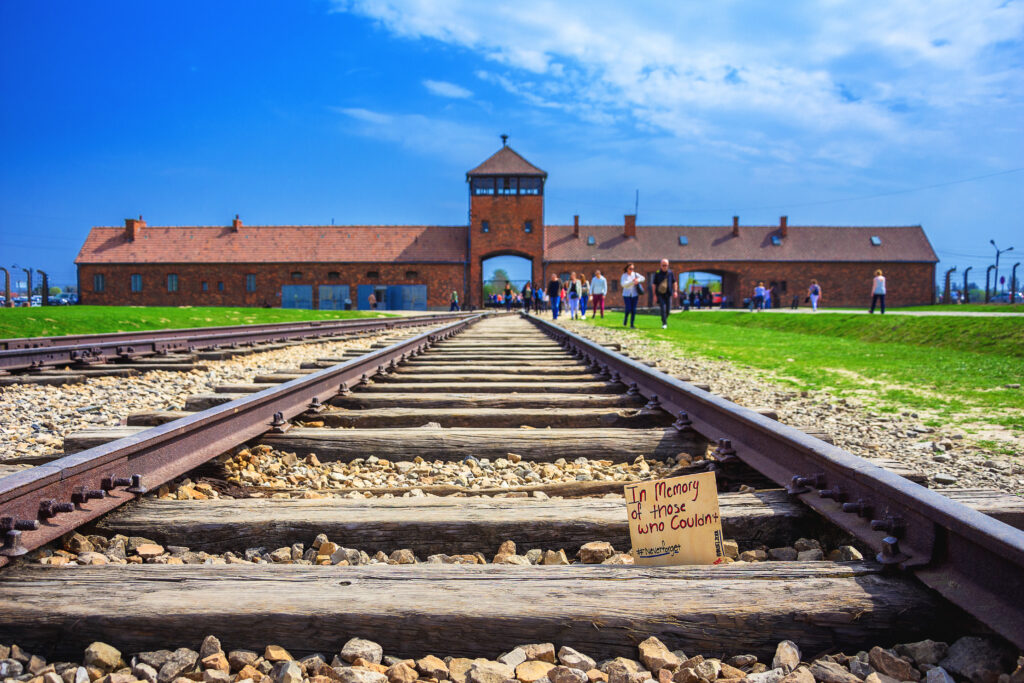
A visit includes two main parts: Auschwitz I and Auschwitz II-Birkenau. Auschwitz I is the original camp, with the brick barracks, main exhibitions, and some of the best known historical spaces. Birkenau is much larger and more open, with the railway tracks, wooden barracks, ruins of crematoria, and the vast scale that makes the site so overwhelming.
Seeing both parts matters. Auschwitz I gives more historical context, while Birkenau shows the size of the camp and the reality of mass deportation and extermination. Together, they create a fuller understanding of the site.
How to visit
Auschwitz-Birkenau can be visited either by booking directly through the official system or by joining an organised tour, for example from Krakow. Both options are valid. The best choice depends on whether you prefer to arrange everything yourself or have transport and timing handled for you.
For many first time visitors, a guided visit is the better option. It gives structure and helps explain what you are seeing, which matters in a place where historical context is essential. Independent visits can also work well, especially if you already know the history or prefer a quieter pace.
Visiting from Krakow
Auschwitz-Birkenau is one of the most popular day trips from Krakow. Many visitors choose organised tours because they combine transport with the visit itself, while others prefer to travel independently and manage the day on their own.
Either way, it is worth treating this as the main focus of the day. The site is large, the visit takes several hours, and moving between Auschwitz I and Birkenau is part of the experience.
What to expect on site
This is a physically larger visit than many people expect. You will spend a lot of time walking, and much of the route, especially in Birkenau, is outdoors. Comfortable shoes and weather appropriate clothing make a real difference.
It is also important to remember that this is a place of remembrance, not a standard tourist attraction. The atmosphere is quiet and serious, and visitors are expected to behave with respect.
Is it suitable for children?
Auschwitz-Birkenau is generally not recommended for children under 14. For older teenagers, the visit can be important and meaningful, but for younger children many families decide that the subject is too difficult.
This depends on age, sensitivity, and how much historical context the child already has, but it is worth thinking about carefully before planning the visit as a family outing.
Practical tip: For a first visit, the easiest and clearest option is usually a guided visit with enough time for both Auschwitz I and Birkenau. Do not try to squeeze it between other attractions.
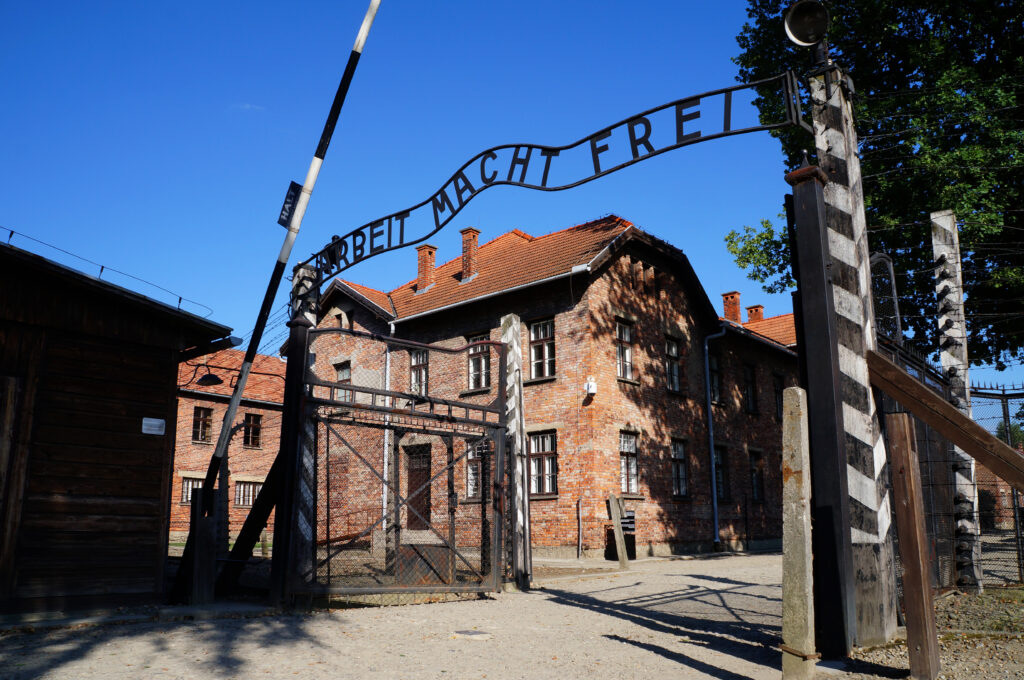
Main gate to nazi concentration camp of Auschwitz Birkenau with train railGates to Auschwitz Birkenau Concentration Camp
Wieliczka Salt Mine
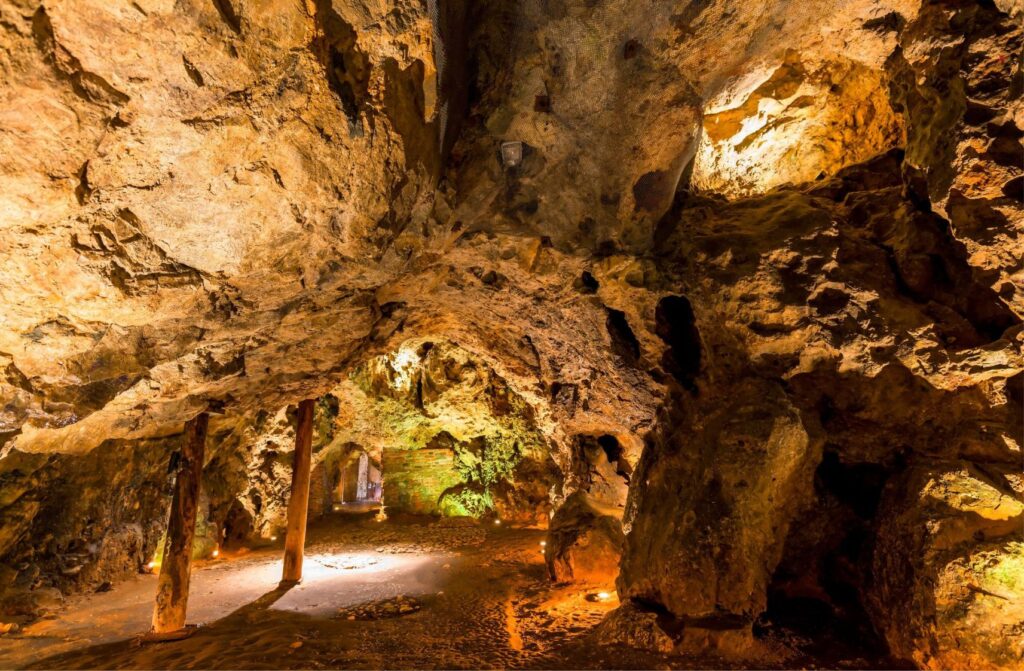
Wieliczka Salt Mine is one of the most famous attractions near Krakow and one of the most distinctive underground heritage sites in Europe. Located just outside the city, it is best known for its chambers carved in salt, underground lakes, historic mining corridors, and the spectacular St Kinga’s Chapel. For many visitors, it is one of the easiest and most rewarding day trips from Krakow.
What makes Wieliczka special is that it is not simply an old mine turned into a museum. It is a historical site shaped over centuries by miners who created not only tunnels and chambers, but also chapels, sculptures, and decorative elements in salt. UNESCO describes the wider property as one of the oldest royal industrial undertakings of its type in Europe, with mining here dating back to the 13th century.
The standard Tourist Route is the best choice for most visitors. According to the official Wieliczka site, the route is about 3.5 km long, takes around 2 to 3 hours, reaches a depth of 135 metres, and keeps a steady underground temperature of 17 to 18°C. It is a substantial visit rather than a quick stop, but it is still manageable for most people.
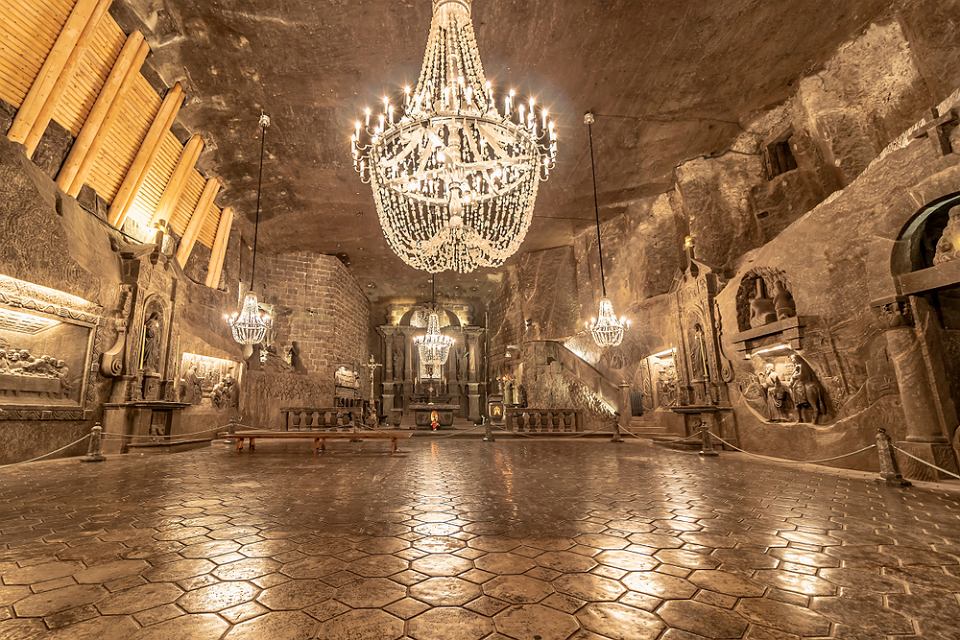
Inside, the biggest highlight for many people is St Kinga’s Chapel, one of the most impressive underground spaces in Poland. The route also includes saline lakes, large chambers, traces of old mining technology, and exhibits explaining how salt was extracted and transported in the past. That combination of history, engineering, and atmosphere is what makes the mine feel much richer than a standard sightseeing attraction.
Wieliczka works especially well for visitors who want something different from churches, squares, and city walks. It is one of those places that feels both historical and visually memorable, and it appeals even to people who are not usually interested in industrial heritage. Because the route is underground and highly structured, it also works well in cooler weather or on days when you want a more organised visit outside Krakow. This is an inference based on the official route format, duration, and indoor underground conditions.
One thing worth remembering is that the visit is more physical than some people expect. The official site notes that there are more than 800 steps on the Tourist Route. It does not require above-average fitness, but comfortable shoes definitely help.
Practical tip: If this is your first visit, choose the Tourist Route, wear comfortable shoes, and bring a light layer even in summer. The mine is cool underground, the route is long, and the stairs are part of the experience.
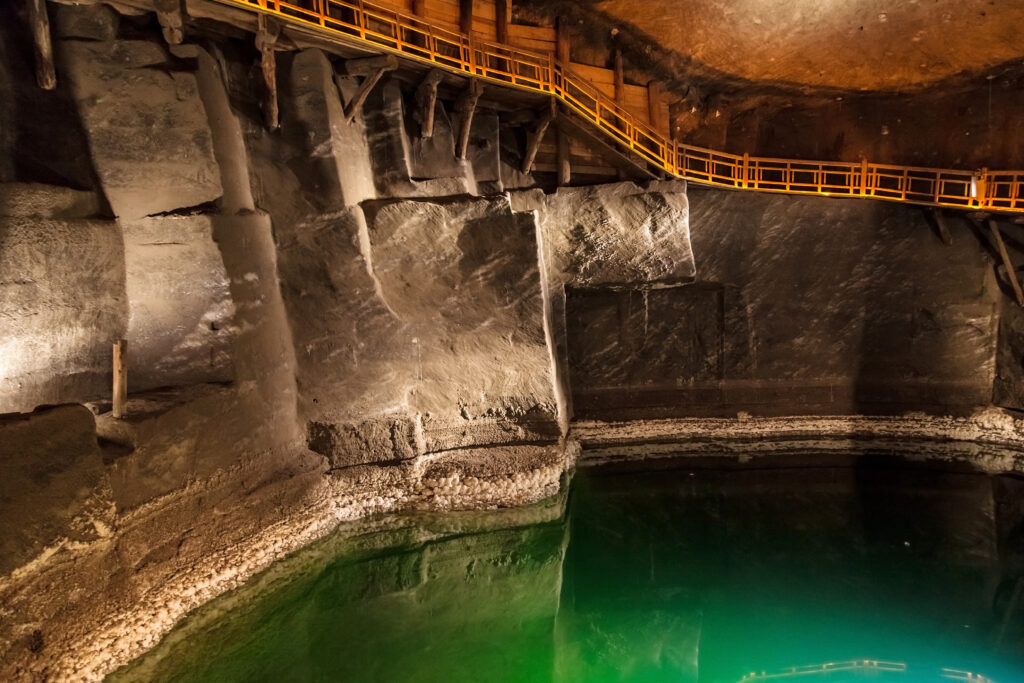
Underground lake in WieliczkaSt Kinga’s Chapel
Zakopane and the Tatras
Zakopane works best when you treat it as a mini guide in three parts: the town itself, the Tatras, and the thermal baths nearby. That is the real essence of the destination. You come here for mountain atmosphere, easy access to famous trails, local highlander culture, and the kind of day that can end in warm thermal water. Official tourism materials describe Zakopane as the highest town in Poland and one of the main gateways to the Tatras.
Zakopane as a town
Zakopane is worth seeing even before you go hiking. The centre is built around Krupowki, the town’s main promenade, full of shops, restaurants, and mountain resort energy. It is the most obvious place to feel the atmosphere of Zakopane, especially for first time visitors. Nearby, Gubalowka gives you one of the easiest panoramic views over the town and the Tatra range, which is why it remains one of the classic stops even for people who are not planning a full mountain hike.
This is also the side of Zakopane where regional culture is easiest to notice. Wooden architecture, highlander motifs, smoked cheeses, and busy streets all belong to the place just as much as the mountains do.
Easy and popular Tatra trails
You do not need to start with difficult summit routes to enjoy the Tatras. For many visitors, the best first experience comes from choosing an easier and more popular trail.
Chocholowska Valley is one of the most classic options. It is known for its wide valley scenery, easy route, and especially for the crocuses that bloom in spring on its clearings. Official Zakopane materials also note that it is the only place in the Polish Tatras where dogs are allowed on the main route and one of the two routes accessible to cyclists, up to the shelter on Chocholowska Clearing.
Koscieliska Valley is another very popular choice. It gives you that proper Tatra feeling without requiring a difficult hike, which is why it works so well for first time visitors and casual walkers.
Strazyska Valley is a good shorter option if you want a relatively easy walk with mountain scenery and a waterfall feel to the route. It is one of the most approachable choices close to Zakopane itself.
Morskie Oko is longer and more demanding in terms of time, but still technically straightforward, which is why it remains one of the most famous routes in the region. For many visitors, it is the most recognisable mountain destination near Zakopane.
Oscypek and local food
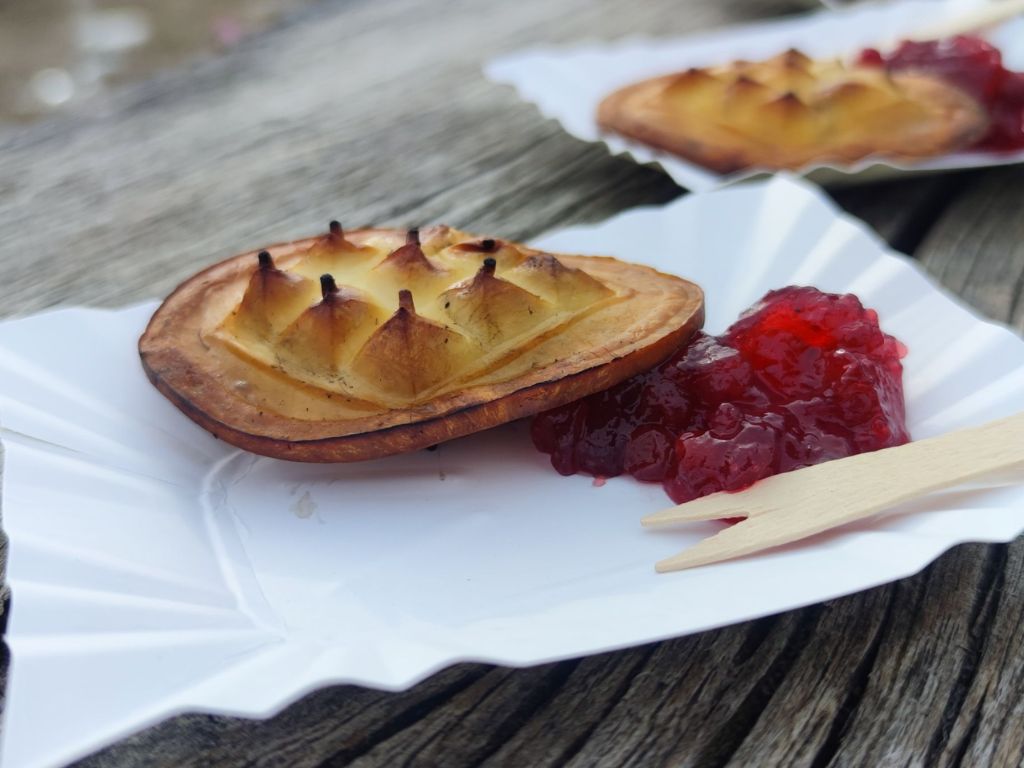
No short guide to Zakopane feels complete without oscypek. It is the most famous local cheese of Podhale, made from sheep’s milk and protected under the EU Protected Designation of Origin system. Official Polish government sources list oscypek among protected regional products, and Zakopane’s tourism materials note that visitors can taste authentic oscypek and zentyca thanks to the traditional sheep grazing culture still present in the Tatras.
For a visitor, this matters because oscypek is not just a snack sold on the street. It is one of the clearest local symbols of the region. Trying it in Zakopane is part of the experience in the same way that walking Krupowki or seeing the mountains is.
Thermal baths near Zakopane
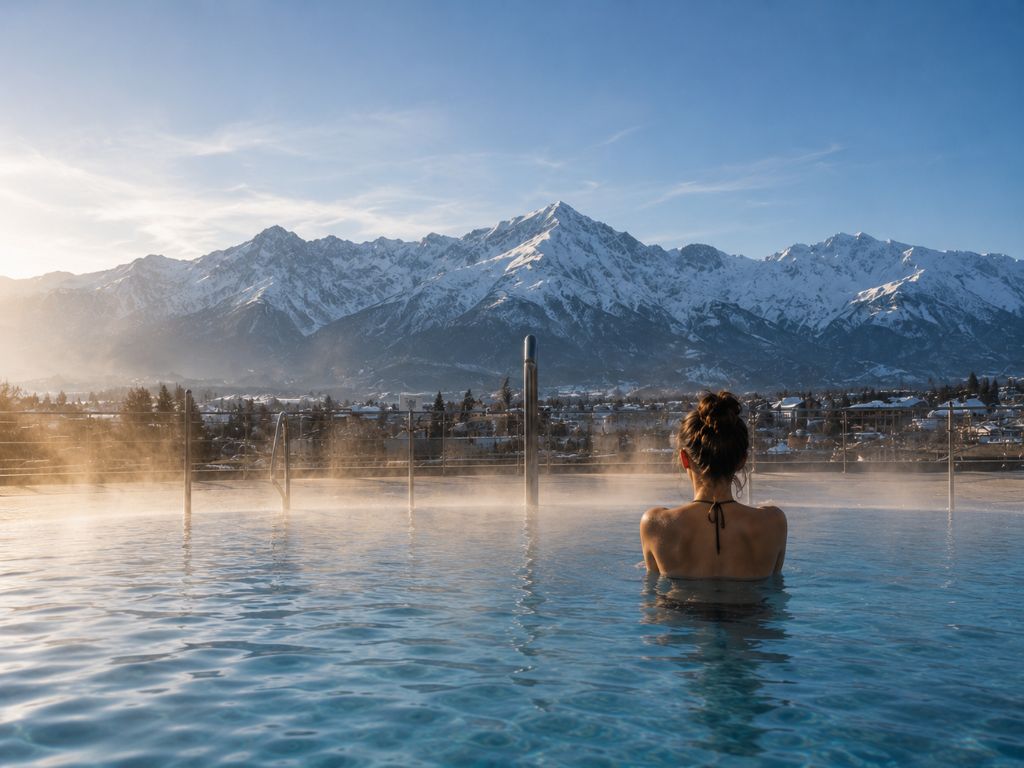
The third part of the Zakopane experience is the thermal baths. They are one of the main reasons the area works so well for families, couples, and mixed groups. You can spend part of the day walking in the mountains and end it in hot pools with mountain views. That combination is one of the most popular reasons people choose Zakopane for a day trip or short break.
The best known option is usually Chocholowskie Termy, while Bukovina Thermal Baths and Terma Bania are also well known choices in the wider area. They differ in size and style, but together they shape the more relaxed side of the Zakopane region.
The essence of Zakopane
The essence of Zakopane is simple: town atmosphere, mountain access, and thermal relaxation. Start with the town and the view, choose one popular and realistic trail, try oscypek, and leave the thermal baths for the end of the day. That is usually a much better first experience than trying to do too much at once.
Practical tip: For a first visit, the most balanced plan is Krupowki or Gubalowka, one easy Tatra route such as Chocholowska or Koscieliska Valley, and thermal baths later in the day. That gives you the real feel of Zakopane without making the trip too rushed.
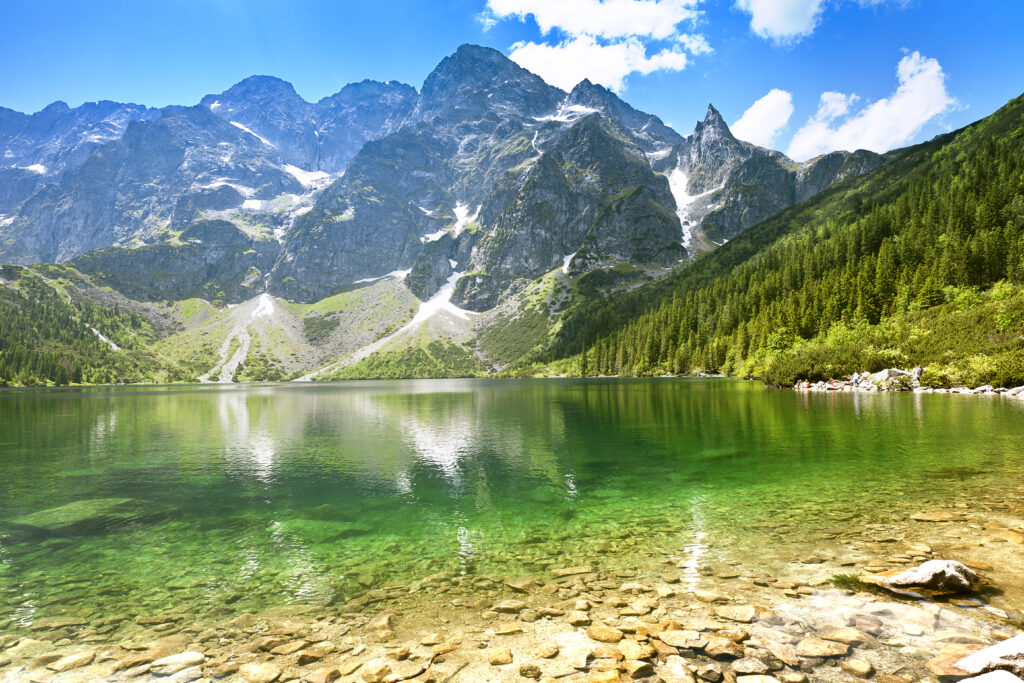
Gubalowka – view on panorama of Tatras at sunset, Poland.‘Morskie Oko’ Lake in Tatra Mountains. Poland
Wadowice
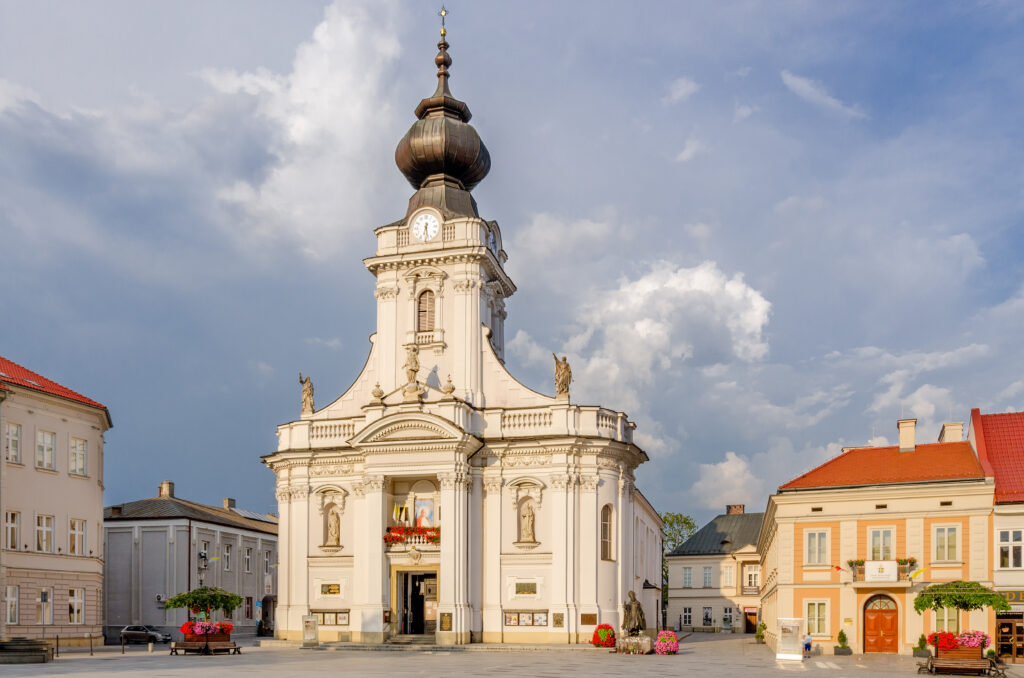
Wadowice is best known as the hometown of St John Paul II, but it works well as more than a single-theme stop. It is a small town with a pleasant market square, an important basilica, the Pope’s family home museum, and one of the most famous local desserts in Poland – kremowka, often called the “papal cream cake.” Official Wadowice materials also present the town as a good base for short walks and local cultural routes.
The town and its main sights
The natural starting point is the Market Square, where the atmosphere feels much calmer than in Krakow. This is also where you find the Basilica of the Presentation of the Blessed Virgin Mary, the church where Karol Wojtyla was baptised, received First Communion, and served as an altar boy. Nearby stands the Family Home of John Paul II, now a biographical museum dedicated to his life. These places form the core of most visits and are also part of the official Karol Wojtyla’s Foot Trail through the town.
Why people come here
For many visitors, Wadowice is above all a place connected with the early life of John Paul II. The local tourist materials build much of the town’s identity around that story, and the walking trail linking the main related places is one of the easiest ways to explore it. At the same time, Wadowice feels more approachable and less formal than a major pilgrimage centre, which is part of its appeal.
Kremowka
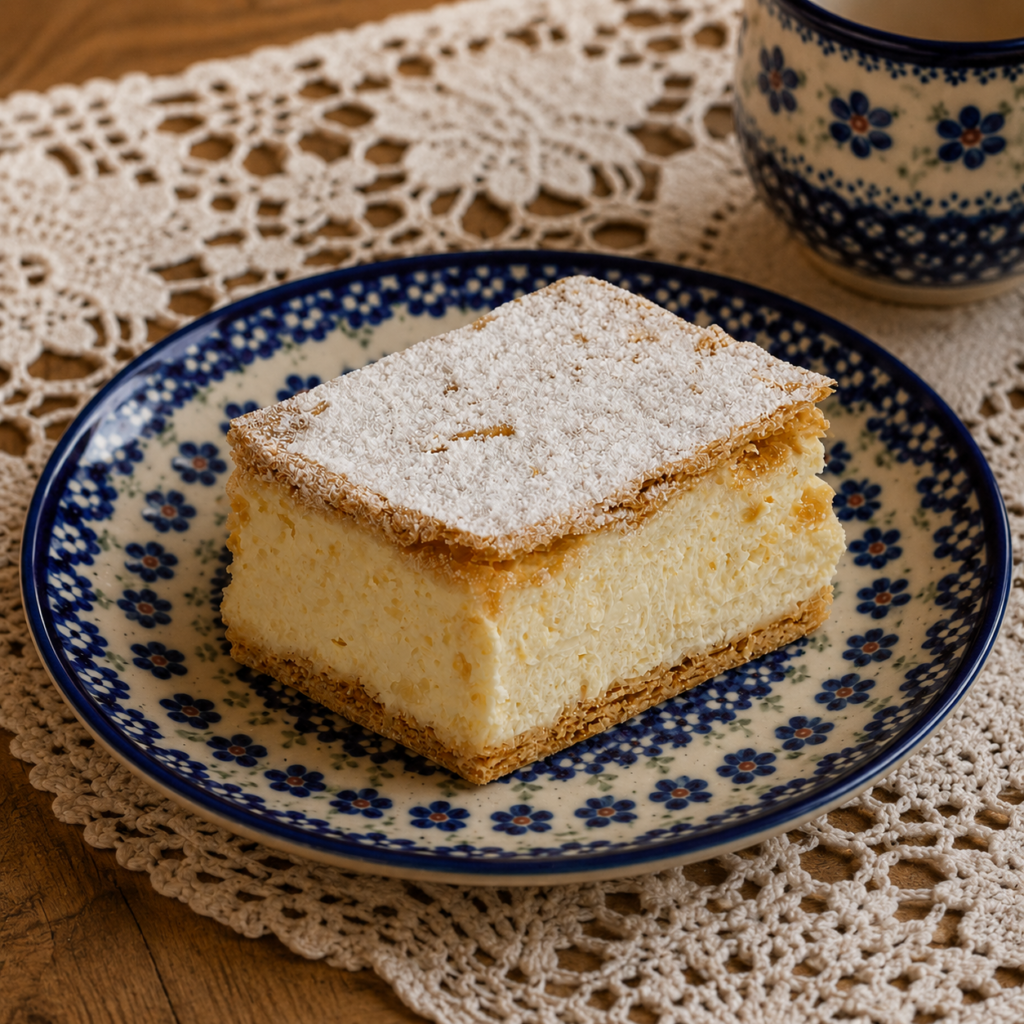
No short guide to Wadowice feels complete without kremowka. The cream cake became closely associated with the town after John Paul II recalled that he and his friends used to go for cream cakes after their final exams. That memory turned kremowka into the best known culinary symbol of Wadowice, and today trying one is part of the standard visitor experience.
Why Wadowice works as a day trip
Wadowice is a good choice if you want something smaller, calmer, and easier to explore than a full city day. The main sights are close enough to each other that the visit feels simple and walkable, and the mix of religious heritage, small-town atmosphere, and local food gives it a clear identity without needing a long itinerary.
Practical tip: The best version of Wadowice is simple – start in the Market Square, visit the basilica and the Family Home Museum, then finish with kremowka in one of the local cafes.
Wadowice, birthplace of Karol Wojtyla, pope John Paul II, Minor Basilica of the Presentation of the Blessed Virgin Mary. Lesser Poland province.Traditional papal cream cake
Energylandia
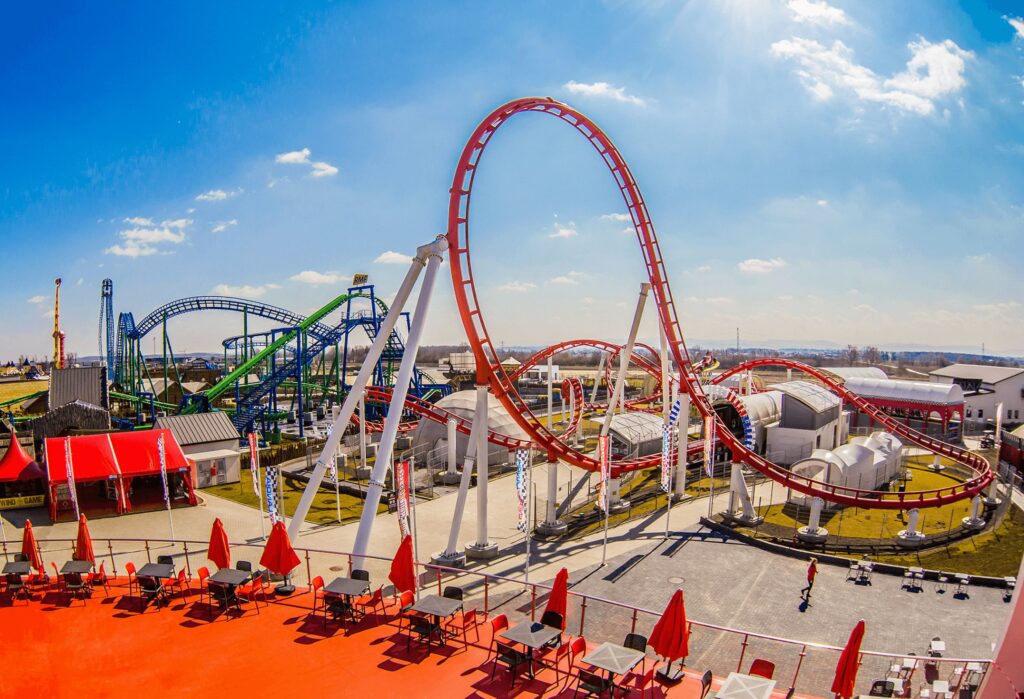
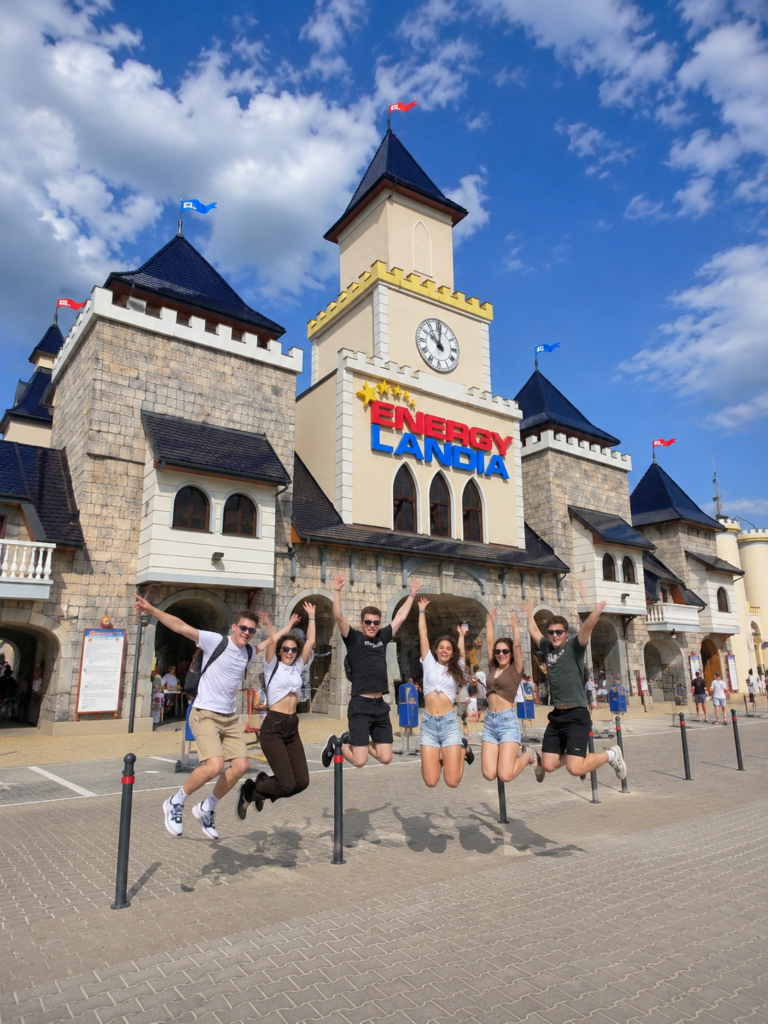
Energylandia is the biggest amusement park in Poland and one of the most popular day trips from Krakow for families, teenagers, and anyone looking for something more active than classic sightseeing. It is located in Zator, around 50 km from Krakow, and the park’s official materials describe it as a large theme park designed for all age groups.
What makes Energylandia especially appealing is its scale. The official park description currently lists 133 attractions across 90 hectares, which makes it much more than a small regional amusement park. It works well both for visitors focused on big roller coasters and for families with younger children.
The park is divided into themed zones, including Fairytale Land, Family Zone, Extreme Zone, Water Park, Dragon Zone, Aqualantis, and Sweet Valley. That variety is one of the reasons it suits mixed groups so well – some people come mainly for major coasters, while others prefer gentler rides, water attractions, or family areas.
For many visitors, the biggest draw is the roller coaster selection. Energylandia is especially well known for headline rides such as Hyperion, Zadra, and Speed, but even without focusing on specific coasters, the park stands out for having a very broad mix of thrill rides, family attractions, and summer water fun.
This is usually best treated as a full day trip, not a quick stop. The official calendar also shows that opening hours vary by season and special events, with some summer dates running longer than standard park days.
Practical tip: If you are planning to go, check the calendar before your visit. Energylandia runs different seasonal events and opening hours, so the experience can vary quite a lot depending on the date.
The largest amusement park in Poland, offering rollercoasters, family attractions, water zones and entertainment for all ages.Group of friends jumping and posing for a photo in front of the main entrance to Energylandia amusement park in Poland.
Pieniny Mountains, Dunajec Rafting, Szczawnica, and Redyk
The Pieniny are one of the most rewarding mountain regions for a day trip from Krakow if you want scenery, local culture, and a few classic attractions that fit naturally together. The essence of the area is quite simple: the mountains, the Dunajec River Gorge, Szczawnica, and the shepherd tradition known as redyk.
Pieniny Mountains
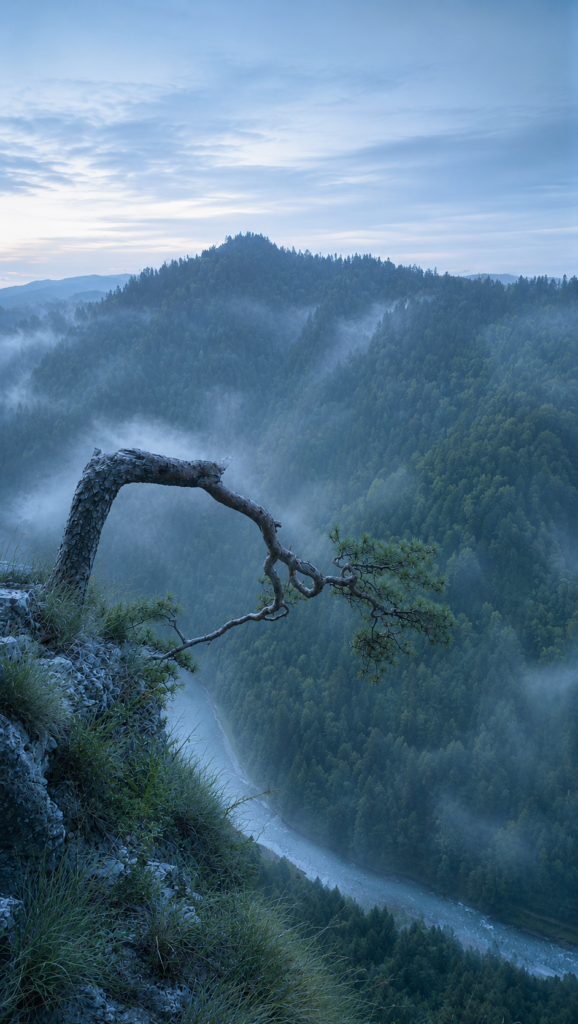
The Pieniny are smaller and more accessible than the Tatras, which is exactly why so many visitors enjoy them. The region is best known for limestone peaks, river gorges, and scenic viewpoints rather than for difficult high mountain hiking. One of the best known landmarks is Trzy Korony, often treated as the signature peak of the range and visible during the Dunajec rafting route.
This is a good destination if you want mountain views without the more demanding atmosphere of the Tatras. The landscape feels dramatic, but the trip itself is usually more relaxed and easier to combine with other stops. This is an inference based on the way official and regional tourism sources present the Pieniny mainly through rafting, viewpoints, and accessible sightseeing.
Dunajec Rafting
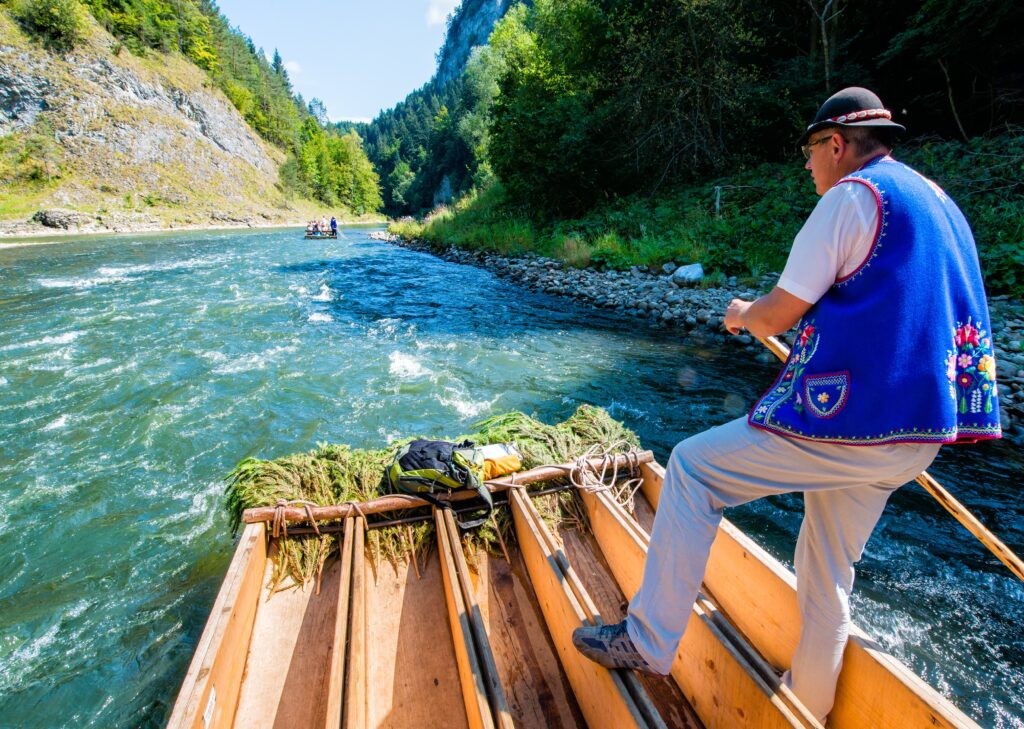
The biggest classic attraction in the region is rafting down the Dunajec River Gorge. Regional tourism materials describe it as one of the most characteristic experiences in the Pieniny and note that the route runs through sharp bends between steep limestone cliffs in the Pieniny National Park. The tradition of rafting here goes back more than 200 years.
For many visitors, this is the most memorable part of the trip because it combines scenery with very little physical effort. Traditional rafting is done on wooden boats operated by local rafters in regional dress. One commonly described route runs from the Sromowce area to Szczawnica, takes about 2 hours 15 minutes, and another longer version continues to Kroscienko in about 2 hours 45 minutes. Other rafting operators also describe the main gorge section as roughly 15.5 to 18 km long, depending on the exact format and endpoint.
Szczawnica
Szczawnica is the natural town base for the Pieniny and one of the best places to combine mountain scenery with a slower resort atmosphere. Regional tourism materials describe it as a spa and active tourism centre, and it is strongly linked with the Dunajec rafting tradition. One official tourism source notes that the rafting route to Szczawnica is 18 km long and operates from April to October.
What makes Szczawnica appealing is that it works well even if you are not planning a full mountain hike. It is the kind of place where you can arrive after the rafting, walk around town, enjoy the mountain setting, and still feel that you have seen the region properly. This is an inference based on its official positioning as a spa and active tourism centre closely tied to the rafting route.
Redyk
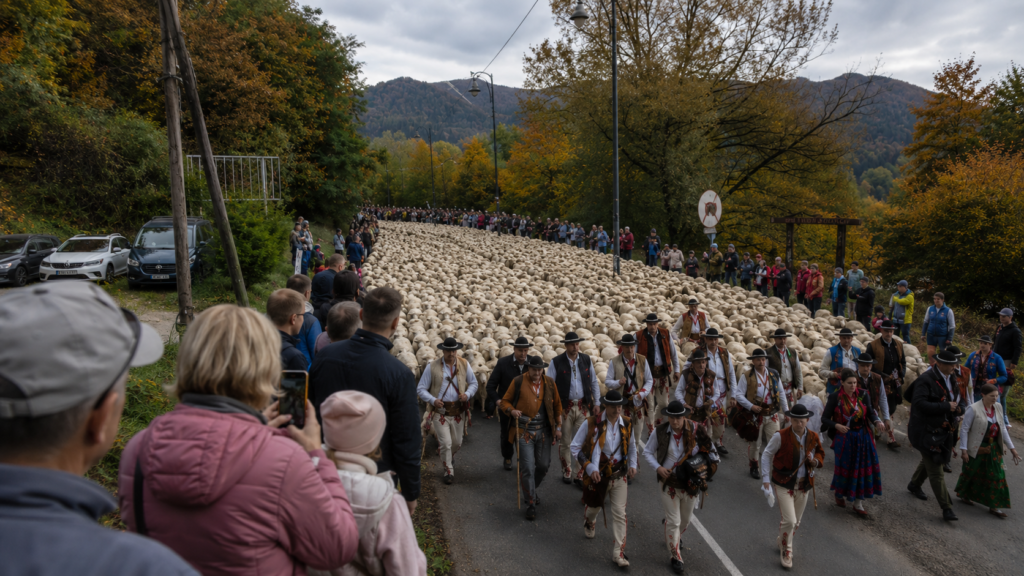
If you want a more cultural side of the Pieniny, redyk is the tradition to know. Redyk is the ceremonial movement of sheep connected with the shepherding calendar, and in Szczawnica it has grown into one of the best known local folk events. The official Szczawnica information page describes Redyk Jesienny as the largest autumn redyk in Poland and presents it as a celebration of Pieniny Highlander customs and pastoral traditions. For 2026, the official Szczawnica page lists it on 10-11 October.
This matters because it adds something beyond landscape. The Pieniny are not only about views and rafting – they are also about living local traditions, music, dress, shepherd culture, and regional identity. If your visit matches the dates, redyk is one of the most distinctive events you can see in the area.
Why this trip works so well
The reason this region works so well for visitors is that everything fits together naturally. The Pieniny give you the scenery, Dunajec rafting gives you the classic experience, Szczawnica gives you the town atmosphere, and redyk gives you the local tradition. You do not need to choose between nature and culture here – the whole appeal is that they come together in one trip. This is an inference drawn from how official and regional tourism sources consistently present the region through these exact elements.
Practical tip: If you want the clearest first experience of the region, build the day around Dunajec rafting and Szczawnica, then add the broader Pieniny landscape around it. If your trip falls in October, check whether it coincides with Redyk Jesienny in Szczawnica.
Famous pine tree on Sokolica peak overlooking the Dunajec River Gorge in Pieniny National Park, Poland.Traditional sheep grazing procession during the autumn redyk in Szczawnica in the Pieniny Mountains.
Dunajec raffting
Czestochowa
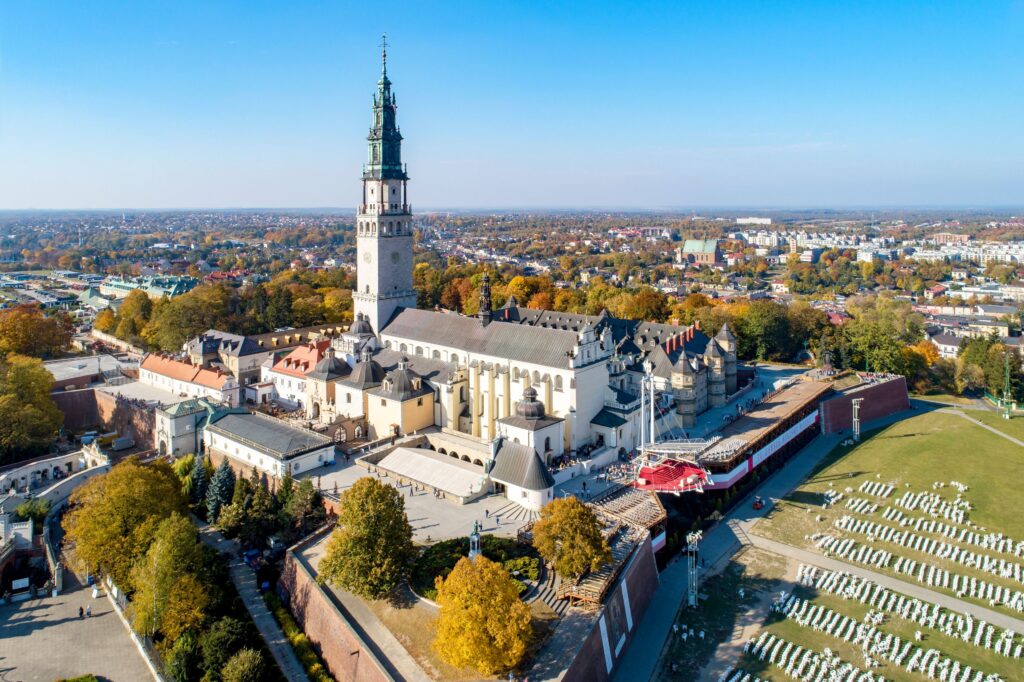
Czestochowa is one of the most important pilgrimage destinations in Poland, but it also works as a worthwhile day trip for visitors interested in history, religion, and a calmer city atmosphere. The town is closely identified with Jasna Gora, the Pauline monastery and sanctuary that attracts millions of pilgrims and tourists. The official city website presents Jasna Gora as the main highlight, but also notes that there is more to see in the city beyond the monastery itself.
Jasna Gora
The main reason most people come to Czestochowa is Jasna Gora. It is one of the most important Marian sanctuaries in Europe and the spiritual centre of the city. The official sanctuary website describes it as a major pilgrimage site, while the city’s tourism materials point visitors not only to the monastery itself, but also to the Our Lady Chapel, the Basilica, the Treasury, the Tower, the Knights’ Room, the 600th Anniversary Museum, and other parts of the complex.
The Black Madonna
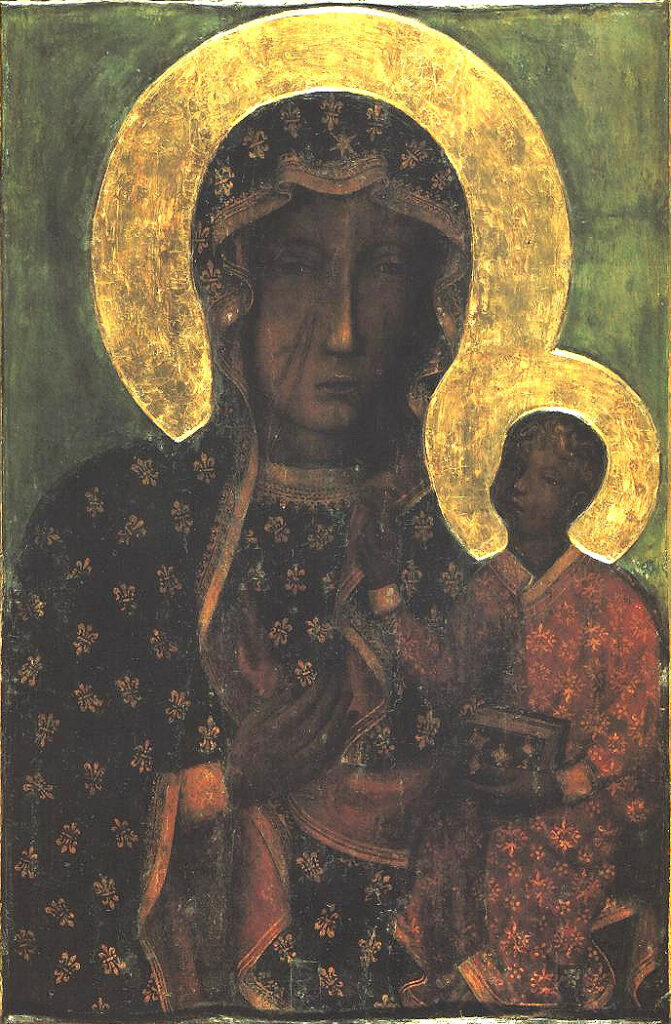
The most famous object in Jasna Gora is the Miraculous Image of Our Lady, widely known as the Black Madonna of Czestochowa. The official Jasna Gora site calls it the sanctuary’s greatest treasure and explains that it was because of this icon that Jasna Gora became one of the largest Marian shrines in Poland. For many visitors, seeing the icon is the central moment of the visit.
What to expect from the visit
A visit to Jasna Gora is usually more than a quick look inside one church. The complex includes religious, historical, and museum spaces, so it can easily take a few hours if you want to see more than just the chapel with the icon. It is also a place of active worship, which means the atmosphere is more solemn and devotional than in a standard tourist attraction.
Why Czestochowa is worth it
Czestochowa is a good choice if you want a destination that feels meaningful rather than busy or entertainment focused. Even for visitors who are not coming for religious reasons, Jasna Gora remains one of those places that helps explain Polish history, identity, and pilgrimage culture in a very direct way. The city’s own tourism materials emphasise both the spiritual importance of the site and the wider historic character of the destination.
Practical tip: If this is your first visit, focus mainly on Jasna Gora rather than trying to turn Czestochowa into a full city break. The monastery complex is the real reason to come, and it is large enough to be the centre of the whole trip.
Poland, Czstochowa. Jasna Góra fortified monastery and church on the hill. Famous historic place and Polish Catholic pilgrimage site with Black Madonna miraculous icon. Aerial view in fallBlack Madonna
Zalipie
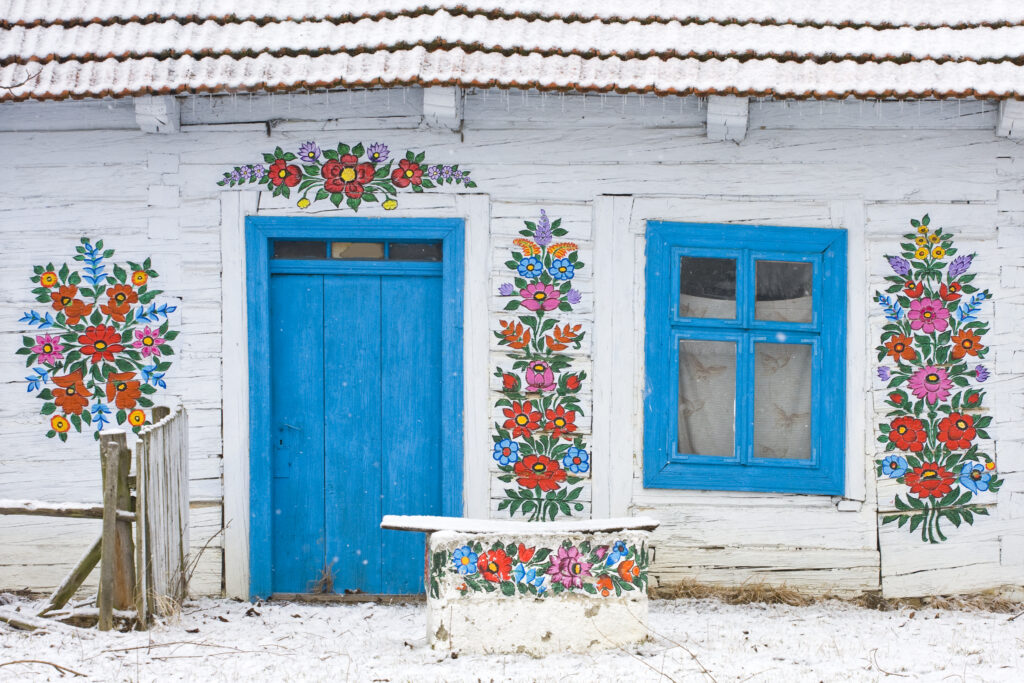
Zalipie is one of the most unusual villages near Krakow and one of the best places to visit if you want something small, local, and visually memorable. It is famous for its tradition of decorating houses, interiors, fences, wells, and everyday objects with hand-painted floral motifs – a custom that reaches back to the 19th century and is still associated with the village today.
What makes Zalipie special is that it does not feel like a single museum attraction. The painted style appears across the village, so the visit is as much about the atmosphere of the place as about one specific building. The tradition has been passed down for generations, often from mother to daughter, and became a defining part of local identity.
The most important stop is Felicja Curyłowa’s Farmstead, now a branch of the Tarnów museum. It is the best known painted household in Zalipie and the main place to see how the floral tradition was used not only on walls, but also on furniture and everyday interiors. Museum information describes Felicja Curyłowa as the most famous Zalipie painter.
If you visit around Corpus Christi, Zalipie becomes especially lively. Every year the village tradition is renewed around that time, and the long-running “Malowana Chata” competition continues to celebrate the painted house custom. Museum information shows the competition still being organised in Zalipie today.
Zalipie works best as a slow, half-day stop rather than a packed sightseeing plan. It is the kind of place where you walk, look closely, and enjoy the details rather than rush from one major landmark to another.
Practical tip: The clearest first visit is to start with Felicja Curyłowa’s Farmstead and then take time to walk around the village itself, because the painted tradition is part of the wider setting, not only the museum site.
A unique village famous for colourful hand-painted houses decorated with traditional floral patterns.
Kalwaria Zebrzydowska
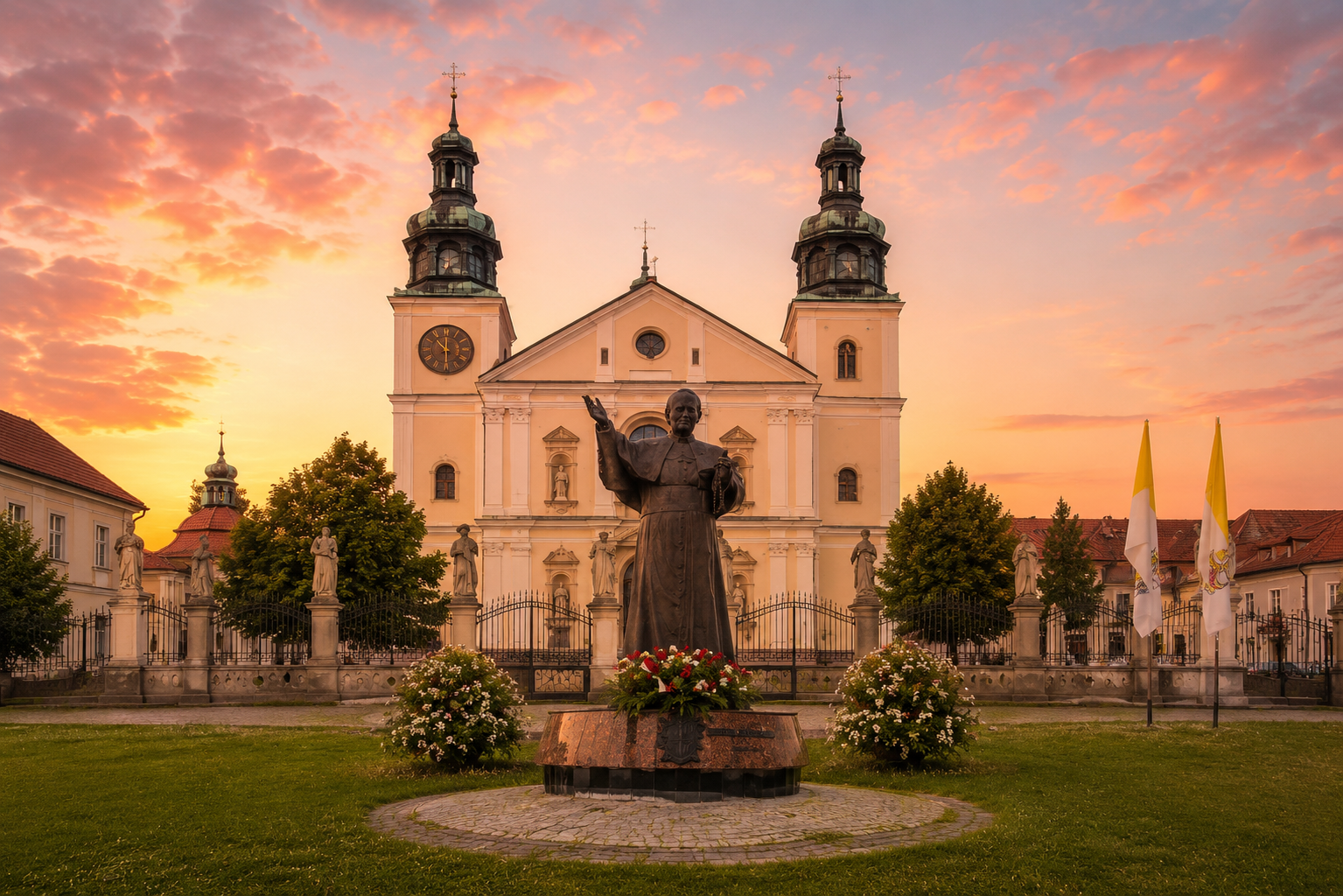
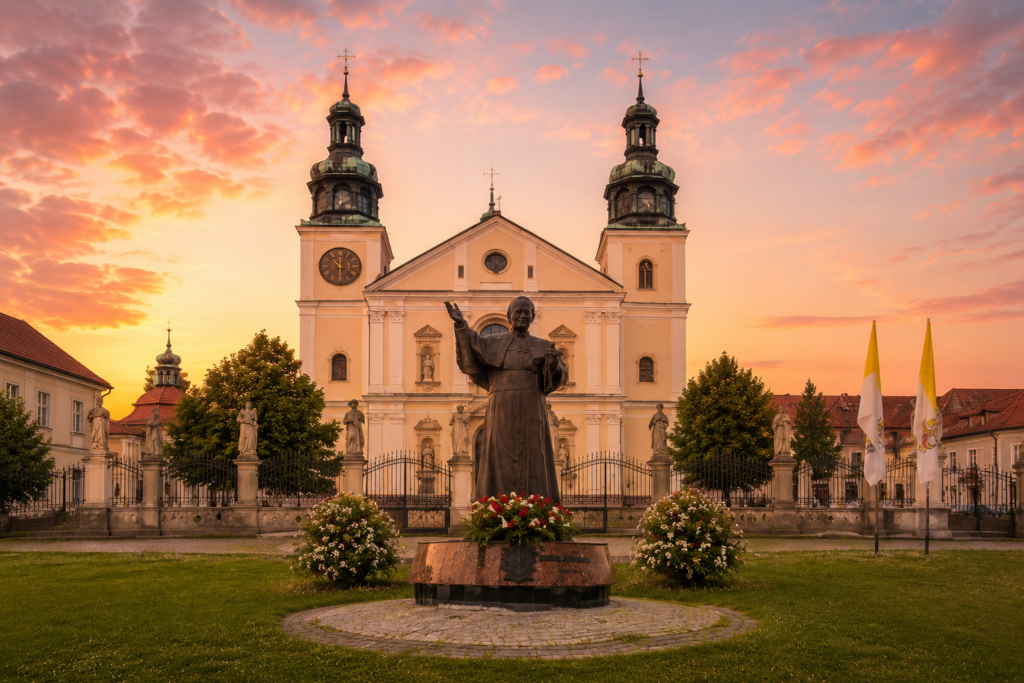
Kalwaria Zebrzydowska is one of the most important pilgrimage destinations in Poland and one of the most distinctive religious sites near Krakow. What makes it special is that it is not just a church or monastery, but a much larger sanctuary landscape made up of the Bernardine monastery, the basilica, and a network of chapels and pilgrimage paths spread across the surrounding hills. UNESCO describes it as a Mannerist architectural and park landscape complex and pilgrimage park dating from the first half of the 17th century.
For most visitors, the heart of the site is the Sanctuary of the Passion and of Our Lady, which has been drawing pilgrims for centuries. The official sanctuary history dates its origins to 1601, when Mikolaj Zebrzydowski founded the first chapel here. Over time, the complex expanded into one of the most important calvaries in Poland and later became a model for similar sites elsewhere.
What makes a visit here especially rewarding is the combination of architecture, landscape, and atmosphere. You can see the church and monastery as the main landmark, but the wider meaning of Kalwaria comes from walking at least part of the surrounding devotional paths. This is why the place feels different from a standard monastery visit – it is designed as a spiritual landscape, not only a single building.
Kalwaria Zebrzydowska is also one of the most important UNESCO sites in Lesser Poland. It was added to the UNESCO World Heritage List in 1999, and UNESCO highlights it as the first large scale calvary built in Poland and an extraordinary testimony of piety and culture. That gives the site importance not only for religious visitors, but also for travellers interested in history, architecture, and cultural heritage.
In practice, this is a very good destination if you want something calmer and more reflective than a busy city attraction. It works well as a half day trip from Krakow, especially for visitors who enjoy meaningful places, historic religious architecture, and walks with a sense of purpose.
Practical tip: Do not limit your visit to the basilica alone. The real character of Kalwaria Zebrzydowska comes from combining the main sanctuary with at least a short walk along the chapel paths on the surrounding hills.
A UNESCO pilgrimage site known for its historic monastery complex and scenic chapels spread across the surrounding hills.
Bochnia Salt Mine
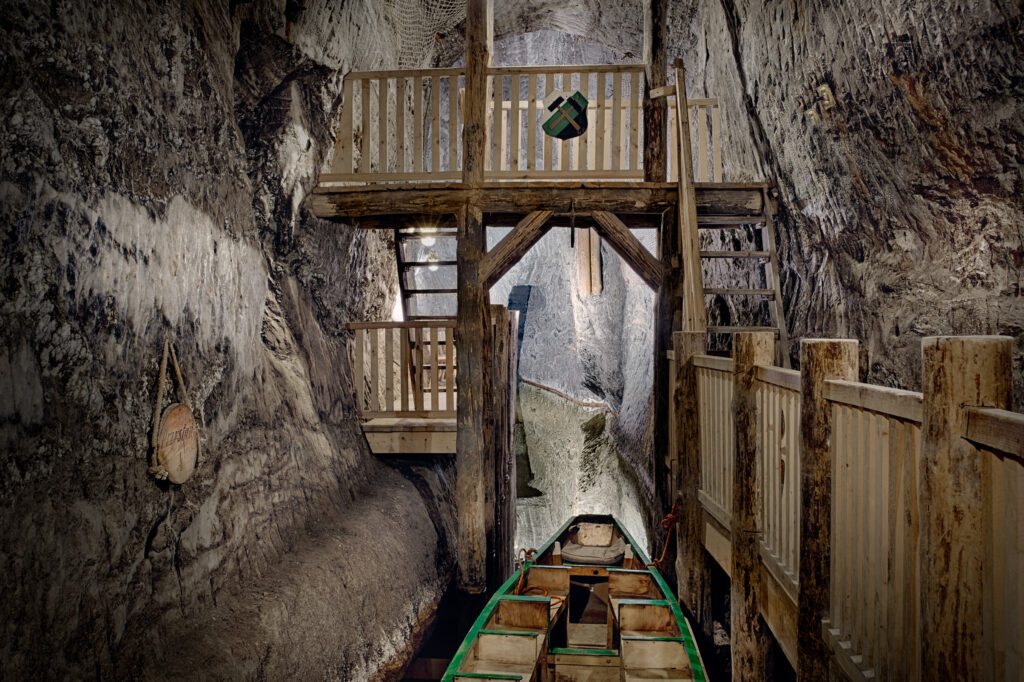
Bochnia Salt Mine is one of the most interesting day trips from Krakow and a very good alternative for visitors who want an underground salt mine experience beyond Wieliczka. It is promoted by the mine itself as the oldest salt mine in Poland, with origins dating back to 1248, and it is part of the UNESCO-listed Wieliczka and Bochnia Royal Salt Mines serial property.
What makes Bochnia stand out is that the visit feels more varied and a little more adventurous than many people expect. The official mine description highlights multimedia displays, an underground train ride, and an optional boat crossing underground, which gives the route a more interactive character than a standard museum style visit.
Bochnia works especially well for visitors who want a historical site that is still very visual and family friendly. The mine presents itself as suitable for both adults and children, and its current visitor information specifically points to attractions such as the train, the boat crossing, and a long underground slide as some of the most memorable parts of the experience.
It is also a practical trip from Krakow. According to the official mine information, Bochnia is located about 40 km east of Krakow, the train journey takes around 45 minutes, and the mine is about a 10 minute walk from Bochnia railway station.
The standard visit is not short, so it is better treated as a proper excursion rather than a quick stop. The mine’s own visitor information says that, depending on the chosen route, the tour lasts 3 or 4 hours.
Practical tip: If you want the most complete first visit, choose a route that includes the multimedia exhibition and the underground boat crossing. Bochnia is also a good option if you are looking for a UNESCO salt mine experience that feels a little quieter and less obvious than Wieliczka.
Bochnia Salt Mine
Silesia – Industrial History and Underground Adventures
Silesia is one of the most distinctive regions in Poland if you want something beyond old towns and castles. It is a place where former mines, workers’ districts, industrial architecture, and underground routes create a very different kind of day trip. The best way to understand it is through the Industrial Monuments Route, the region’s official heritage trail linking major post-industrial sites across Silesia.
What makes this region especially interesting is that it is not only about looking at old industrial buildings from the outside. In Silesia, many of the key attractions take you below ground, into former mines, adits, and historic underground spaces, which makes the visit feel much more immersive than a standard museum stop.
Guido Mine and Queen Luiza
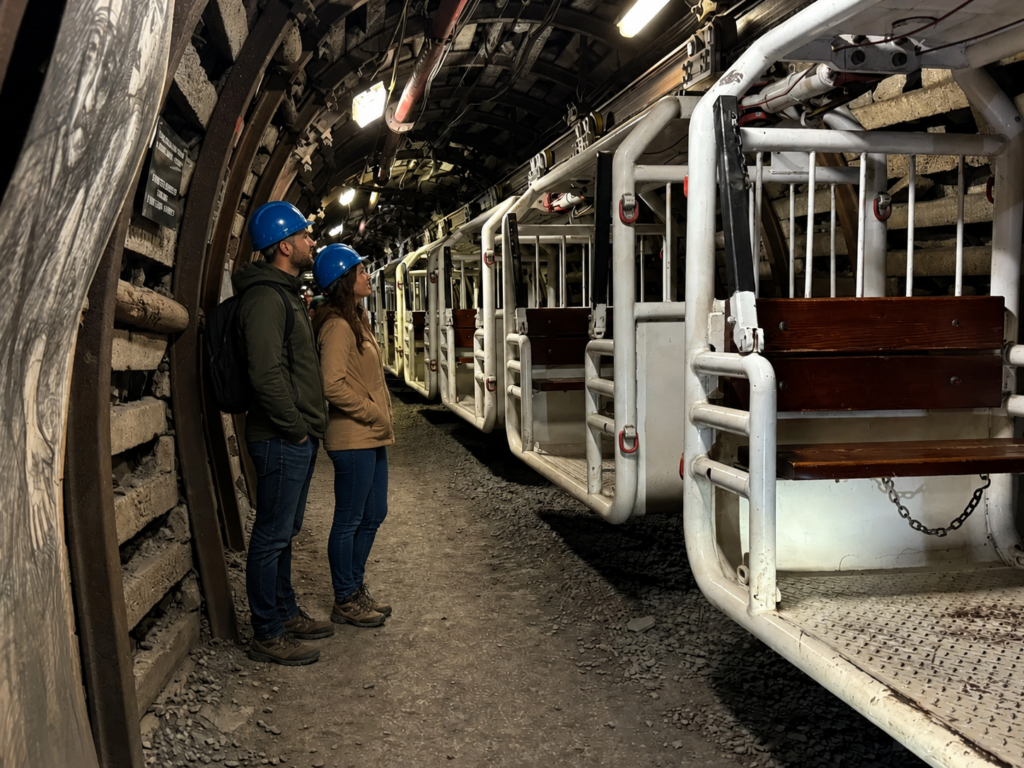
If you want the clearest underground experience, the strongest starting point is Zabrze, where the best known industrial attractions are concentrated. Two of the biggest names are the Guido Mine and the Queen Luiza complex, both presented as major industrial heritage attractions in the region. They are among the places that define Silesia’s reputation for underground tourism.
These sites work well because they combine real mining spaces with a visitor route that still feels atmospheric rather than overly polished. For many travellers, this is the most memorable part of Silesia – going underground and seeing how strongly the region’s identity was shaped by mining.
Historic Silver Mine
Another major underground attraction is the Historic Silver Mine in Tarnowskie Gory, one of the region’s best known heritage sites. It belongs naturally in any Silesia itinerary focused on industrial history and underground adventure, and it adds a slightly different dimension to the mining story than the coal sites of Upper Silesia.
It is a very good choice if you want the trip to feel broader than one mining town. Together with Zabrze, it helps show that Silesia’s industrial history is not one story in one place, but a much larger regional landscape.
Nikiszowiec and workers’ districts
To understand the human side of industrial Silesia, it is worth adding Nikiszowiec in Katowice. Official Katowice tourism materials describe it as one of the most interesting workers’ housing estates in Europe from the turn of the 19th and 20th centuries. It gives the whole industrial story a social and architectural context.
Nikiszowiec is important because it shows that Silesia is not only about mines and machinery. It is also about everyday life, brick workers’ housing, local identity, and the urban world that grew around heavy industry. This is often the part that makes the region feel more complete and less one-dimensional.
Katowice and the modern side of the region
A good Silesia trip does not have to stay only underground. Katowice works well as the modern gateway to the region, and official city tourism materials highlight attractions such as the Silesian Museum and Nikiszowiec among the key places to see. That makes Katowice a useful base if you want to combine industrial heritage with a more contemporary city atmosphere.
This balance is one of Silesia’s strengths. You can spend part of the day in a former mine or industrial site, then move into a city that has clearly reworked its post-industrial identity into something cultural and modern.
Why this trip works
Silesia works best when you treat it as a region of contrasts: underground routes and open city spaces, heavy industry and strong local culture, engineering heritage and surprisingly good architecture. It is one of the most original day trip directions in southern Poland, especially for visitors who want something more unusual than the standard historic route.
Practical tip: If this is your first visit, the easiest and most balanced version is to combine one underground attraction such as Guido or the Silver Mine with Nikiszowiec and a short stop in Katowice. That gives you the real feel of Silesia without trying to see too much at once.
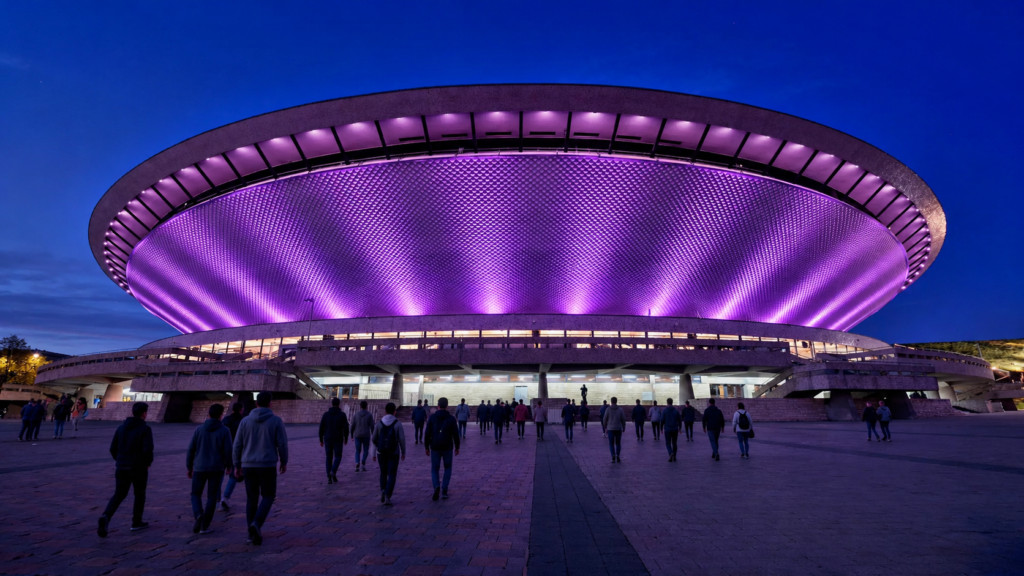
Visitors standing beside the underground mining railway inside Guido Coal Mine in Zabrze, exploring historic tunnels deep below ground.Katowice at night with the illuminated Spodek arena and city lights in the background
Wooden Architecture Route in Malopolska
The Wooden Architecture Route is one of the most distinctive cultural routes in southern Poland and a very good idea for visitors who want something beyond Krakow’s main city sights. Instead of one single attraction, it connects more than 250 wooden buildings and complexes across Małopolska, including churches, Orthodox churches, manor houses, villas, open-air museums, and traditional village architecture.
What makes the route especially interesting is its variety. Some places feel deeply religious and historic, others more rural and atmospheric, and some work best as scenic stops during a day trip. It is one of those routes that gives you a broader sense of the region rather than just one monument.
UNESCO highlights
The best known part of the route is the group of UNESCO listed wooden churches of southern Małopolska. Official tourism and UNESCO materials highlight churches in Powroznik, Binarowa, Debno Podhalanskie, Lipnica Murowana, and Sekowa, while the wider route also includes outstanding wooden Orthodox churches such as Owczary, Kwiaton, and Brunary Wyzne.
These churches are not just beautiful from the outside. UNESCO describes them as exceptional examples of medieval wooden church building traditions, built with the horizontal log technique and closely linked to the cultural landscape of the region.
What else is on the route
The route is not limited to churches. Official Małopolska tourism materials also point to manor houses, spa villas, small town wooden buildings, Chocholow’s traditional village architecture, Zakopane style buildings such as Jaszczurówka and Villa pod Jedlami, and several open-air museums including Wygielzow, Nowy Sacz, Sidzina, Zubrzyca Gorna, Szymbark, and Jurgow.
That is why the route works well not only for art and history lovers, but also for visitors who simply enjoy quiet villages, regional architecture, and places that feel more local than touristy.
Why it is worth it
The Wooden Architecture Route is worth treating as a theme rather than a checklist. Most visitors do not try to “do the whole route.” Instead, they choose one region or combine one or two wooden churches with another nearby attraction, such as Zakopane, the Beskids, or a countryside day trip. That usually works much better than trying to cover too much. This is an inference based on the scale of the route across Małopolska and the range of building types included in official materials.
Practical tip: If this is your first contact with the Wooden Architecture Route, start with one of the UNESCO churches or an open-air museum. They give the clearest and most satisfying introduction without turning the day into too much driving.
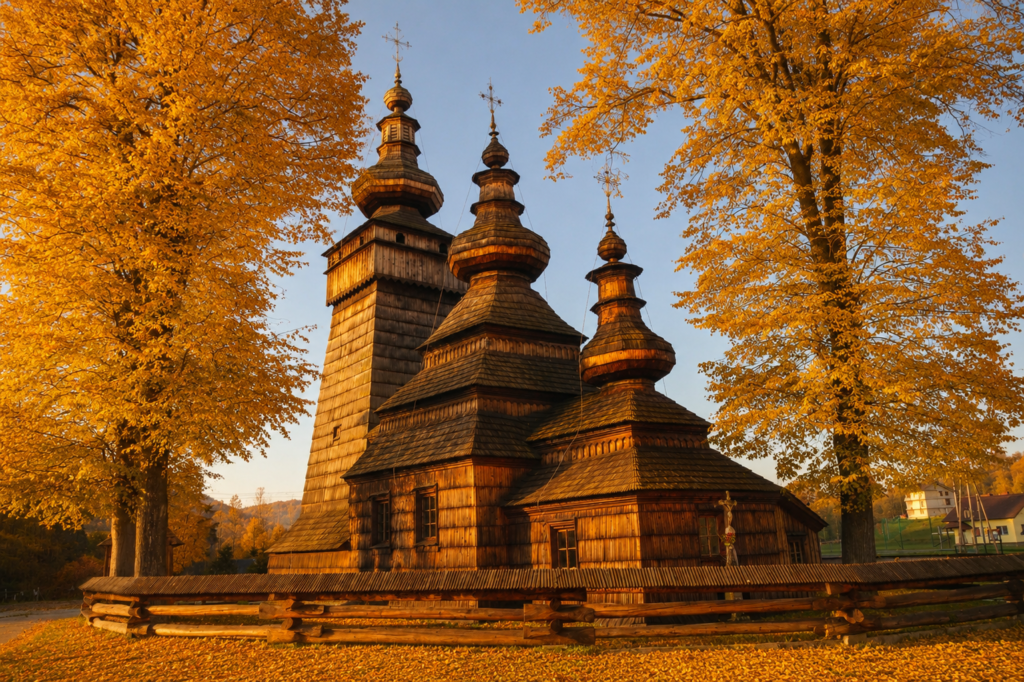
Historic wooden church surrounded by golden autumn trees on the Wooden Architecture Route in southern Poland.
Eagles’ Nests Castles
The Eagles’ Nests Castles are one of the most distinctive sightseeing routes in southern Poland and a very good idea for a day trip beyond Krakow. The route follows the Krakow-Czestochowa Upland and links a chain of medieval strongholds built on high limestone rocks, which is exactly where the name comes from – these castles looked like eagle nests set high above the surrounding landscape. The official Malopolska tourism description calls it one of the oldest and most beautiful tourist routes in Poland, running along defensive strongholds connected with King Casimir the Great.
What makes this route special is that it is not only about castles. The whole experience is built around the Jurassic landscape itself – limestone cliffs, rock formations, valleys, caves, and open viewpoints. That is why the Eagles’ Nests work especially well for visitors who want a mix of history and scenery rather than a single museum stop.
The most important castles to know
For visitors coming from Krakow, one of the most natural starting points is Pieskowa Skala Castle, which stands within the Ojców National Park area and is one of the best preserved and most elegant castles on the route. It gives you a more complete castle experience than many of the ruins further north.
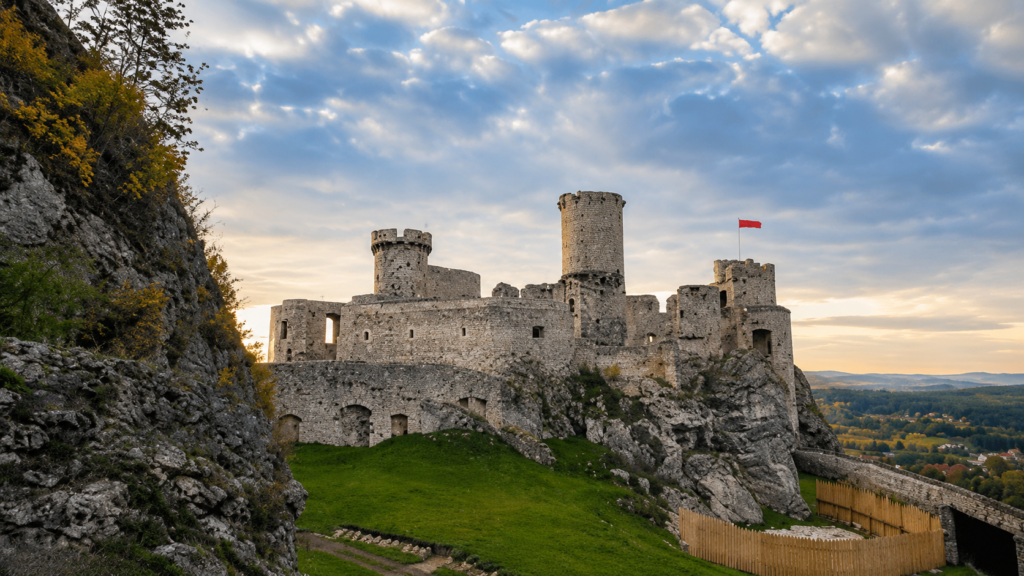
Further along the route, Ogrodzieniec Castle is usually one of the biggest highlights. Malopolska tourism materials describe it as the largest stronghold on the Trail of the Eagles’ Nests, and it is often the most dramatic ruin visitors remember from the whole route.
Two other very popular stops are Bobolice and Mirów. Regional tourism materials describe Bobolice as one of the most famous fortresses on the route, while Mirów is presented as one of the most beautiful monuments on the trail. These two castles are especially often paired together in one outing because of their location and visual appeal.
Near Czestochowa, Olsztyn Castle is another classic stop. Regional tourism materials specifically note that Olsztyn is known above all for the ruins of its once mighty Eagle’s Nest castle from the time of Casimir the Great.
Why the route is worth it
The Eagles’ Nests Castles work well because they do not feel repetitive. Some stops are preserved castles, some are atmospheric ruins, and some are really about the combination of the fortress with the surrounding rocks and landscape. Even if you are not deeply interested in medieval history, the route still works because the scenery itself is part of the attraction.
It is also worth knowing that this is not really a one-stop destination. The full walking route is around 163.9 km, and the cycling route is around 190 km, so most visitors choose just one section or a few castles rather than trying to “do the whole trail” at once.
Practical tip: For a first trip from Krakow, the easiest and most satisfying version is usually Pieskowa Skala plus one bigger ruin such as Ogrodzieniec, or a northern pair such as Bobolice and Mirów. That gives you the feel of the Eagles’ Nests without turning the day into too much driving.
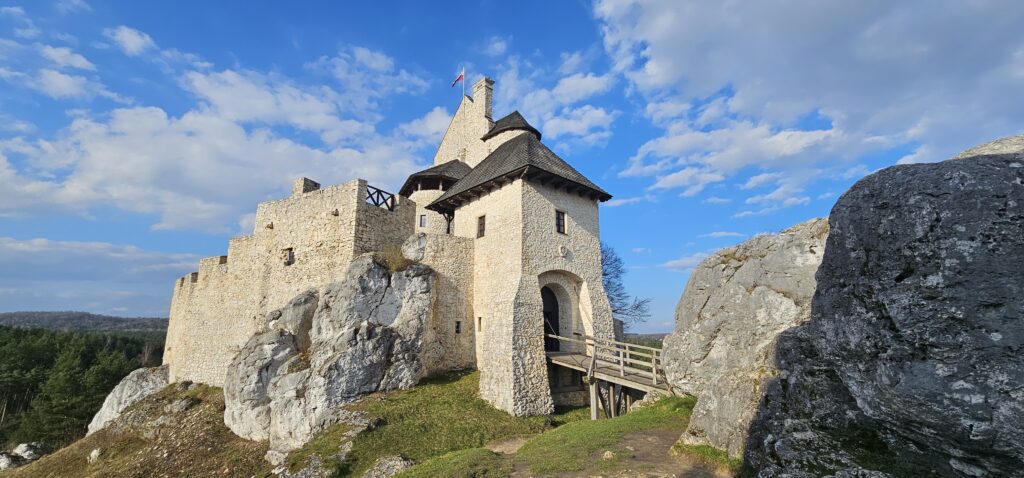
Ruins of Ogrodzieniec Castle on the Trail of the Eagles’ Nests, surrounded by rocky cliffs and dramatic countryside views in southern Poland.Bobolice Castle
Lanckorona
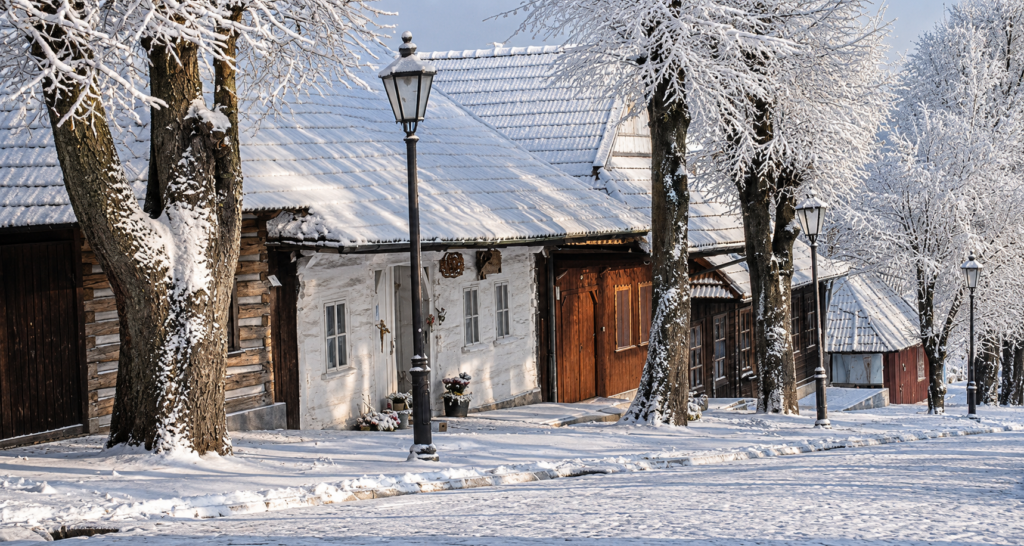
Lanckorona is one of the most atmospheric small destinations near Krakow and a very good choice if you want a slower, more local day trip. Today it is a village, but official Malopolska tourism materials describe it as a former town with a long history, known above all for its steep market square, cobbled streets, and well preserved 19th century wooden houses.
What makes Lanckorona special is not one single monument, but the overall mood of the place. The market square and the streets leading away from it still preserve an old small town character that feels very different from Krakow. It is also known for its artistic, quiet, almost nostalgic atmosphere, with cafes, craft shops, and views over the surrounding hills.
Above the village are the ruins of the Royal Castle in Lanckorona, built in the 14th century by King Casimir the Great on Lanckorońska Mountain. Today, the surviving walls, moat outline, and hilltop setting make it one of the main sights in the area and a good reason to combine a village walk with a short uphill route.
Another place worth noting is the Church of the Nativity of St John the Baptist, founded in 1336 by King Casimir the Great. Together with the market square and the castle ruins, it helps explain why Lanckorona feels more historically layered than many villages of this size.
Lanckorona works best as a calm half day trip rather than a packed sightseeing plan. It is a place for walking, coffee, views, wooden architecture, and a slower rhythm rather than for ticking off a long list of attractions.
Practical tip: The best first visit is simple – start in the market square, wander the wooden streets, then walk up to the castle ruins for the wider view over the foothills.
Snow-covered wooden houses and quiet village street in Lanckorona during winter in southern Poland.
Jura Krakowsko-Czestochowska
Jura Krakowsko-Czestochowska is one of the most scenic regions near Krakow and one of the best directions for a day trip if you want nature, rock formations, caves, and viewpoints rather than a classic city attraction. Its landscape is defined by limestone valleys, white cliffs, isolated rock towers, forests, and open upland views, which give the whole area a very different character from Krakow itself.
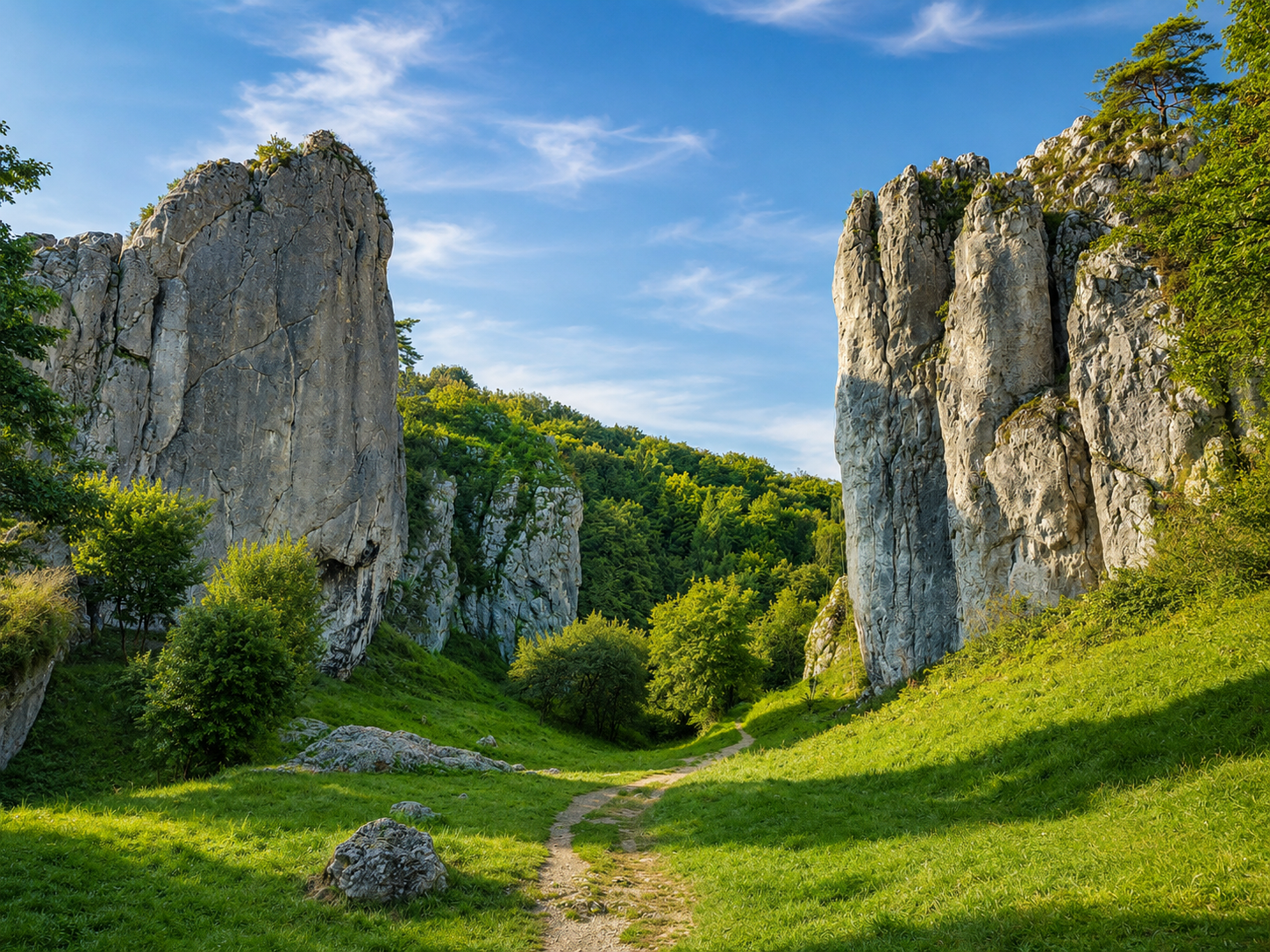
What makes Jura especially attractive is that it is not only about castles, even though many people first associate it with the Eagles’ Nests. In reality, its beauty comes just as much from places like Kobylanska Valley, Bedkowska Valley, Kluczwody Valley, and the wider area around Ojcow, where the landscape feels softer, greener, and more walkable. These valleys are among the most popular nature escapes near Krakow, with limestone walls, quiet trails, and scenery that feels dramatic without requiring a demanding mountain hike.
At the same time, Jura also has a more rugged and panoramic side. Places such as Gora Zborow and Okiennik Wielki show the region at its most striking – full of exposed rock, open views, and unusual limestone forms. Gora Zborow is one of the best known viewpoints in the upland and part of a protected reserve, while Okiennik Wielki is one of the most recognisable rock formations in the region, famous for its large natural opening in the stone.
Another important part of Jura is its strong historical character. The region is heavily marked by old defensive sites, with many remains of castles, fortified settlements, towers, and ruins scattered across the upland. Some of them are well preserved, others survive only in fragments, but together they give Jura a clear sense of being a fortified landscape shaped by both nature and history. That is one of the reasons the area feels richer than a simple countryside destination.
Jura also has a large number of caves, which add another layer to the experience. Some are well known and accessible to visitors, while others are more closely associated with exploration, hiking, or the geological identity of the region. This underground side of Jura matters because it makes the landscape feel deeper and more varied – not only cliffs and valleys, but also hidden spaces inside the limestone itself.
For many people, Jura is also a paradise for climbers. Official regional tourism sources repeatedly point to the valleys and limestone outcrops of the region as some of the most important climbing areas in southern Poland. That climbing culture is part of the area’s identity and helps explain why Jura feels active, slightly wild, and different from more passive sightseeing destinations. Even if you do not climb, you notice it in the landscape and in the way these rocks are experienced.
This is why Jura Krakowsko-Czestochowska is best understood not as a single attraction, but as a whole region of valleys, rock formations, caves, ruins, and viewpoints. You can come here for an easy walk in a limestone valley, for a more dramatic rocky panorama, or for the atmosphere of a landscape where nature and old fortifications constantly overlap. That variety is exactly what makes Jura one of the most beautiful and rewarding areas near Krakow.
Practical tip: For a first visit, it usually works best to combine one scenic valley, such as Kobylańska or Będkowska, with one stronger viewpoint or rock landmark like Gora Zborow or Okiennik Wielki. That gives you the real feel of Jura without trying to cover too much in one day.
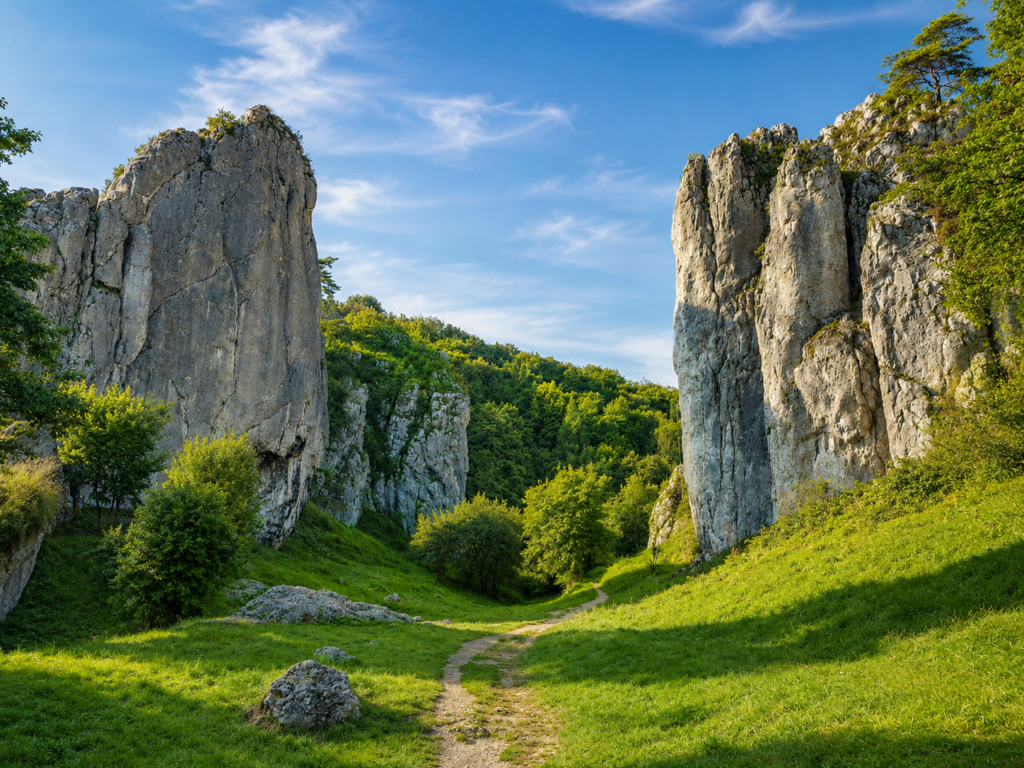
Sunlit limestone cliffs and walking trail in Kobylańska Valley, part of the Kraków-Częstochowa Upland in southern Poland.
Czorsztyn Lake
Czorsztyn Lake is one of the most scenic spots in southern Poland and one of the most rewarding day trip directions if you want mountain views, castles, cycling, and a slower outdoor atmosphere. The reservoir was created by the dam in Niedzica and lies between the Pieniny and Gorce ranges, which is why the setting feels much more dramatic than a typical lakeside stop.
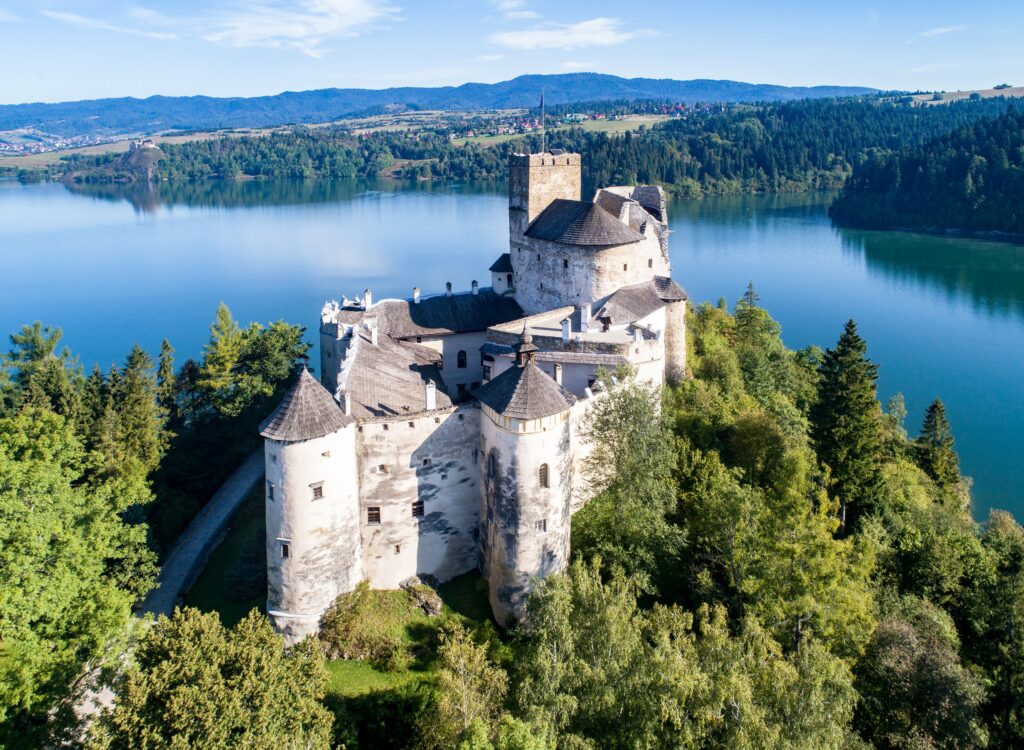
What makes the area special is that the lake is only part of the attraction. On one side you have Niedzica Castle, on the other the ruins of Czorsztyn Castle, and the whole landscape is tied together by viewpoints, ferries, and one of the best known cycling routes in the region. The ruins in Czorsztyn sit above the lake in the Pieniny National Park, while regional tourism materials also highlight ferry links between the two castle sides of the reservoir.
The area is especially popular for cycling thanks to Velo Czorsztyn, the scenic route around the lake. Regional tourism sources describe it as a route with lake panoramas, views toward the Pieniny, Gorce, and even the Tatras in the distance, plus the added attraction of a ferry crossing. That makes the lake feel active and varied rather than just pretty to look at.
It also works very well for a relaxed visit even if you are not cycling. Many people come here simply for the views, a short cruise or ferry crossing, time by the water, and the combination of castles and mountain scenery in one place. That mix is exactly why Czorsztyn Lake feels more complete than a simple reservoir stop.
Practical tip: Czorsztyn Lake is at its best when treated as a small route rather than one single stop – for a first visit, combine one castle, a lakeside walk or ferry crossing, and if possible at least part of the Velo Czorsztyn route
Medieval Niedzica Castle overlooking the lake and mountain landscape in southern Poland near the Pieniny Mountains.
Krynica-Zdroj
Krynica-Zdroj is one of the best known spa towns in southern Poland and one of the strongest choices if you want a mix of mountain atmosphere, promenade life, mineral waters, and easy access to viewpoints. It is often described as one of the classic spa resorts of Malopolska, with a distinctive resort character shaped by elegant guesthouses, green spaces, and the main promenade.
The heart of the town is the Deptak, the promenade area with the Main Pump Room, spa buildings, and the most recognisable resort atmosphere. This is the part of Krynica that feels most classic – walking here is less about one single monument and more about taking in the identity of the town itself.
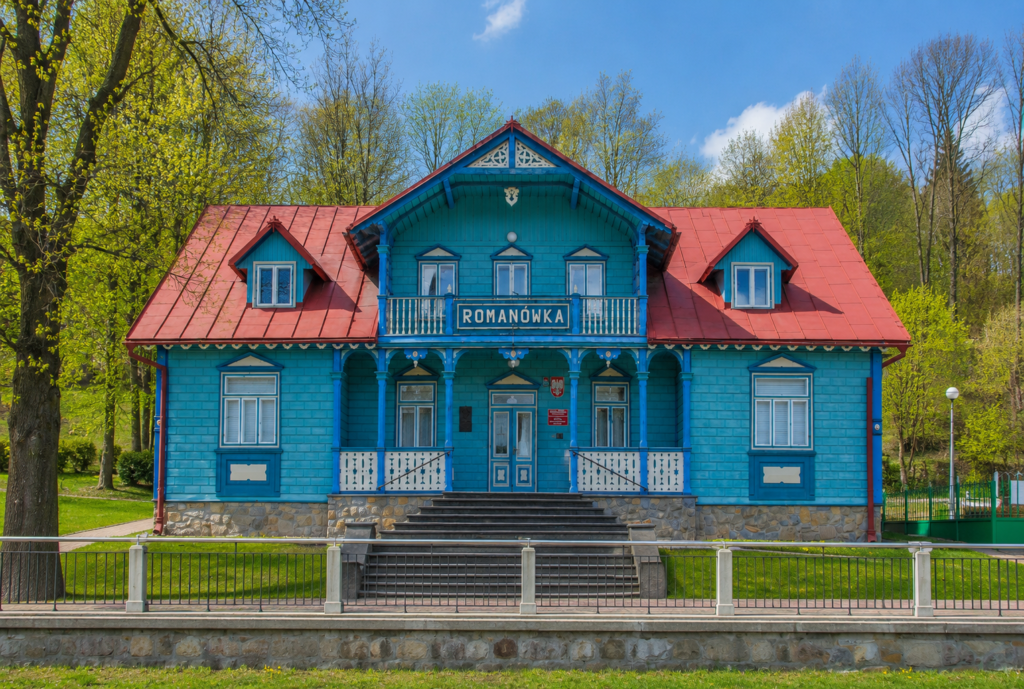
One of the things that gives Krynica its special charm is its spa architecture, including old wooden villas and guesthouses. A good example is Romanowka, the historic wooden villa that now houses the Nikifor Museum. The museum is dedicated to Nikifor Krynicki and also works as a reminder that Krynica is not only a health resort, but also a town with a strong artistic identity.
A major attraction is Gora Parkowa, which rises directly above the centre. It is reached by the oldest cable-funicular railway in Poland, launched in 1937, and remains one of the most characteristic experiences in Krynica. This makes Gora Parkowa more than just a viewpoint – it is one of the town’s historic attractions in its own right.
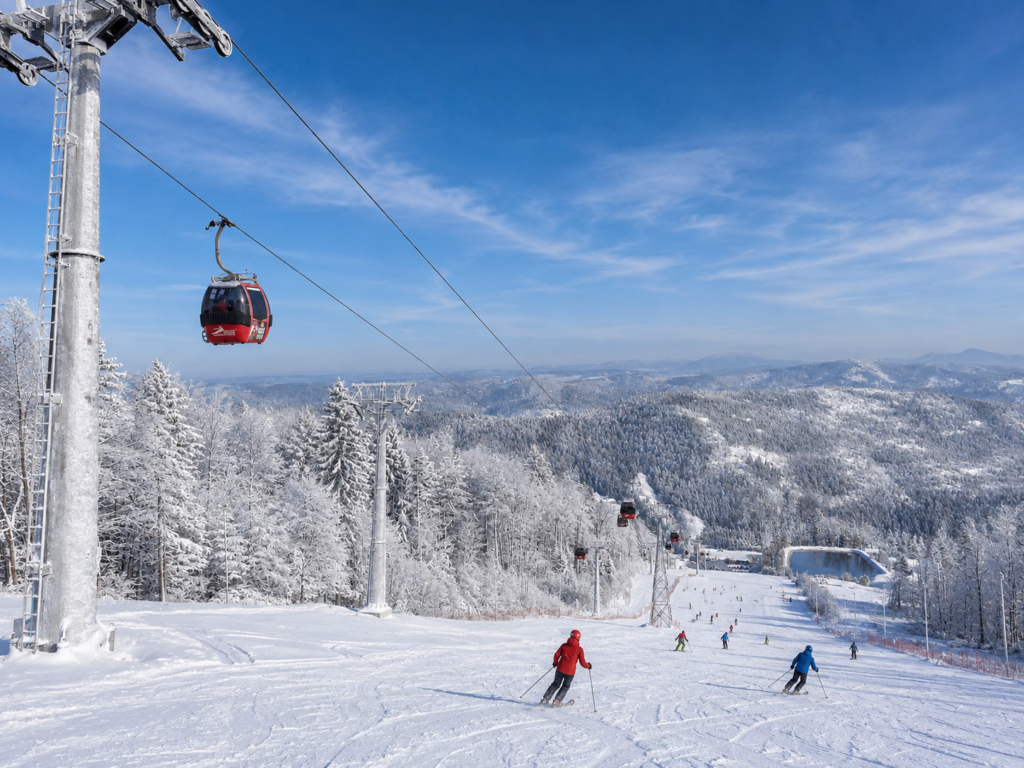
If you want a broader mountain panorama, Jaworzyna Krynicka is the other key attraction. The official site highlights the summit at 1114 m and promotes the 360 viewpoint platform, which gives wide views over the surrounding Beskid landscape. Together, Gora Parkowa and Jaworzyna show the two most important scenic sides of Krynica – one close to the spa centre, the other more fully mountain oriented.
Krynica also works well because it opens naturally toward other nearby spa towns. The most obvious is Muszyna, known for its gardens, parks, mineral waters, and castle ruins. Piwniczna-Zdroj is another nearby resort, quieter and more local in atmosphere, connected with the Poprad Valley and spa traditions. Slightly less obvious, but still worth knowing, are Zegiestow-Zdroj and Wysowa-Zdroj, which belong to the same wider spa region and show a calmer, more nature focused side of this part of Malopolska.
So the real appeal of Krynica is not just that it is a spa town. It combines promenade atmosphere, historic villas, mineral water culture, and easy mountain access, while also working well as a base for exploring other nearby health resorts. That is what makes it feel richer than a single stop and more like a whole small region of its own.
Practical tip: If this is your first visit, the most balanced version is simple – start with the Deptak and Pump Room, add Gora Parkowa for the classic Krynica experience, and choose Jaworzyna Krynicka if you also want a stronger mountain viewpoint. Muszyna is the easiest nearby spa town to add if you have more time.
Historic Villa Romanówka in Krynica-Zdrój, a traditional wooden spa villa surrounded by spring greenery in southern Poland.Skiers on the snowy slopes of Jaworzyna Krynicka with gondola lift and mountain views in southern Poland.
Beskidy Mountains
The Beskidy are one of the most rewarding mountain regions in southern Poland if you want scenic walks, forested ridges, mountain shelters, and wide views without the more alpine feel of the Tatras. Official regional tourism materials present them as a broad group of accessible mountain ranges that work well for both short trips and longer stays.
What makes the Beskidy especially appealing is their variety. Instead of one single landscape, they include several different ranges, each with its own character. In practice, this means you can choose between spa towns, quieter forest trails, broad panoramic peaks, and more remote valleys depending on the kind of trip you want.
Beskid Sadecki is a very good choice if you want mountain scenery combined with spa towns such as Krynica-Zdroj, Muszyna, or Piwniczna-Zdroj. Official Malopolska tourism materials present it as a region of viewpoints, health resorts, and easy day trip ideas rather than only hard hiking.
Beskid Wyspowy is one of the closest ranges to Krakow and is known for peaks that rise separately from each other “like islands,” which is exactly where the name comes from. Tourism materials highlight it as a good area for day trips, forest walks, glades, and broad views without the crowds typical of the Tatras.
Beskid Zywiecki is the range to know if you want the most iconic summit scenery in the Beskidy. This is where you find Babia Gora, described by official park sources as the “Queen of the Beskids” and the highest peak in the Polish Beskids at 1,725 m.
If you prefer somewhere quieter and wilder, Beskid Niski stands out for its more remote character. Official regional tourism sources describe it as a landscape of lower mountains, protected areas, and a calmer, less crowded feel than the more famous ranges.
Overall, the Beskidy are best for visitors who want real mountain atmosphere without needing a high mountain plan. They are strong on marked trails, shelters, scenery, and local culture, and they usually feel less pressured and less crowded than the Tatras.
Practical tip: If this is your first Beskidy trip, it helps to choose one range rather than treating “the Beskidy” as a single destination. Beskid Sadecki is best for spa-town atmosphere, Beskid Wyspowy for easy day hikes near Krakow, and Beskid Zywiecki if you want the biggest views.
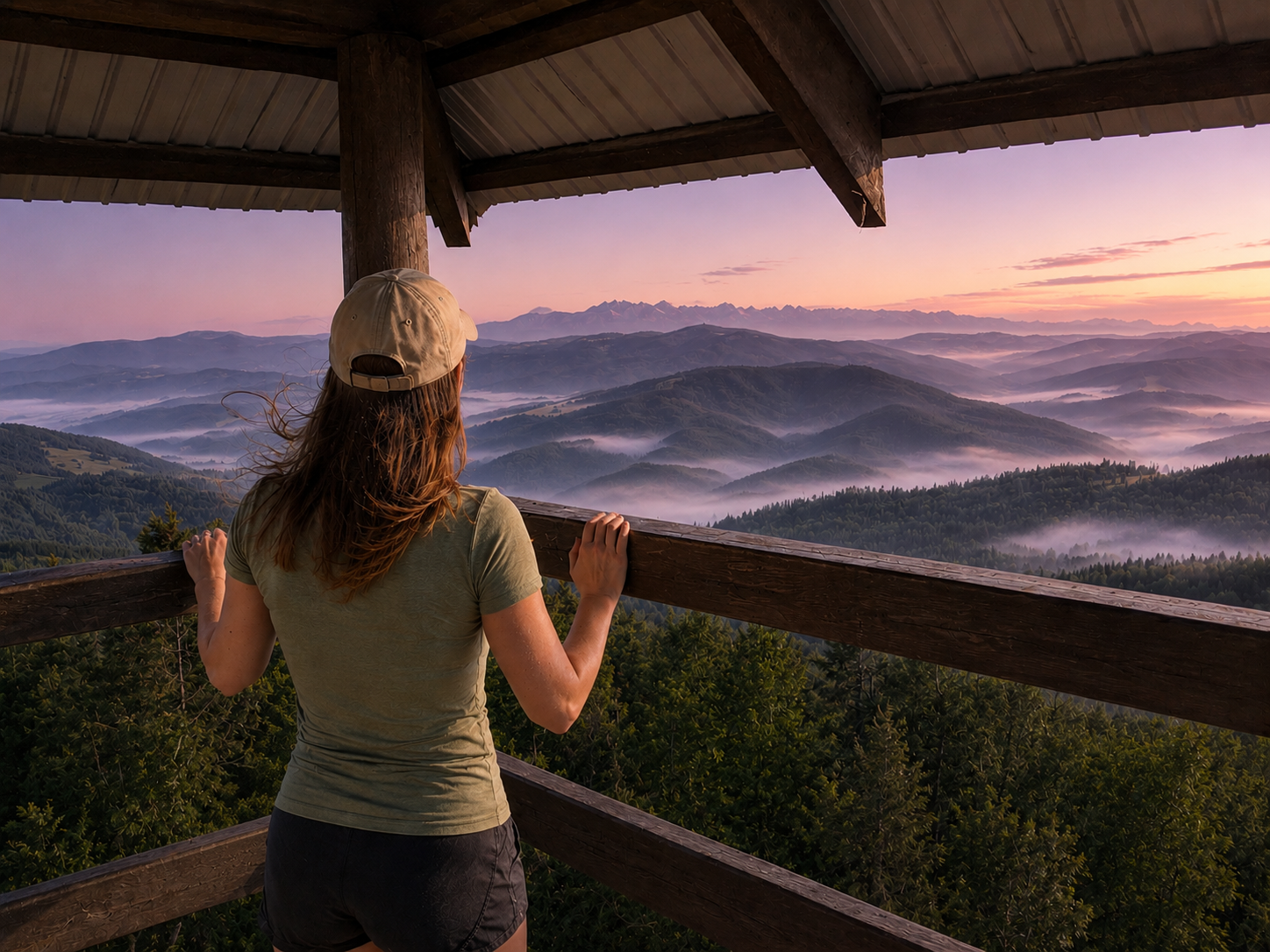
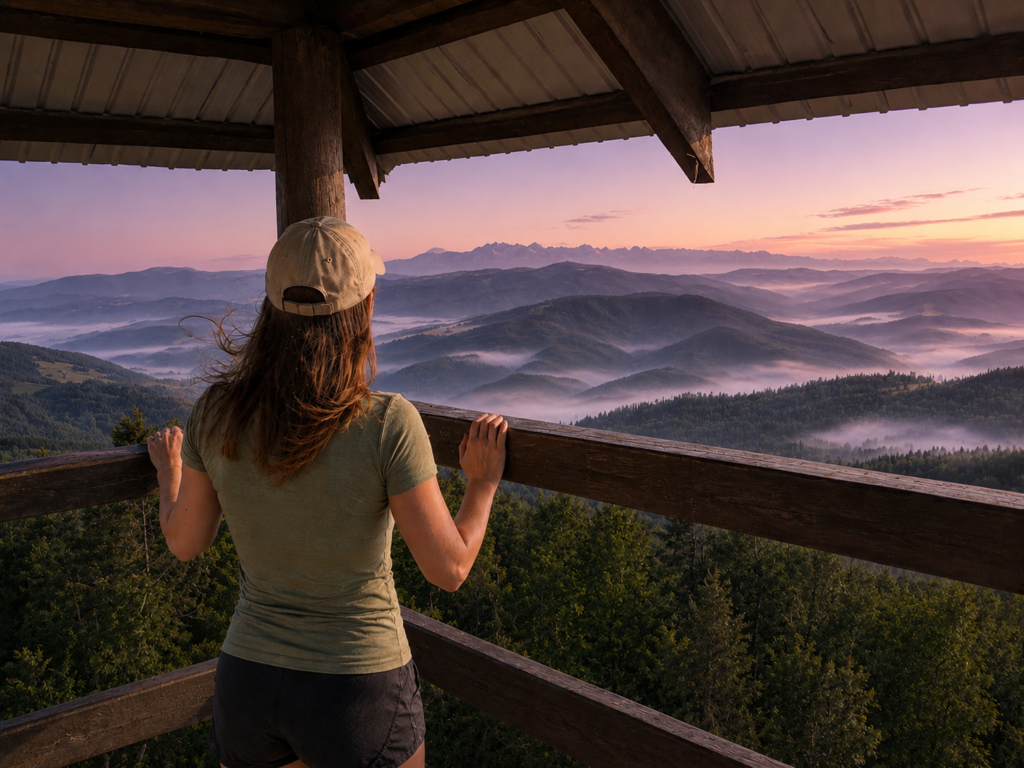
Panoramic sunrise view from Mogielica in the Beskid Wyspowy mountains, with rolling hills, morning mist and distant Tatra peaks.
Jagiellonian University Botanical Garden Krakow
The Jagiellonian University Botanical Garden is one of the most peaceful and elegant green spaces in Krakow. Founded in 1783, it is the oldest botanical garden in Poland and still feels like a quiet escape from the city, even though it is located close to the centre on ul. Kopernika 27.
What makes it especially appealing is the balance between science and atmosphere. This is not just a park for a quick walk, but a historic university garden with themed plant collections, old trees, ponds, and greenhouses. Official materials also note that the garden covers around 9.6 hectares, so it feels larger and more varied than many visitors expect.
It is a very good choice if you want a calmer side of Krakow. Compared with the Old Town, everything here feels slower and more seasonal. In spring and summer the garden is especially rewarding, while the glasshouses add interest even when the weather is less predictable.
The garden also hosts exhibitions, concerts, and seasonal events, so it can feel more dynamic than a simple botanical collection. At the same time, it still works perfectly as a quiet stop for visitors who just want greenery, shade, and a break from the busier parts of the city.
Practical tip: The official garden information notes that the greenhouses and museum are closed on Mondays, even when the outdoor part of the garden is open, so it is worth planning your visit around that.
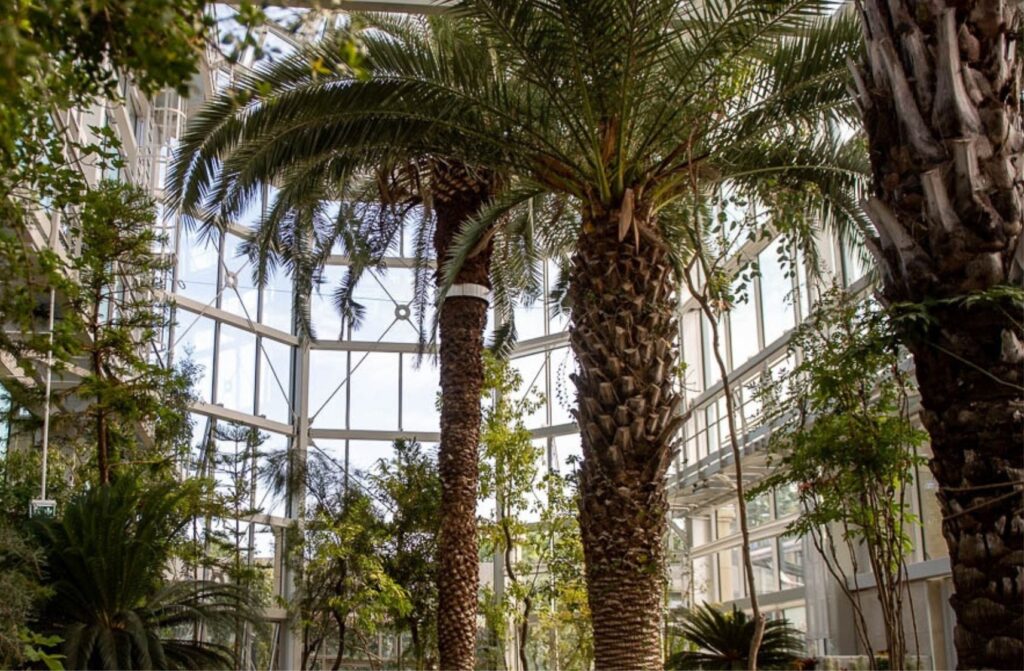
Jagiellonian University Botanical Garden in Krakow with lush plants and walking paths
Błonia Meadow Krakow
Błonia Meadow is one of the most characteristic open spaces in Krakow and one of the city’s favourite places for walking, jogging, cycling, and simply taking a break outdoors. Located close to the Old Town, it offers a rare sense of openness so near the historic centre. Official Krakow tourism materials describe it as a 48 hectare meadow, around a 15 minute walk from the Main Market Square.
What makes Błonia special is its simplicity. There are no dramatic monuments in the middle and no complicated route to follow – just a wide green space with long paths around it, open sky, and views towards Kosciuszko Mound and Lasek Wolski. That is exactly why locals use it so often for everyday walks, runs, and outdoor relaxation.
Błonia also has an important place in the life of the city. For centuries it served mainly as pastureland, and today it is used for concerts, public gatherings, festivals, and major events. Because of its size and central location, it works both as a green escape and as one of Krakow’s main event spaces.
This is a very good stop if you want something easy and local rather than another museum or church. It works especially well as part of a longer walk with Jordan Park, the National Museum area, or the routes leading towards Kosciuszko Mound.
Practical tip: Błonia is best early in the morning or around sunset, when the light is softer and the whole space feels calmer and more atmospheric.
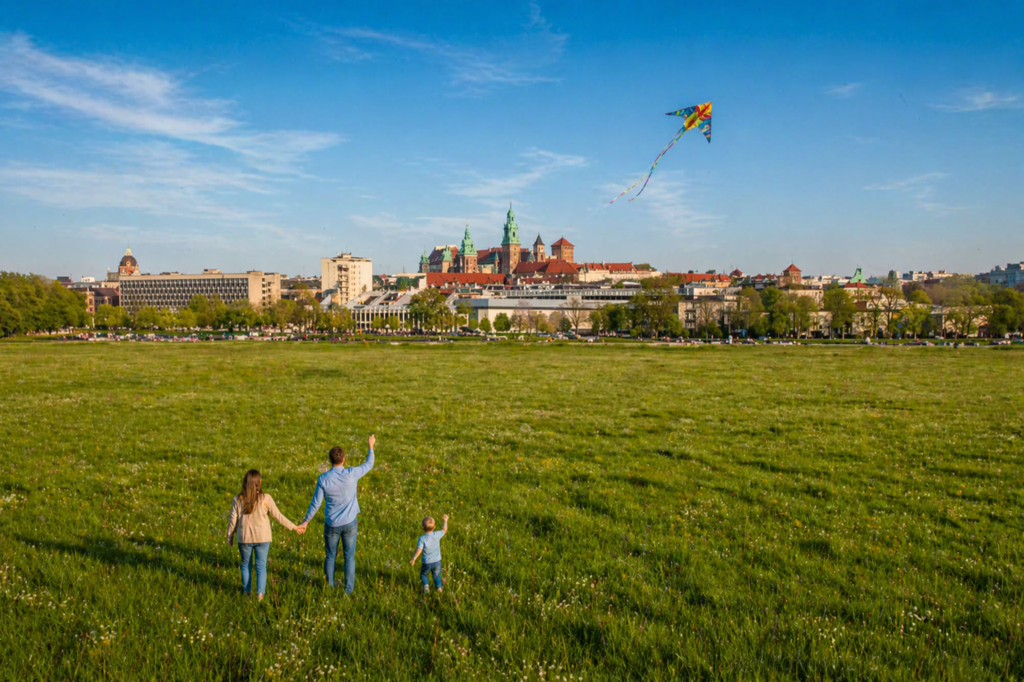
Krakow Błonia – a vast green meadow with views of the city
Jordan Park Krakow
Jordan Park is one of the best known green spaces in Krakow and one of the easiest places to recommend for a relaxed walk near the city centre. Located next to Błonia and close to the Old Town, it combines open lawns, tree lined paths, and a more active side that makes it especially popular with families and locals. The park was opened in 1889 by Dr Henryk Jordan, a promoter of physical education for young people, and it was designed in the style of English landscape gardens.
What makes Jordan Park stand out is that it is not just a quiet park for sitting on a bench. Official city and tourism sources describe it as a place with playgrounds, cycle paths, sports areas, a skating ramp, street workout equipment, an outdoor gym, a water playground, and other recreational facilities. That gives it a much more active and family friendly character than many other central parks in Krakow.
It also works well as a simple break between sightseeing stops. Because of its location near Błonia, AGH, and the western side of the centre, it fits naturally into a walk through this part of Krakow. In warmer months, the park feels lively and social, while in winter city sources note that families often come here for sledging on the small slope.
Another advantage is that the park offers more than just paths and greenery. Tourism information notes that visitors can rent boats, bikes, and electric cars, which makes it especially appealing for families with children or anyone looking for a more playful stop rather than just another park walk.
Practical tip: Jordan Park is a very good choice if you want something central but less formal than the Old Town. It works especially well for families, a casual walk near Błonia, or a short outdoor break between museums and sightseeing. The tourism listing currently shows the park as open daily, with seasonal hours.
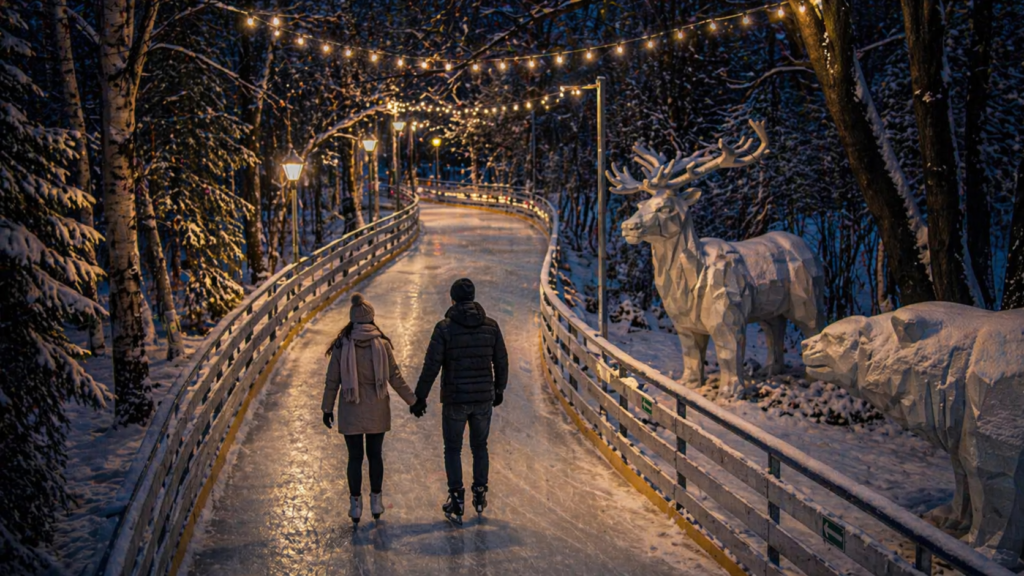
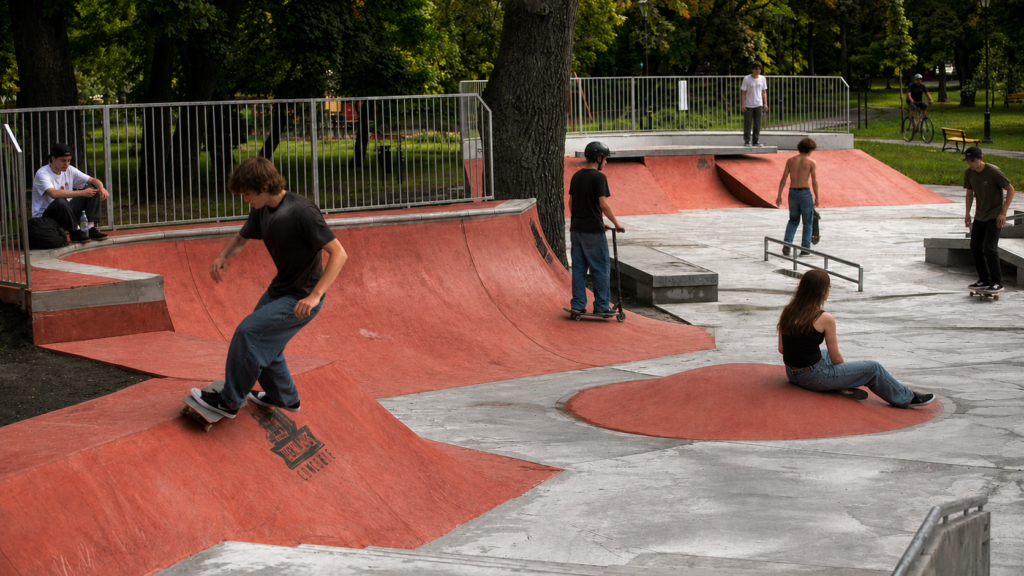
Jordan Park in winter with an ice rink and festive atmosphereSkaters and scooter riders enjoying the skate park in Jordan Park in Kraków on a sunny afternoon.
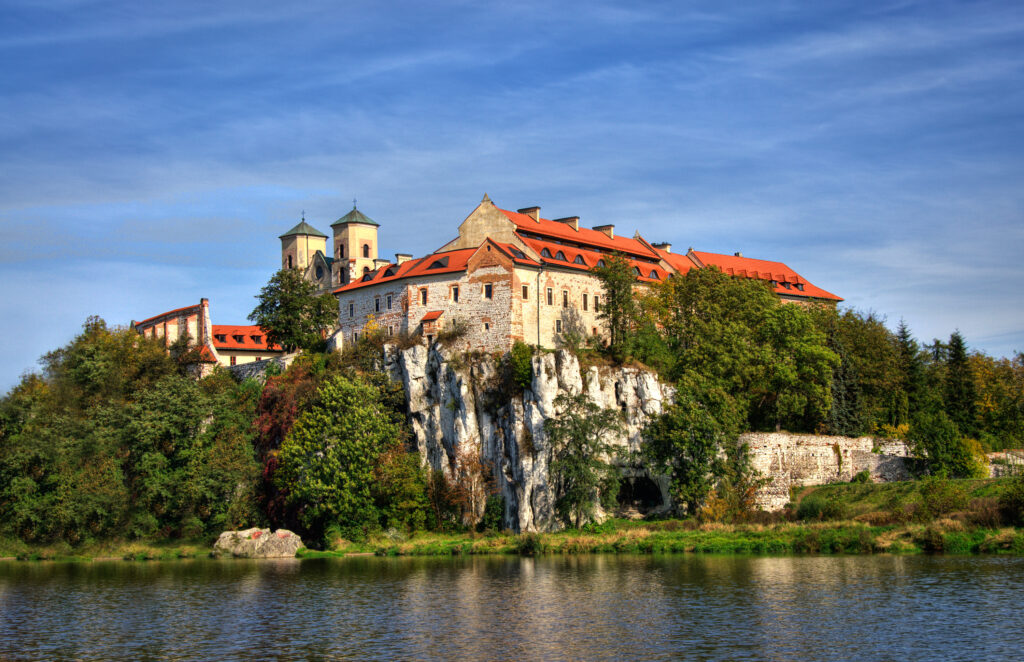
Tyniec is one of the most peaceful and rewarding places to visit near Krakow, especially if you want a slower atmosphere, river views, and a break from the city centre. Although it now feels like a quiet riverside district, official Krakow tourism materials note that it once lay a full day’s journey from Krakow. Today, it is easy to reach and is especially popular for short trips, walks, cycling, and visits to the abbey.
The main landmark here is the Benedictine Abbey, dramatically placed on a limestone hill above the Vistula. One of the reasons it stands out so much is that it looks more like a fortified monastery than a typical church. Krakow’s official tourism description explains that this is no coincidence – from the beginning, the abbey also had a defensive role. The first Benedictine monks arrived here in the mid-11th century, and the site later grew into an important religious and economic centre.
What makes Tyniec especially appealing is the atmosphere. This is not only a monument to look at from outside, but a place still shaped by monastic life, silence, and the Benedictine motto ora et labora. That gives the visit a very different feeling from Krakow’s busier churches and museums.
The setting is also a big part of the experience. Tyniec is one of the best places near Krakow for a scenic riverside stop, and official tourism materials specifically mention the beautiful cycle route leading here along the Vistula. Because of that, it works well not only as a religious or historical visit, but also as part of a relaxed half day trip focused on views and the landscape.
In summer, the abbey sometimes becomes even more appealing thanks to music events. Krakow Travel notes that the abbey hosts organ and chamber recitals, which adds another layer to the visit and fits naturally with the contemplative setting.
Practical tip: Tyniec works especially well as a half day trip from Krakow. If the weather is good, one of the best ways to enjoy it is to combine the abbey visit with a walk or bike ride along the Vistula.
Tyniec Monasterio in Krakow, Poland
Las Wolski Krakow
Las Wolski is the largest forest park in Krakow and one of the best places in the city for a longer walk away from the busy centre. Located in the western part of Krakow, between Wola Justowska and Bielany, it covers about 422 hectares and feels much more like a real woodland escape than a typical city park.
What makes Las Wolski especially attractive is its variety. You can come here simply for a quiet walk among trees, but the area also includes some of Krakow’s best known outdoor landmarks, including Pilsudski Mound, Krakow Zoo, and the Camaldolese Monastery in Bielany. Official tourism information also highlights the three nature reserves within the forest: Skałki Bielańskie, Skałki Przegorzalskie, and Panieńskie Skały.
Unlike parks closer to the Old Town, Las Wolski feels spacious and less structured. The terrain is hilly, the paths are more natural, and the whole area works well for walking, cycling, and simply spending a few hours outdoors. That is why it is popular not only with tourists, but also with locals looking for fresh air and a break from the city.
It is also a good choice if you want to combine nature with sightseeing. You can turn a visit here into a half day outing by adding the zoo, climbing Pilsudski Mound for the view, or stopping near one of the forest’s rocky reserves.
Practical tip: Las Wolski is better for a longer, more relaxed outing than for a quick stop. If you are planning to visit the zoo or Pilsudski Mound as well, it is worth setting aside at least half a day.
Wolski Forest – a walking path among dense trees near Krakow
Bagry Lagoon Krakow
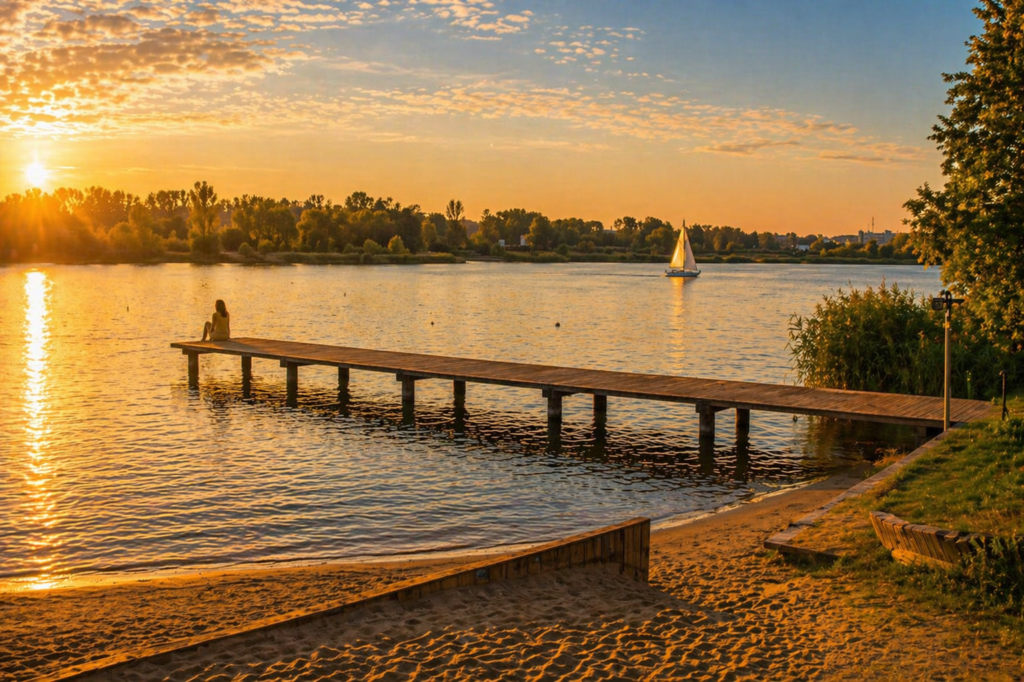
Bagry Lagoon is one of the most popular summer spots in Krakow and one of the easiest places in the city to combine a beach atmosphere with water sports and a more local feel. It was created in a former gravel pit and today is one of the larger bodies of water within Krakow’s city limits. Official tourism information highlights the bathing area, quays, and water equipment rental, while other city materials note that the lagoon now includes a guarded bathing site and marinas.
What makes Bagry especially appealing is that it feels more like a simple urban beach than a scenic viewpoint destination. You come here for the sandy shore, the open water, and the relaxed summer atmosphere rather than dramatic cliffs or nature trails. Krakow tourism materials also point out that in the sailing season the lagoon hosts many outdoor events and competitions, which adds to the lively character of the area.
It is also a good choice if you want more than just sunbathing. Official and regional tourism sources mention water equipment rental, sailing infrastructure, and a dog bathing area, which makes Bagry a flexible option for families, groups of friends, and visitors looking for a more active afternoon by the water.
Compared with places like Zakrzowek, Bagry feels less dramatic but more straightforward and beach focused. That is part of its charm. It works well when you want an easy summer break from museums and sightseeing, without leaving the city.
Practical tip: Official Krakow tourism information lists the bathing area at Bagry as open seasonally, from 15 June to 15 September, daily from 10:00 to 18:00, and notes that admission is free. It is worth checking current seasonal details before you go
Bagry Reservoir in Krakow with piers and waterside recreation
Kryspinow Lake near Krakow
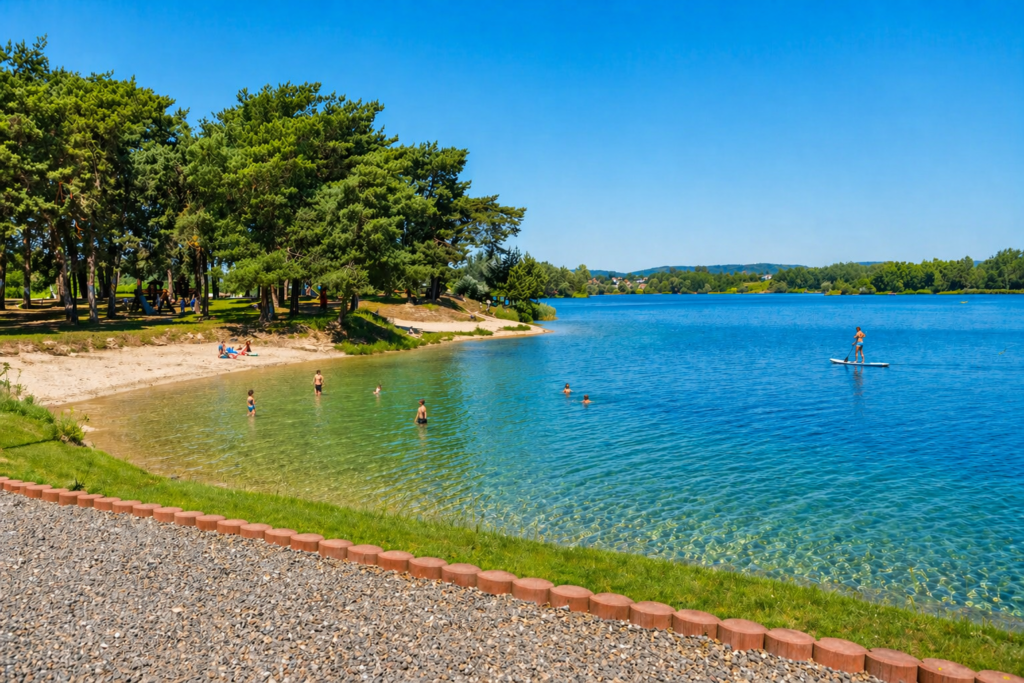
Kryspinow Lake, officially the Kryspinowski Reservoir, is one of the most popular summer escapes near Krakow. Located around 12 km west of the city centre in Cholerzyn, Liszki, it is especially known for its sandy beach, open water, and relaxed atmosphere that feels very different from the historic centre. The reservoir was created in the former sandpits and today consists of two large bodies of water.
What makes Kryspinow so appealing is its simple formula: sun, beach, sand, water, and space to spend a few lazy hours outdoors. Official Krakow tourism materials describe it as the most popular bathing site among Krakow residents, which says a lot about how established it is as a warm weather destination.
It works well both for swimming and for a more casual day by the water. Regional tourism coverage also highlights it as a good place to relax in the open air and spend time in nature, which is why it often appears in summer recommendations alongside other bathing areas around Krakow.
Compared with places like Zakrzowek, Kryspinow feels more like a classic beach outing. You come here less for dramatic views and more for the broad lakeside setting, summer atmosphere, and the easy, familiar rhythm of a day by the water. That makes it a very good option for families, groups of friends, or anyone who simply wants a straightforward beach style break not far from the city. This comparison is an inference based on the official tourism descriptions of Kryspinow as a bathing site with beach and leisure focus.
The practical side is also clear. Krakow Travel currently lists the site as open in the bathing season from 4 June to 15 September, daily from 8:00 to 18:00, with listed ticket prices of PLN 15/10 and a family ticket for PLN 25. The same listing marks it as disabled-friendly and suitable for children.
Practical tip: Kryspinow is best treated as a summer-only attraction. If you plan to go, check the current season dates and opening hours before setting out, because official listings show it as closed outside the main bathing season.
Kryspinów Reservoir in summer with a sandy beach and clear blue water
Wanda Mound Krakow
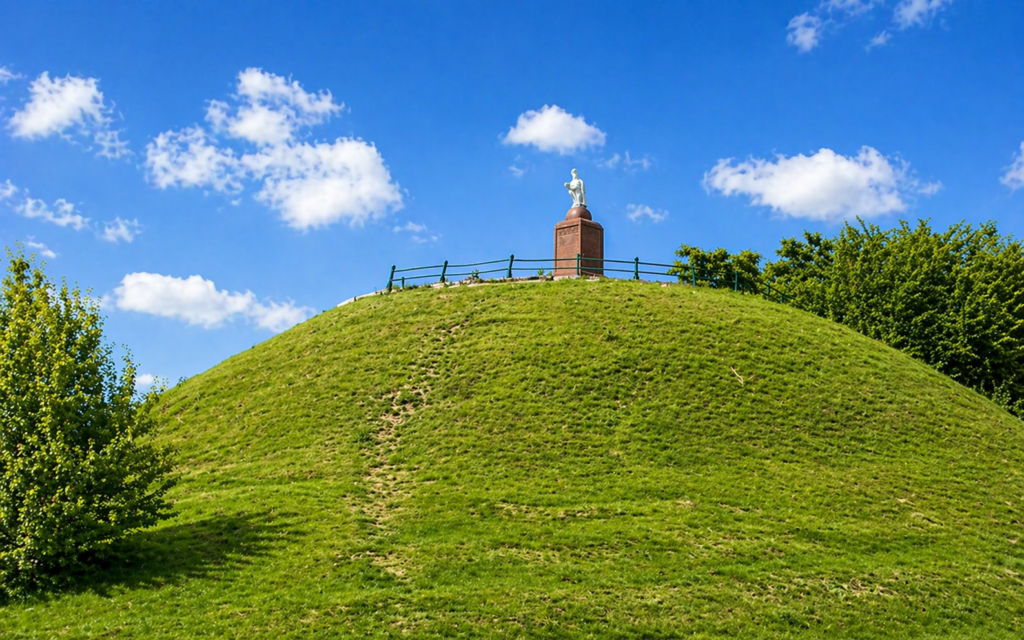
Wanda Mound is one of Krakow’s lesser known mounds, located in the Nowa Huta area near Mogila. It is smaller and less central than Kosciuszko Mound or Krakus Mound, but it has a very distinctive atmosphere and a strong connection to local legend. Official Krakow tourism materials describe it as one of the oldest visible traces of human presence in this part of the city.
The mound is usually dated to the 7th or 8th century, although its exact purpose remains uncertain. According to legend, it is the burial place of Princess Wanda, the daughter of Krak, the legendary founder of Krakow. Other interpretations mentioned by Krakow tourism sources suggest defensive, ritual, or even astronomical functions.
What makes Wanda Mound interesting is not only the story behind it, but also its location. It stands close to the historic area of Mogila and the steelworks zone, so it feels quite different from the more touristy parts of Krakow. That contrast gives the place a more local and slightly unusual character.
The mound is about 14 metres high, and since 1890 it has been topped with a marble eagle designed by Jan Matejko. From the top, you get an open view over this part of Krakow, and in good weather some regional sources note that even the Tatras can sometimes be seen in the distance.
Wanda Mound is a good stop if you want to explore a side of Krakow that feels older, quieter, and less obvious. It works especially well as part of a wider route through Nowa Huta and Mogila rather than as a standalone major attraction.
Practical tip: The mound is located on ul. Ujastek Mogilski, and official Krakow tourism information says it can be reached by tram lines 21 or 22 to the stop called Kopiec Wandy.
Wanda Mound in Krakow surrounded by greenery and open space
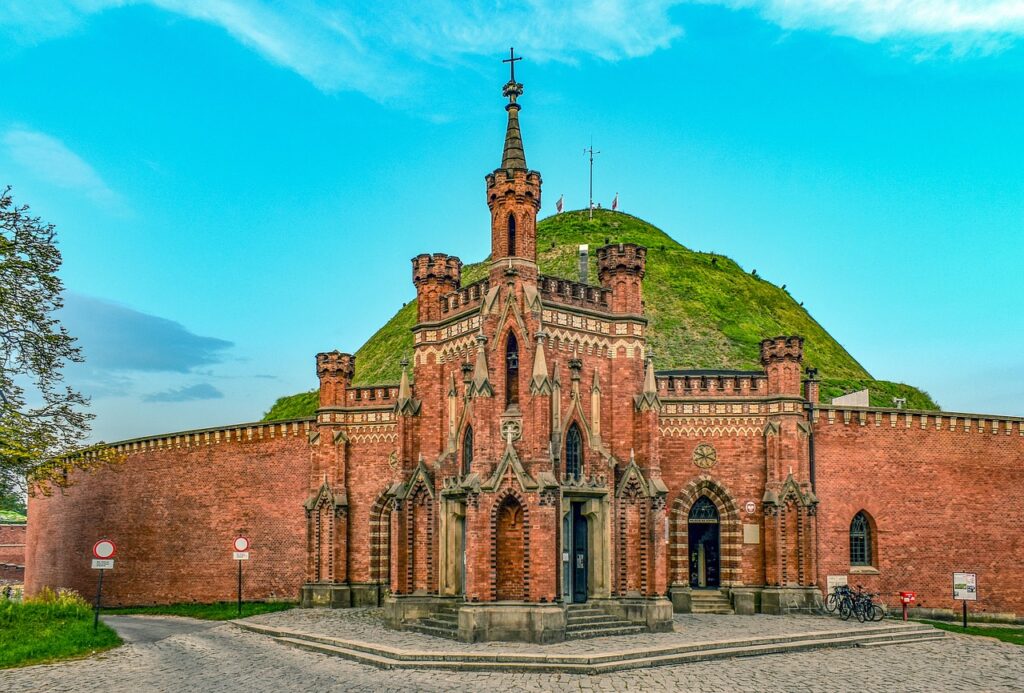
Pilsudski Mound Krakow
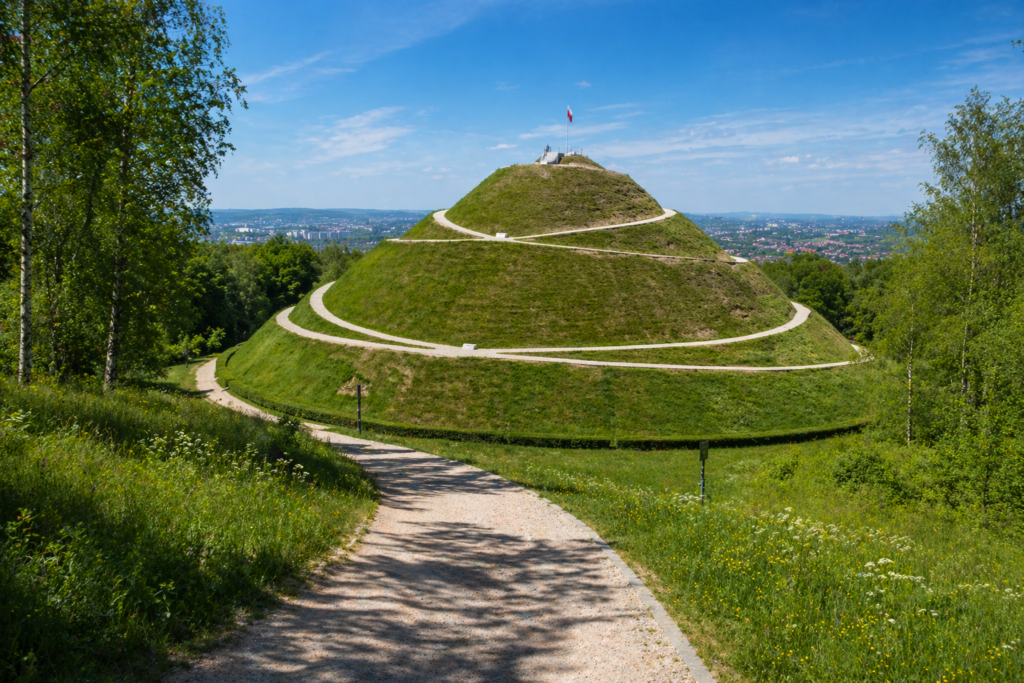
Pilsudski Mound is the largest and highest of Krakow’s mounds and one of the city’s best panoramic viewpoints. It stands on Sowiniec Hill in Lasek Wolski, away from the centre, which gives the visit a more natural and less urban feel than the better known viewpoints closer to the Old Town.
The mound was built between 1934 and 1937 to commemorate Jozef Pilsudski, Poland’s independence regained in 1918, and the struggle to defend the country in the 20th century. That gives it a strong symbolic meaning, but in practice many visitors come here just as much for the walk and the views as for the historical context.
What makes this place special is its setting. Unlike Kosciuszko Mound, which feels much more connected to the city, Pilsudski Mound is surrounded by forest paths and open space. The approach through Lasek Wolski is part of the experience, so it works especially well for people who want to combine a viewpoint with a walk in nature.
The panorama from the top is one of the widest in Krakow. Official and regional descriptions mention views over Lasek Wolski, the city centre, Kosciuszko Mound, and on clear days even the Beskids, Gorce, Babia Gora, and the Tatra Mountains. That is why this mound feels less like a quick photo stop and more like a proper scenic destination.
Because it is farther from the centre and harder to reach than the other mounds, Pilsudski Mound usually feels quieter and less crowded. That makes it a very good choice if you want a more local and less obvious place for a walk, especially in good weather.
Practical tip: This is the best Krakow mound if you want a viewpoint combined with a forest walk, but it is also the least convenient to access, so it works better when you have more time than for a quick stop between city centre attractions.
Piłsudski Mound in Krakow – panoramic view of the historic mound surrounded by forest, with walking paths leading to the top
Kosciuszko Mound Krakow
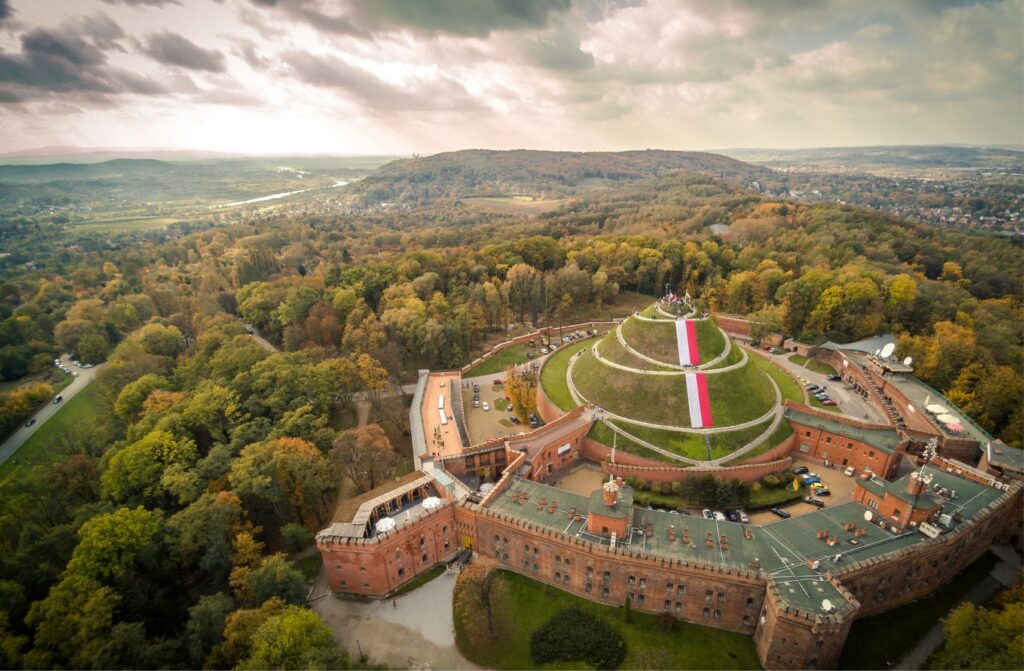
Kosciuszko Mound is one of the best viewpoints in Krakow and one of the city’s most symbolic landmarks. Located on St Bronislawa Hill in the western part of the city, it was built in the 1820s in honour of Tadeusz Kosciuszko, one of the most important figures in Polish history.
What makes this place special is the combination of history and panorama. From the top, you get one of the widest views over Krakow, including the city skyline, green areas, and on clear days even more distant surroundings. The official Kościuszko Mound site itself highlights the mound as a place of “most beautiful views,” and that is still the main reason many visitors come here.
The mound is more than just a viewpoint. The site also includes the Kosciuszko Museum, the new exhibition “Kosciuszko – a Hero for Our Times,” an educational route, and a garden, so it works well not only as a short photo stop but also as a fuller visit.
Another reason the visit feels different from many central Krakow attractions is the setting. Kosciuszko Mound stands slightly outside the busiest tourist area, which makes it feel calmer and more open than the Old Town. It is a good place to come when you want both a historical landmark and some breathing space.
For many visitors, the biggest appeal is simply the atmosphere at the top. Unlike tower viewpoints, this one feels more open and less enclosed, so the experience is closer to standing above the city rather than just looking out from a building.
Practical tip: If the weather is good, this is one of the best places in Krakow for a panoramic view. The official site currently lists the mound as open daily, with today’s sample hours shown as 9:00 am to 6:30 pm, so it is worth checking current opening hours before you go.
Historic fortifications surrounding Kościuszko Mound in Krakow, with defensive walls and greenery on the hilltop.Kościuszko Mound from above – aerial view of the historic mound in Krakow, surrounded by greenery and cityscape
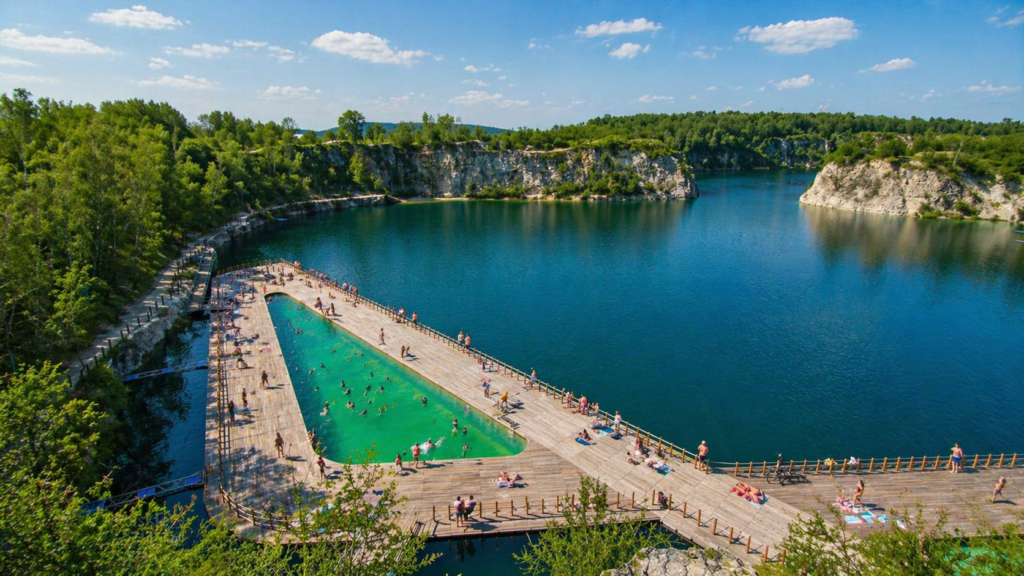
Zakrzówek is one of the most striking green and blue spaces in Krakow and one of the best places in the city for a walk with a view. Located southwest of the centre, it was created when a former limestone quarry filled with water, forming the distinctive turquoise reservoir that people now associate with the area. Official Krakow tourism materials describe it as one of the most beautiful diving sites in Poland, with rocky viewpoints offering a wide panorama over the city.
What makes Zakrzówek especially appealing is the contrast between nature and the city. The cliffs, water, and walking paths make it feel much more dramatic than a typical urban park, while at the same time it remains easy to include in a Krakow itinerary. It works well both as a short stop for views and as a longer walk if you want a break from the Old Town and busier sightseeing areas.
In recent years, Zakrzówek has also become known for its modern swimming area. The official bathing site presents floating pools of different depths, from shallow family-friendly sections to a deep pool for stronger swimmers, surrounded by wooden platforms designed for relaxing and enjoying the setting.
Because of that, Zakrzówek now has two different sides. Outside the guarded summer bathing area, it still feels like a scenic natural spot known for walks, viewpoints, and diving culture. In season, it also becomes one of Krakow’s most talked about outdoor swimming and sunbathing places.
Practical tip: Zakrzówek is worth visiting even if you are not planning to swim. Come for the views and the atmosphere first, and if you want to use the floating pools, check the official bathing site before your visit because access and seasonal opening depend on current operating conditions.
Zakrzówek in summer – turquoise swimming area with wooden boardwalks and people relaxing by the lake on a sunny day
Ojców National Park
Ojców National Park is one of the best day trips from Krakow if you want nature, castles, caves, and scenic walking routes in one place. It was established in 1956 and is the smallest national park in Poland, but it is exceptionally rich in attractions. The park protects the Prądnik Valley and part of the Kraków-Częstochowa Upland, where limestone rocks, forests, caves, and historic monuments all come together in a relatively compact area.
What makes Ojców special is that it does not feel like a single attraction. It is better understood as a landscape you move through. A walk here can include rock formations, panoramic viewpoints, caves, castle ruins, a chapel, and even a food stop that feels local rather than touristy. That mix is exactly why the park works so well for a half-day or full-day escape from the city.
Prądnik Valley
The Prądnik Valley is the heart of the park and the natural base for almost every visit. This is where you get the classic Ojców scenery – limestone cliffs, wooded slopes, winding roads and paths, and the village of Ojców itself. Even if you are not planning a demanding hike, simply walking through the valley gives you the essence of the park.
It is also the best place to understand why Ojców feels so different from other green areas near Krakow. The valley is not just pretty – it is structured by the rock formations and historic sites around it, so the route itself becomes part of the sightseeing.
Krakow Gate, the Source of Love, and Cow Cave
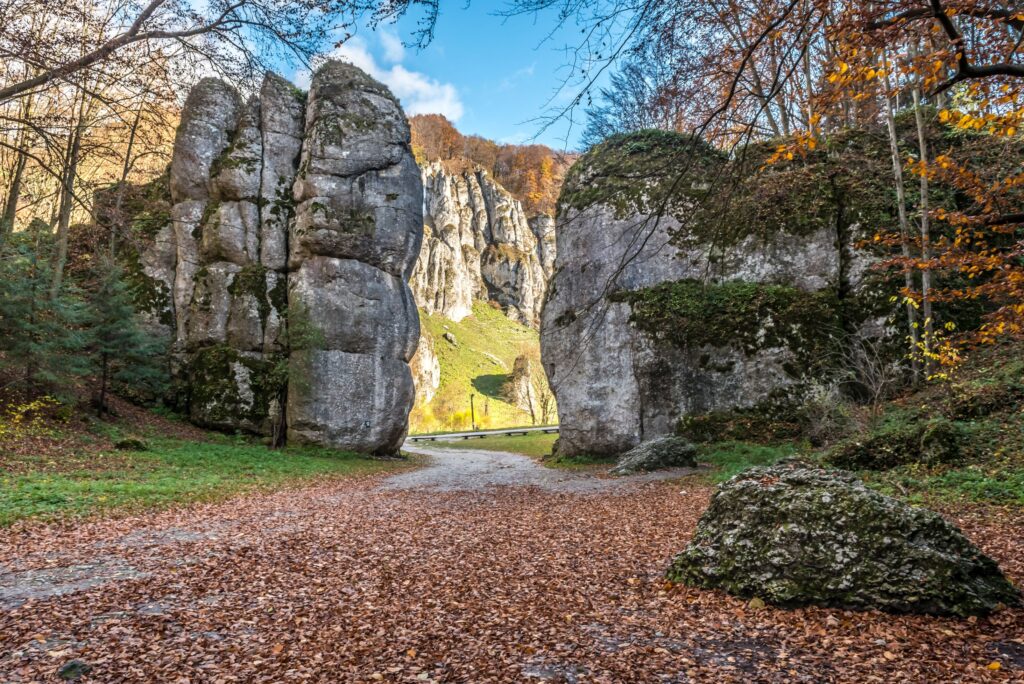
One of the best known landmarks in the park is the Krakow Gate, a dramatic natural rock gate and one of the most popular stops in Ojców. Official Ojców materials describe it as one of the favourite places for visitors, located at the intersection of hiking trails and offering panoramic views of the eastern part of the Prądnik Valley.
Nearby you will also find the Source of Love and Cow Cave, which makes this area especially rewarding even on a shorter walk. If you want one section of Ojców that feels instantly recognisable and easy to include in a first visit, this is one of the strongest choices.
Łokietek’s Cave
Łokietek’s Cave is the most famous cave in the park and one of its classic must-see attractions. Ojców tourist materials describe it as the largest and longest cave in Ojców National Park. It is also strongly linked with local legend, especially the story that King Władysław Łokietek once hid there.
This is one of the attractions that gives the trip a stronger adventure feel. Reaching the cave adds a more active element to the day, and the legend makes it especially appealing for first-time visitors and families.
Dark Cave
The other major cave attraction is Dark Cave. It is especially important because of its archaeological value. Unlike Łokietek’s Cave, which is better known for legend and popularity, Dark Cave feels more atmospheric and more connected with prehistory and excavation history. Official Ojców materials present it as one of the park’s major cave sites.
If you want to balance a classic scenic route with something more unusual and less obvious, Dark Cave is a very good addition to the itinerary. It gives the visit a different tone and helps show that Ojców is not only about views, but also about deep geological and human history.
Ojców Castle Ruins
The ruins of Ojców Castle are one of the key historical landmarks in the valley. They are associated with the defensive system of King Casimir the Great and are usually treated as one of the core man-made attractions in the park.
This is not the kind of site that dominates the whole day on its own, but it adds an important historical layer to the landscape. In Ojców, that matters a lot – the ruins work best not as a standalone castle stop, but as part of the wider story of a valley that was both beautiful and strategically important.
Chapel on the Water
The Chapel on the Water is one of the most charming and photogenic landmarks in Ojców. It is smaller and quieter than the caves or castles, but it gives the area much of its local character. It is one of those places that makes the park feel more varied and memorable rather than just scenic.
This stop works particularly well in a first visit because it breaks up the route naturally and adds a more intimate, almost storybook quality to the valley.
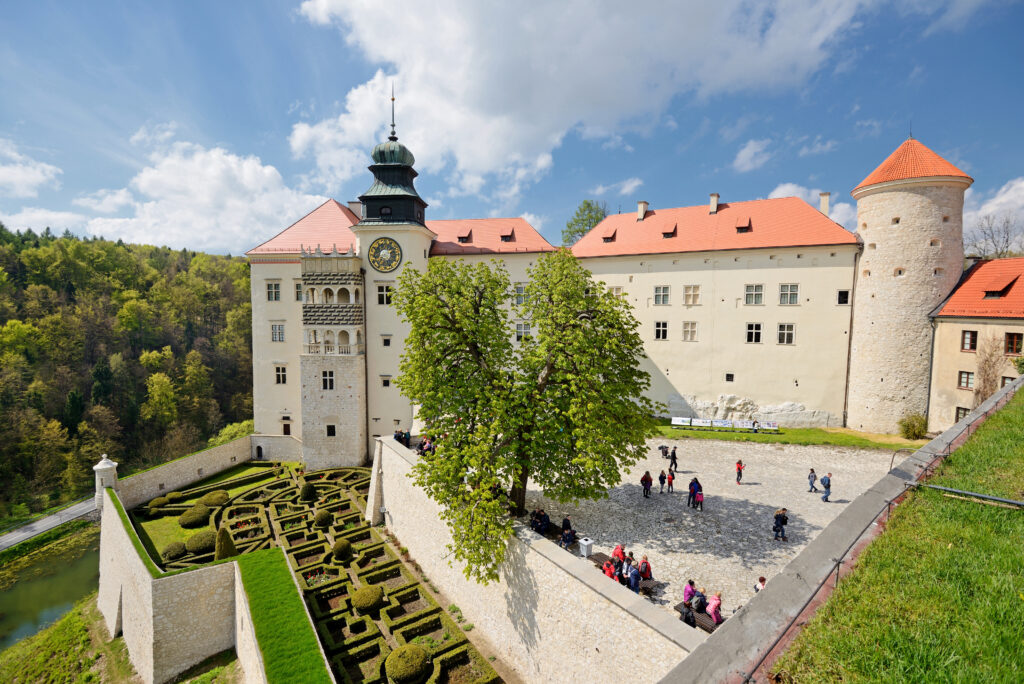
Pieskowa Skała Castle
If you want a fuller castle experience, Pieskowa Skała Castle is one of the biggest highlights in the wider park area. Official park materials describe it as an important link in the defensive chain guarding the trade route from Krakow to Silesia, and as one of the standout monuments on the Eagles’ Nests Trail. They also describe it as one of the rare top-class Renaissance monuments in Poland.
This is the attraction to choose if you want more than ruins. It adds architecture, museum character, and a more formal sightseeing stop to a day otherwise dominated by walking and nature. That contrast is one of the reasons Ojców National Park feels more complete than many other short excursions from Krakow.
Hercules’ Club
Near Pieskowa Skała stands Hercules’ Club, the park’s most famous rock formation. It is one of the signature views of the region and one of those landmarks that almost every first-time visitor wants to see. Official Ojców materials describe it as the most peculiar rock in the park.
You do not need much time here, but it is one of the easiest attractions to combine with Pieskowa Skała Castle. Visually, it is one of the strongest and most instantly recognisable images associated with Ojców National Park.
Ojców Trout
A visit to Ojców is also a good chance to try Ojców trout, one of the local specialities most closely associated with the area. Official sources describe it as a traditional product of Lesser Poland, and the trout farm in Ojców dates back to 1935.
This is not just a random food stop. The trout is closely tied to local conditions – clear, well-oxygenated water and a favourable microclimate helped create ideal conditions for fish farming here. City culinary materials also note that the fish is bred using traditional methods and that its flavour is linked to the clean waters of the local stream.
Adding trout to the day makes sense because it fits naturally into the place. Ojców is one of those rare destinations where the local dish feels genuinely rooted in the landscape rather than just added for tourists.
How to plan a first visit
If this is your first time in Ojców National Park, the strongest core route is usually the Prądnik Valley, Krakow Gate, one major cave, the Ojców Castle ruins, and the Chapel on the Water. That gives you the best mix of scenery, walking, and classic landmarks without trying to do too much in one go. This route structure is consistent with the way official Ojców tourism materials group the main attractions.
If you have more time, add Pieskowa Skała Castle and Hercules’ Club. That gives you a fuller sense of the park’s natural and historical range. And if you want the day to feel more local, finish with Ojców trout rather than rushing straight back to Krakow.
Practical tip: Ojców National Park works best when you treat it as a connected landscape rather than a checklist. For a first visit, focus on the valley, one cave, one castle stop, and time to walk slowly. Trying to squeeze in everything usually makes the trip less enjoyable.
Ojcow National Park limestone cliffs and forest landscape near KrakowPieskowa Skała Castle in Ojcow National Park surrounded by limestone cliffs and forest landscapeKrakow Gate rock formation in Ojcow National Park along a scenic walking path between limestone formations
Lem Science Garden Krakow
Lem Science Garden, officially the Stanislaw Lem Experimental Garden, is one of the most original family attractions in Krakow. It is an open air branch of the Museum of Engineering and Technology, located in the green area of Park Lotnikow Polskich. It was created as a place where science can be explored through movement, observation, and direct experience rather than through traditional museum displays.
What makes this place special is that it is not a regular park and not a classic museum either. The whole idea is to learn by trying things out. The garden has more than 100 interactive installations that let visitors explore topics such as mechanics, acoustics, optics, and hydrostatics in a hands on way.
It is one of the best attractions in Krakow for families with children, but it also works well for adults because the exhibits are large, interactive, and spread across a wide outdoor space. That makes the visit feel much more relaxed than many indoor science centres or museums.
It is also worth mentioning that in the colder months the garden changes character. According to the official MIT Krakow information, the Experimental Garden operates seasonally and during autumn and winter it transforms into a themed Garden of Lights, so the site remains active even outside the main science garden season. Recent MIT updates also confirm seasonal light garden editions in this location.
Because everything is spread across a large open area, this is a good choice when you want something educational, interactive, and outdoors in spring or summer, while the winter light garden adds a more atmospheric and visual experience later in the year.
Practical tip: The garden is seasonal, so it is worth checking the current opening status before you go. In autumn and winter, look out for the themed Garden of Lights edition instead of the standard science garden visit.
Stanislaw Lem Experimental Garden interactive science park in KrakowElegant woman in a winter coat walking through a glowing light tunnel at the Garden of Lights in Krakow, viewed from behind in a symmetrical perspective.
Krakow Balloon
Krakow Balloon is one of the more unusual sightseeing attractions in the city, offering panoramic views from a tethered observation balloon rather than a traditional free flying hot air balloon. It is located on Wolynski Boulevard by the Vistula River, which gives you a wide view over Wawel, the riverbanks, and the surrounding parts of Krakow.
What makes it appealing is the combination of views and simplicity. The balloon rises to up to 150 metres, and according to the operator it can take up to 30 passengers including the pilot, so it works well as a short scenic stop rather than a full adventure activity.
This attraction fits especially well into a riverside walk. Because it is close to the boulevards, it can easily be combined with Wawel, the river paths, or a cruise area nearby. It is also a good option for visitors who want a viewpoint without climbing a tower or hill. This is an inference based on the official location and format of the attraction.
It is worth remembering that the balloon is highly weather dependent. The official passenger information says flights take place only if conditions are suitable, and the operator specifically advises checking the website or calling before coming. The site also posts daily flight notices, including suspensions caused by strong wind.
Practical tip: Treat Krakow Balloon as a short viewpoint stop rather than a major attraction, and always check on the day whether it is flying before you go.
Krakow tethered balloon rising above the city skyline
Krakow Eye (Ferris Wheel) Krakow
Krakow Eye, also known as Cracow Eye, is one of the most recognisable modern attractions on the Vistula riverfront. Located near the river in the Dębniki area, it offers a very different type of sightseeing from Krakow’s churches, museums, and historic streets.
The main reason to come here is the view. The wheel rises to about 50 metres, giving visitors a broad panorama over the river, Wawel Hill, and the surrounding parts of the city. It works especially well as a lighter, more relaxed stop during a walk along the boulevards.
Unlike many of Krakow’s historic viewpoints, this one feels more contemporary and more casual. It is popular with couples, families, and first time visitors who want an easy panoramic experience without climbing towers or hills. Because the cabins are enclosed, it is also a more comfortable option than some open viewpoints, especially in cooler or windier weather. This is an inference based on source descriptions of the enclosed cabins and its role as a reliable lower-altitude viewpoint.
Krakow Eye is particularly atmospheric in the late afternoon and around sunset, when the riverfront becomes livelier and the views of Wawel and the skyline feel more dramatic. It also works well as part of a riverside route together with the boulevards, nearby restaurants, or a short walk toward Podgorze.
Practical tip: If you want the best experience, go closer to sunset or after dark, when the city lights and the riverside setting make the ride feel more memorable.
Krakow Eye Ferris wheel seen from below against the skyAdult woman sitting inside a Krakow Eye gondola, looking out over the Vistula River and Wawel Castle with a panoramic city view in natural daylight
Vodka Factory Museum Krakow
If you mean the vodka museum in Krakow, the correct attraction is Vodka Factory Museum, not the Polish Vodka Museum. The official Polish Vodka Museum is in Warsaw, at the Koneser complex, while Krakow’s vodka themed attraction is located in Fabryczna City on the site of the former Polmos vodka factory.
The Vodka Factory Museum is one of the more unusual attractions in Krakow, especially if you want something different from churches, castles, and wartime museums. Its biggest strength is the setting itself – the museum is housed in a former vodka factory, so the place has real industrial background rather than feeling like a themed exhibition created from scratch.
The visit is built around the story of Polish vodka, its production, and tasting culture. Descriptions of the attraction consistently emphasise an interactive format, guided or audio guided elements, and the chance to see the history of the factory in a more immersive way than in a standard museum display.
For many visitors, the tasting element is a major part of the experience. The venue is also connected with an Art Deco style cocktail bar, which gives the visit a more atmospheric and social character than a classic historical museum. Because of that, it works well both as a daytime attraction and as part of an evening plan.
This is a good choice if you are interested in Polish food and drink culture, industrial heritage, or simply want a more modern and experience based attraction in Krakow. It fits especially well for adults, couples, and small groups looking for something a little different from the usual sightseeing route.
Practical tip: If you use this on the site, I would avoid the title Polish Vodka Museum Krakow, because that can be misleading. Vodka Factory Museum Krakow is the safer and more accurate name, while the Warsaw attraction is the one officially called Polish Vodka Museum.
Museum of Vodka Factory Krakow – interactive exhibition with historic distillation equipment, glass bottles and visitors exploring multimedia displays
Beksinski Art Gallery Krakow
Beksinski Art Gallery is one of the most distinctive art spaces in Krakow, located in the Nowa Huta Cultural Centre. It is dedicated to the work of Zdzislaw Beksinski, one of Poland’s most recognisable modern artists, whose dark, detailed, and emotionally intense works continue to divide and fascinate viewers.
The gallery presents works from the private collection of Anna and Piotr Dmochowski, art dealers and close friends of the artist. According to the official gallery information, a total of 250 works – paintings, drawings, and photographs – have been hosted at the Nowa Huta Cultural Centre since October 2016. The paintings are shown in the permanent exhibition, while the drawings and photographs appear in temporary displays.
What makes this place especially interesting is the atmosphere. Beksinski’s art is known for its extreme precision, distorted figures, abandoned spaces, and haunting forms that can feel both beautiful and disturbing at the same time. Even people who do not usually visit galleries often find this one memorable, because the works are so visually strong and emotionally direct.
This is a good stop if you want something more intense and less predictable than Krakow’s standard museum route. It also works well as part of a wider visit to Nowa Huta, especially if you want to combine architecture, local atmosphere, and a strong art experience in one area.
Practical tip: The gallery is currently open Tuesday to Wednesday from 10 am to 4 pm and Thursday to Sunday from 1 pm to 7 pm. The official page also lists a combined ticket with the Jerzy Duda-Gracz Gallery, which can be a good option if you want to see two very different Polish artists in one visit.
Beksiński Gallery in Krakow – visitor viewed from behind observing surreal paintings in a dimly lit exhibition space
Home Army Museum Krakow
The Home Army Museum in Krakow is one of the most important museums in the city for visitors interested in World War II and modern Polish history. Officially dedicated to the history of the Home Army and the Polish Underground State, it is based in a restored building of the former Krakow Fortress at Wita Stwosza 12, close to Krakow Glowny railway station.
What makes this museum stand out is its clear focus. Unlike broader wartime museums, it is entirely devoted to the story of the largest underground resistance army in occupied Europe. The museum describes itself as a modern institution combining exhibition, education, research, and remembrance, with a multimedia permanent exhibition and large historical collections.
Inside, the visit goes beyond military history alone. The museum’s mission and visitor materials show that it presents not only weapons, documents, and wartime objects, but also the wider reality of underground life, resistance, conspiracy, and the structure of the Polish Underground State. This makes it especially valuable if you want more context after visiting places such as Schindler’s Factory or the former ghetto area.
The collection is also substantial. According to the museum, it holds more than 20,000 exhibits, including militaria, medals, historical memorabilia, documents, underground press, photographs, and one of the largest collections of small arms in Poland. That gives the museum a stronger object based dimension than many smaller historical exhibitions.
Another advantage is the setting itself. The museum is housed in a former fortress building, which adds atmosphere to the visit and fits naturally with the subject. At the same time, the institution presents itself as modern and fully accessible, with guided tours available in Polish, English, and German.
Practical tip: This is a good museum to include if you want a more focused and less crowded World War II site in Krakow. The museum states that it is open 10:00 to 17:00, except on Mondays, and it is easy to reach on foot from the main train and bus stations.
Home Army Museum in Krakow with the central MUZEUM sign in front of a historic brick building.Home Army Museum in Krakow – modern exhibition hall with missile display and visitors exploring historical exhibits
Nowa Huta Krakow
Nowa Huta is one of the most unusual parts of Krakow and one of the city’s most rewarding districts to explore if you want something beyond the Old Town. Built after World War II as a model socialist city centred on the steelworks, it was planned on a monumental scale, with wide avenues, large squares, generous green spaces, and architecture designed to express political ambition as much as everyday life. Today, that same district feels far more layered – part historical experiment, part lived-in neighbourhood, part open-air lesson in 20th century urban planning.
What makes Nowa Huta special is that it does not feel like a museum district frozen for tourists. It still feels local and authentic. You come here for the urban layout, the surviving socialist realist architecture, the stories of resistance and everyday life, the shelters and Cold War traces, but also for green spaces, honest food, and a version of Krakow that is calmer, broader, and more residential than the centre.
Plac Centralny and the heart of the district
If you are starting anywhere, start at Plac Centralny – the main square and the most recognisable point in Nowa Huta. Official Krakow tourism materials describe it as the district’s main landmark, the place every tourist route eventually reaches. It was designed as the heart of the new city, with broad avenues radiating outward and a monumental composition typical of socialist realist planning.
This is also the place many people mean when they casually refer to the “Nowa Huta square.” Around it, the buildings form a coherent urban whole, and the scale immediately tells you that this was meant to be more than an ordinary neighbourhood centre. It was planned as a statement. Even now, Plac Centralny remains the best place to understand the district’s structure before you start wandering into the side streets and housing estates.
Aleja Roz and the classic Nowa Huta image
From Plac Centralny, it makes sense to continue along Aleja Roz. Official descriptions call it the most representative place in Nowa Huta. It was originally intended to connect the transport centre at Plac Centralny with the main forum of the district, although that wider plan was never fully realised. Over time it became a pedestrian space for strolling and one of the best known symbols of the district.
Aleja Roz is important not only because of its design, but because of its symbolism. This was where the Lenin monument once stood, and it remains one of the most recognisable spaces tied to the district’s communist-era identity. Today it is softer and greener than many visitors expect – the city has recently renewed the planting scheme, including large numbers of rose bushes, which makes the avenue much more pleasant for a walk than the old stereotypes suggest.
Bunkers and the underground side of Nowa Huta
One of the most distinctive attractions in Nowa Huta is its underground shelter system. The best known visitor site is Nowa Huta Underground, run by the Museum of Krakow in the shelter under the Mechanical School Complex at os. Szkolne 37. Museum materials describe it as the first shelter opened to the public within the Nowa Huta underground route. The exhibition “State of Emergency” explores the instinct to seek shelter and the Cold War mentality built into the district’s planning.
This is not just a curiosity. Official tourism information notes that more than 250 shelters were built in Nowa Huta in the 1950s, although they would not actually have provided meaningful protection against a nuclear attack. That gap between ideology, fear, and reality is part of what makes the bunkers so interesting today. They show the hidden, defensive side of a district that many visitors only read through architecture above ground.
The Ark of the Lord and the story of resistance
No article about Nowa Huta feels complete without The Ark of the Lord Church. Official Krakow tourism materials describe it as one of the most characteristic and easily recognisable buildings in the district. Its importance, however, is not only architectural. The broader official history of Nowa Huta notes that the workers’ district waited a long time for its first church, and that the Ark of the Lord was finally built only in 1967-77 thanks to the determination of local residents.
That matters because Nowa Huta was originally conceived as a socialist city without the kind of traditional religious landscape associated with older Krakow. The church therefore stands not only as a landmark, but also as a reminder that the district’s history includes conflict, persistence, and civic resistance – not just ideology imposed from above.
Real neighbourhood life: milk bars and old school dining
Nowa Huta is also one of the best places in Krakow to sit down for a meal that feels local rather than curated. If you want the district’s everyday side, this is where the milk bars matter. Krakow’s official culinary guide specifically highlights Centralny and Polnocny as classic Nowa Huta milk bars, and Spolem’s bar list confirms both as operating bars in the district. These are the kinds of places people go for pierogi, soups, kompot, and simple Polish lunches without ceremony.
For something a little more old-fashioned and atmospheric, Restauracja Stylowa is worth mentioning too. Its own site describes it as the oldest restaurant in Nowa Huta, operating since 1956, and it remains one of the district’s best known addresses if you want a more nostalgic PRL-era setting without losing the feeling that this is still a functioning local place.
Green Nowa Huta: meadows and the lagoon
Many first-time visitors expect Nowa Huta to be all concrete and planning ideology, but one of its strengths is the amount of open space. Nowa Huta Meadows are one of the district’s best green areas and are regularly used for cultural events as well as walks and recreation. Krakow tourism listings also show them as a venue for recurring events such as the International Days of Romani Culture.
Another good stop is Zalew Nowohucki, a lagoon and park area in the district that city materials present as a recreational zone with landscaped green surroundings. It works well if you want to break up the architectural sightseeing with a slower walk or some time outdoors. Together, the meadows and the lagoon show a side of Nowa Huta that is much greener and more relaxed than many visitors expect.
Other places worth adding to your route
If you want to go deeper, it is worth keeping an eye on the Museum of Nowa Huta as well. The Museum of Krakow notes that the former Swiatowid cinema building is currently under renovation, while the branch continues its activity elsewhere for now. That means the museum remains part of the district’s story, even if the classic building is temporarily unavailable in its usual form.
Nowa Huta also rewards simple wandering. Some of the best impressions come not from one headline attraction, but from moving between housing estates, arcades, courtyards, old signage, and local service pavilions. The district has become part of the European ATRIUM route dedicated to the architecture of 20th century totalitarian regimes, which underlines that its urban fabric is now read as important heritage on a broader European level.
Why Nowa Huta is worth your time
Nowa Huta works best when you treat it as more than a quick PRL detour. It is one of the few places in Krakow where architecture, ideology, memory, religion, food, and everyday local life all sit right next to each other. You can stand in a monumental square, walk a surprisingly green avenue, go underground into a Cold War shelter, eat a cheap lunch in a milk bar, and finish by the lagoon or meadows – all in the same district.
Practical tip: Nowa Huta is worth at least half a day, and ideally longer. Start at Plac Centralny, walk Aleja Roz, add the Ark of the Lord and one bunker exhibition, then leave time for lunch in a milk bar and a slower walk through one of the greener parts of the district.
Kraków, Poland. Aerial panorama of Nowa Huta (New Steel Mill), one of only two entirely planned and build socialist realist settlements in the world. Originally the town, now a district of CracowSwans swimming on Nowa Huta Lagoon in Krakow, surrounded by autumn trees reflected in calm waterSolidarity Monument in Krakow, a symbolic memorial with engraved dates and plaques, set in a green park under a dramatic sky
Krakow Arcade Museum
Krakow Arcade Museum is one of the most unusual indoor attractions in the city, especially for visitors looking for something more playful and nostalgic than traditional museums. Located in a post industrial part of Krakow, it focuses on classic arcade gaming and offers a very different experience from the city’s historical landmarks.
The museum presents the history and development of arcade games through a large interactive collection. According to its official website, it has more than 150 classic video games, mainly from the 1980s and 1990s, and the idea is not just to look at them but to actually play them.
What makes this place especially appealing is that the exhibition is fully hands on. The museum states that all arcade machines are available to visitors without extra limits beyond the ticket format, which gives the visit more of the feeling of a retro gaming hall than a traditional museum display.
It is a good choice for adults who grew up with retro games, but it also works well for families, groups of friends, and teenagers looking for something interactive. The museum also promotes itself as a venue for birthdays, organised groups, and company events, which reflects its more social and entertainment focused character.
This is one of the better Krakow attractions for rainy weather or for an evening plan that feels different from standard sightseeing. It is less about reading descriptions and more about spending time with the machines, the atmosphere, and the history of gaming culture.
Practical tip: The official site says individual visitors do not need a reservation during opening hours, but groups of more than 15 people do. It also offers different ticket lengths, including 1 hour, 2 hours, and open tickets.
Neon-lit pinball machine in a dark arcade setting, with colorful lights and glowing playfield creating a vibrant retro gaming atmosphereKrakow arcade museum – retro gaming hall with neon lighting and visitors playing classic arcade machines
Polish Aviation Museum Krakow
The Polish Aviation Museum is one of the most distinctive museums in Krakow, located on the grounds of the former Rakowice-Czyzyny airfield, which regional tourism sources describe as one of the oldest airports in Europe. That setting gives the visit a very different atmosphere from the city’s churches, squares, and historic streets.
It is a strong choice for anyone interested in aircraft, engineering, military history, or simply something less typical than the usual Old Town itinerary. The museum’s own materials say its collection includes more than 250 aircraft, gliders, and helicopters, over 140 aircraft engines, and thousands of smaller objects such as uniforms, instruments, documents, and memorabilia.
What makes the museum especially interesting is the range of the exhibition. It presents not only aircraft themselves, but also the wider story of Polish aviation, from the earliest balloon flights and early designs to modern civil and military aviation. The displays are spread across historic airfield buildings, postwar structures, and open air exhibition space, so the visit feels broad and varied rather than limited to one hall.
For many visitors, one of the biggest advantages is the open air part of the museum, where the aircraft can be seen in a much more spacious setting. The museum is also known for several rare and unusual machines, and regional tourism information highlights pieces such as the Grigorovich M-15, described there as the only surviving example of its kind.
This is one of the better museum options in Krakow if you want something more technical, more spacious, and less crowded than the city centre highlights. It works especially well for families, aviation enthusiasts, and visitors who have already seen the main historic attractions and want something different.
Practical tip: This is not a quick stop. Because the collection is large and spread across indoor and outdoor areas, it is worth allowing more time than for a small city museum.
Glider aircraft in the Polish Aviation Museum in Krakow, viewed from below with a front-facing perspective highlighting the suspended plane and hangar ceilingAircraft exhibit at the Polish Aviation Museum in Krakow with a historic military plane displayed outdoors
Krakow Water Park and Aquapark
Krakow Water Park, also known as Aquapark Krakow or locally as Park Wodny Krakow, is one of the most popular indoor family attractions in the city. It is located at ul. Dobrego Pasterza 126, outside the historic centre, and official tourism information describes it as one of the larger facilities of this type in the region.
Using both names makes sense here, because English speaking visitors are much more likely to search for water park in Krakow or aquapark Krakow than for the Polish term Park Wodny. In practice, all three refer to the same place.
The attraction is designed more for fun and recreation than for serious swimming. Official and tourism descriptions mention indoor and outdoor slides, a wild river, jacuzzis, hydromassage features, swimming lanes, and other water attractions that make it a good choice for both families with children and visitors looking for a more relaxed break from sightseeing.
It works especially well on rainy days or when you want a change from Krakow’s churches, museums, and long walks through the Old Town. Because it is an indoor attraction with a broad mix of pools and slides, it fits easily into a half day plan.
The location is also practical. The water park is easy to reach by public transport, and the official Park Wodny directions page lists multiple city bus lines serving the area.
Practical tip: The official site says the water park is open daily from 8:00 to 22:00, so it is worth checking current prices and time options in advance before you go.
Indoor pool at Park Wodny in Krakow with swimmers, bright lighting and large dragon slideColorful outdoor water slides in Krakow water park, viewed from a low angle beneath the structure, showing twisting tubes against a blue sky
Museum of Illusions Krakow
The Museum of Illusions in Krakow is a playful and interactive attraction located in the city centre, in a historic manor house at Straszewskiego 15. It is designed as a space where illusion meets science, combining optics, physics, art, and visual tricks in a way that feels more hands on than a traditional museum.
The exhibition is divided into several sections, including optical illusions, physical illusions, special illusions, and historical illusions. According to the museum’s official description, visitors can expect interactive elements such as drawing with light, creating shadows, and stepping into an upside down world, which makes the visit especially popular with families, groups of friends, and anyone who enjoys taking unusual photos.
What makes this place work well in a Krakow itinerary is that it offers something lighter and more contemporary than the city’s usual churches, castles, and historical museums. It is less about reading long descriptions and more about testing what your eyes think they see. The museum also notes that staff are on hand to explain the exhibits and help visitors interact with them.
It is a good choice for rainy weather, for families with children, or simply as a fun break during sightseeing. The museum’s official English visitor information lists opening hours as Monday to Friday 10:00-19:00 and Saturday to Sunday 10:00-20:00, with online ticket discounts sometimes available.
Practical tip: If you like photo based attractions, this is one of the better indoor options in central Krakow, and the museum explicitly allows photos and videos throughout the exhibition.
Interactive exhibit at the Museum of Illusions in Krakow with a woman blowing bubbles toward a painting that appears to come to life
Manggha Museum of Japanese Art and Technology Krakow
The Manggha Museum of Japanese Art and Technology is one of the most distinctive cultural institutions in Krakow, located on the Vistula River opposite Wawel Hill. It is not just a museum in the narrow sense, but a wider centre for exhibitions, education, events, and cultural exchange between Poland and Japan.
The museum opened in 1994 and was created on the initiative of the Kyoto – Krakow Foundation established by Andrzej Wajda and Krystyna Zachwatowicz-Wajda. Its name refers to the collector Feliks Jasienski, who used the artistic pseudonym “Manggha” and helped shape Polish interest in Japanese art.
What makes Manggha especially interesting is its broader mission. According to the museum, it focuses on the cultural relations between Poland and Japan, as well as between East and West more generally. That means a visit here can include not only Japanese art, but also exhibitions connected with design, architecture, theatre, education, and the influence of Japan on Polish artists.
The museum is also known for its changing temporary exhibitions, which means the experience depends a lot on when you visit. In addition to exhibitions, Manggha hosts lectures, concerts, workshops, and educational programmes, so it feels more active and contemporary than a static collection based museum.
Its riverside location is part of the appeal. The building itself was designed as a meeting place between cultures, and from outside it stands out as one of the more distinctive museum buildings in Krakow. Because it is slightly removed from the busiest Old Town routes, it often feels calmer and more focused than some of the city’s more crowded museums.
Practical tip: The museum is open from Tuesday to Sunday, 10:00 to 18:00, with last entry recommended half an hour before closing, and Tuesdays currently offer free admission.
Manggha Museum of Japanese Art and Technology in Krakow with modern curved facade reflected in water at golden hourJapanese-style decorative folding fan with gold panels and red circle displayed against a black background
Krakow Zoo is one of the most family friendly attractions in the city, located in the green surroundings of Lasek Wolski on the western edge of Krakow. Its setting makes it feel different from urban attractions in the centre – visiting the zoo can easily be combined with a walk in the forest and a more relaxed half day outdoors.
The zoo opened in 1929 and has grown into one of the best known animal attractions in the region. According to official tourism information, it is home to around 1,500 animals representing more than 250 species, including both well known and rarer animals.
What makes Krakow Zoo especially appealing is that it works well for different kinds of visitors. Families come here for the classic zoo experience, while others enjoy it as part of a greener side of Krakow, away from churches, museums, and historic streets. The zoo is also known for its children’s mini zoo, where younger visitors can see, pet, and feed selected animals.
Over the years, the zoo has also become known for breeding valuable and rare species. Official tourism materials mention successful breeding of animals such as the great condor, white handed gibbon, chimpanzee, cotton top tamarin, fennec fox, and Przewalski’s horse. More recent visitor information also highlights popular enclosures such as the Humboldt penguins.
For many visitors, the biggest advantage of Krakow Zoo is not only the animals themselves, but the overall setting. Because it is surrounded by forest and located in one of the greener parts of the city, it feels more spacious and calmer than many centrally located attractions.
Practical tip: Krakow tourism information lists bus 134 as a direct way to reach the zoo from near the city centre, and current opening hours vary by season, so it is worth checking them before your visit.
penguin swimming in clear blue water at Krakow Zoo aquarium exhibit.Flamingos at Krakow Zoo standing in shallow water surrounded by greenery
Cogiteon Science Centre Krakow
Cogiteon Science Centre is one of the newest and most modern educational attractions in Krakow. Located in Czyzyny, it is designed as a place for experimentation, discovery, and hands on learning rather than a traditional museum. The official Cogiteon materials describe it as a science centre built around curiosity, skills, and trying things out in practice.
The heart of the centre is its permanent exhibition, Human and His Dreams, which includes more than 100 interactive exhibits arranged across five exhibition halls. According to Cogiteon, the exhibition explores topics connected with the human body, society, nature, technology, creativity, and the wider world, making it broad enough to appeal to both older children and adults.
What makes Cogiteon especially attractive is that it is built around participation. Visitors are expected to explore, test, and interact with the exhibits rather than just look at them. Cogiteon also offers laboratories, workshops, events, and educational spaces, so the visit can feel much more active than in a classic museum.
It is a particularly good choice for families, school age children, and anyone looking for a more modern indoor attraction in Krakow. The official visitor information recommends the main exhibition especially for children aged 10 and above, and estimates that exploring it usually takes around 2 to 3 hours.
Cogiteon also has practical advantages beyond the exhibition itself. The centre provides a café, restaurant, science shop, accessible facilities, and even a roof garden and outdoor area, which makes it easier to turn the visit into a longer stop rather than a quick attraction.
Practical tip: If you are planning a visit, allow at least 2 to 3 hours for the permanent exhibition. It is also worth checking the current programme in advance, because Cogiteon regularly adds workshops, performances, and special events to the main visit.
Cogiteon Science Centre in Krakow – modern building with a distinctive geometric facadeCogiteon Science Centre in Krakow interactive exhibition space with children exploring colorful educational displays.
National Museum in Krakow – Main Building
The National Museum in Krakow is one of the city’s most important cultural institutions, but in this case the focus is on its Main Building, located on al. 3 Maja 1, close to Błonia and within easy reach of the Old Town. This is the central museum building most visitors mean when they refer to the National Museum in Krakow.
The Main Building is a good choice if you want a broader museum experience rather than a single narrowly defined collection. The museum’s official exhibition pages list permanent displays here such as the XX + XXI Polish Art Gallery and the European Art Gallery, which together make the visit feel wide ranging rather than specialised.
What makes this place especially valuable is its range. Instead of focusing on one artist or one historical moment, the Main Building gives visitors access to Polish and European art across different periods, styles, and artistic movements. That makes it a strong option for people who want to add painting, sculpture, and broader visual culture to their Krakow itinerary, not just churches and historic landmarks.
It is also worth remembering that the National Museum in Krakow is a larger institution with several branches across the city, including places such as Sukiennice and the Czartoryski Museum. Most of those branches, however, work better as separate stops with their own identity, while the Main Building functions as the most general and comprehensive museum introduction.
The Main Building also hosts changing exhibitions, so the experience can differ depending on when you visit. The official museum pages currently show both permanent and temporary programming, which gives the museum a more dynamic character than a static collection alone.
Practical tip: If you are planning a visit, note that the Main Building is closed on Mondays, and the museum states that Tuesday is the free admission day for permanent exhibitions.
National Museum in Krakow main building with a wide open plaza in front under a clear blue sky.
Vistula Boulevards by Wawel Krakow
The Vistula Boulevards on the Wawel side are one of the best places in Krakow for a walk, especially if you want open views, a slower pace, and a different perspective on the city. Stretching along the river at the foot of Wawel Hill, they are described by official and regional tourism sources as one of Krakow’s most popular spaces for walking, leisure, and riverside recreation.
This is a good place to come not only for the view of Wawel Castle, but also for the atmosphere. The paths along the river are used for walking, cycling, and simply relaxing by the water, and the area feels much more open than the streets of the Old Town. From here, the castle skyline and the bend of the Vistula create one of the most recognisable views in Krakow.
The boulevards are also known for their barges with restaurants and bars. Regional tourism materials specifically note that the Vistula Boulevards are a good place to enjoy the culinary offer on barges moored along the riverbanks, which adds to the relaxed summer character of the area.
Another reason many visitors come here is that the area below Wawel is one of the main starting points for Vistula River cruises. Cruise operators describe departures from the foot of Wawel Castle or nearby Bulwar Czerwienski, which makes the boulevards a natural place to begin a sightseeing cruise on the river.
The riverside below Wawel is also one of the key event spaces in Krakow. The Great Dragon Parade is staged at the bend of the Vistula near Wawel, with dragons animated from barges floating on the river, while Wianki brings music and celebrations to the Vistula boulevards in late June, continuing one of the city’s best known midsummer traditions.
Practical tip: If you want the best experience, come in the late afternoon or evening and combine a riverside walk with a short cruise or a stop at one of the barges. During major events like the Dragon Parade or Wianki, this area becomes one of the liveliest parts of the city.
Great Dragon Parade in Krakow with a giant dragon breathing fire during a night show by the Vistula River.
The Wawel Dragon Statue is one of the most recognisable landmarks in Krakow, standing on the Vistula boulevard at the foot of Wawel Hill, near the exit from Dragon’s Den. The official Wawel site notes that the sculpture was installed in 1972, and regional tourism sources identify Bronislaw Chromy as its creator.
The statue refers to the legend of the Wawel Dragon, one of the best known stories connected with Krakow. Because of this, it works not only as a monument, but also as a visual symbol of the city and one of the most popular places for visitors to stop near Wawel.
What makes the sculpture especially memorable is that it breathes real fire. That feature has turned it into one of the most photographed attractions in Krakow and gives the riverside area below Wawel a more playful and dramatic character. Recent reporting also confirms that the fire-breathing mechanism remains an active part of the attraction.
Its location is also part of the appeal. Seen against the castle hill and close to the river, the dragon feels much more dynamic than a typical city monument. It is one of those places in Krakow that appeals equally to children, first time visitors, and anyone looking for a more legendary side of the city.
Practical tip: The statue works best as part of a short Wawel riverside walk, especially if you combine it with Dragon’s Den and the paths along the Vistula below the hill.
Wawel Dragon statue in Krakow breathing fire near the Vistula River at the foot of Wawel Hill.
Dragon’s Den Krakow
Dragon’s Den is one of the most famous attractions on Wawel Hill and one of the places where history and legend meet most clearly in Krakow. Located in the western slope of the hill, the cave is closely tied to the story of the Wawel Dragon, one of the best known legends in Poland. According to the official Wawel description, the cave itself was formed nearly 12 million years ago as a result of karst processes in Jurassic limestone.
For many visitors, the appeal of Dragon’s Den is not only the legend, but also the experience of descending below Wawel Hill and emerging closer to the river. The cave is 270 metres long, of which 81 metres are open to the public, and the visit begins at the foot of the Thieves’ Tower, with a descent through a staircase built inside a brick tower that once served as an Austrian well.
One of the more unusual historical details is that part of the cave was once connected with a tavern near the lower entrance on the Vistula riverbank. The official Wawel description says that in the 17th and 18th centuries, part of one chamber was used for storage and as a banquet room by this riverside tavern, while another chamber once served as the tavern’s main room.
Today, Dragon’s Den can be visited as part of the Looking for the Dragon route, which links the cave with Between the Walls and a broader story about the dragon legend, archaeology, and the history of Wawel Hill. The official route description says the visit ends with a descent into the cave in a setting shaped by light, sound, and shifting shadows.
Practical tip: Dragon’s Den is a seasonal attraction. In 2026, the official Wawel page lists it as open from 24 April to 31 October, with last entry 20 minutes before closing. It is also not accessible for wheelchair users and involves a steep spiral staircase with 135 steps, so it is worth checking access conditions before your visit.
Dragon’s Den in Krakow at the foot of Wawel Hill, known as the legendary cave of the Wawel Dragon.
Wawel Crypts Krakow
The Wawel Crypts are one of the most symbolically powerful parts of Wawel Cathedral and an essential place for understanding Polish history. More than just a burial space, they form a national pantheon where royal tradition, political memory, and cultural heritage come together beneath the cathedral. Wawel Cathedral became the burial place of Polish kings, and later also of national heroes and poets, which gave the crypts a meaning far beyond a purely dynastic tomb.
For centuries, the crypts were associated above all with the Polish monarchy. The official history of the cathedral states that the first king buried at Wawel was Wladyslaw the Short, and over time the cathedral became the resting place of many rulers and members of royal families. Among the most important royal figures buried at Wawel are Kazimierz the Great, Wladyslaw Jagiello, Kazimierz IV Jagiellon, Jan Olbracht, Sigismund August, Stefan Batory, Sigismund III Vasa, Wladyslaw IV, Michal Korybut Wisniowiecki, and Jan III Sobieski.
The crypts are also closely connected with Poland’s national heroes. The official cathedral history notes that Tadeusz Kosciuszko, Prince Jozef Poniatowski, and General Wladyslaw Sikorski were buried in St Leonard’s Crypt, while Jozef Pilsudski was laid to rest in the crypt beneath the Tower of Silver Bells. This turned Wawel into a place of national remembrance as well as royal memory.
Another especially important part of the crypts is the Crypt of National Poets. According to the official cathedral history, Adam Mickiewicz was reburied at Wawel in 1890, Juliusz Slowacki in 1927, and in 2001 an urn with soil from the grave of Cyprian Kamil Norwid was placed there as well. This strengthened the role of Wawel as a national pantheon where monarchs, military leaders, and major figures of Polish culture are remembered side by side.
Exceptionally, Wawel is also the burial place of one presidential couple – Lech and Maria Kaczynski. They were laid to rest there after their deaths in the 2010 Smolensk air disaster, in the antechamber of Jozef Pilsudski’s crypt at Wawel Cathedral. Their burial made Wawel’s commemorative role feel even more contemporary, linking the site not only with distant history, but also with one of the most traumatic events in modern Polish public life.
Although the crypts are often mentioned together, they are not all the same in character. Some are royal, some are military, and some are connected with literature and national identity. That is what makes the Wawel Crypts so distinctive – they are not only underground chambers, but a condensed history of Poland expressed through burial, memory, and symbolism.
Practical tip: The Royal Tombs are treated by the cathedral as a separate part of the visit, so it is worth allowing extra time if you want to include them together with the cathedral interior and the Sigismund Bell tower. The official visitor information says the Royal Tombs take about 10 minutes, while the cathedral and bell tower route takes around 40 minutes.
Wawel Cathedral crypts in Krakow with stone sarcophagi and historic burial chambers.
Wawel Cathedral Krakow
Wawel Cathedral is one of the most important religious and historical monuments in Poland and one of the key landmarks on Wawel Hill. Officially known as the Royal Cathedral of Saints Stanislaus and Wenceslaus, it served for centuries as the coronation site of Polish kings and remains one of the strongest symbols of Polish statehood and national memory.
What makes the cathedral especially impressive is that it combines several layers of meaning in one place. It is at once a royal church, a national sanctuary, a cathedral of saints and bishops, and a building filled with chapels, tombs, and artworks added over many centuries. This gives the interior a rich and complex character that feels very different from a single-style church.
Among the most important elements to notice inside are the chapels surrounding the cathedral, above all the Sigismund Chapel, which the official cathedral history describes as particularly noteworthy and which is widely regarded as one of the finest Renaissance works in Central Europe. Designed by Bartolomeo Berrecci for King Sigismund I the Old, it is one of the real artistic highlights of Wawel.
Another key feature is the cathedral’s connection with Saint Stanislaus, one of Poland’s most important patron saints. The cathedral presents itself not only as a royal church but also as a cathedral of saints, and this spiritual dimension is an important part of its identity, alongside the royal and national one.
A major part of the visit for many people is the Sigismund Tower with the Royal Sigismund Bell. The bell was cast in 1520 by Hans Behem, commissioned by King Sigismund I the Old, and first rang in 1521. The tower itself was adapted from an older defensive structure and remains one of the most famous points on Wawel. In practice, this part of the route is also worth it for the elevated perspective and is one of the classic viewpoint experiences on Wawel Hill.
The crypts and royal tombs are also an important part of the cathedral, although they deserve a separate page of their own. For a general description here, it is enough to note that they form one of the most symbolically powerful spaces on Wawel, linked with kings, national memory, and the burial tradition of major historical figures. The official visitor information treats the Royal Tombs as a separate part of the visit, alongside the cathedral itself and the Sigismund Bell.
Overall, Wawel Cathedral is not a place to rush through. It is one of those monuments where architecture, religion, monarchy, art, and national history all meet in a single space, which is why it remains one of the most essential places to visit in Krakow.
Practical tip: If you want the fullest experience, treat the cathedral interior and the Sigismund Bell tower as one visit. According to the official visitor information, an audio guided tour of the cathedral and the bell tower takes around 40 minutes, while the Royal Tombs are visited separately.
Ornate dome inside Wawel Cathedral in Krakow with detailed gold decorations and central skylight.View over Krakow from the Wawel Cathedral tower with historic rooftops and church towers.Sigismund Bell inside Wawel Cathedral tower in Krakow, one of the most important historic bells in Poland.Wawel Cathedral in Krakow during the Christmas season with winter atmosphere and festive decorations.
Wawel Underground Exhibitions Krakow
Wawel is not only about royal chambers, courtyards, and views above ground. Some of its most interesting stories are hidden below the surface, where archaeological remains, early architecture, and defensive structures reveal how Wawel Hill developed over many centuries. These underground exhibitions show a different side of the complex – less ceremonial, more structural, and often more surprising.
The main underground route at Wawel is Castle Underground, which includes The Lost Wawel and The Lapidarium. In the summer season, the route also includes the Church of Saint Gereon. Separate from this is Between the Walls. Wawel Underground, which functions as its own exhibition.
The Lost Wawel Krakow
The Lost Wawel is one of the key underground exhibitions on Wawel Hill and a very good starting point for understanding the earliest history of the site. It forms part of the Castle Underground route and introduces visitors to the archaeological layers hidden beneath the royal complex.
The exhibition combines an archaeological and architectural reserve with objects uncovered during excavations, architectural elements from different periods, and models of former buildings. One of its distinctive features is the presentation of Wawel’s large collection of Renaissance tiles, which adds a more visual and decorative layer to the visit.
What makes this exhibition especially valuable is the context it gives to the whole hill. It shows that Wawel is not just a castle, but a layered historical site shaped by many centuries of construction, destruction, and rebuilding.
Wawel Underground: The Lapidarium Krakow
The Lapidarium is also part of the Castle Underground route and focuses on architectural details and stone sculpture discovered during archaeological work at Wawel. It is housed in the cellars of the royal palace, which already gives the exhibition a distinctive atmosphere.
The exhibition presents a previously unexhibited collection of early modern architectural details and stone sculptures preserved from the 19th century to the present day. It also helps visitors understand how the Renaissance royal residence was built and how later generations worked to restore Wawel Royal Castle.
This part of the underground route feels more architectural and material than narrative. Instead of focusing on kings or court life, it reveals the physical fabric of Wawel and the traces of earlier buildings embedded within the castle itself.
Church of Saint Gereon Krakow
The Church of Saint Gereon is one of the oldest sacred spaces connected with Wawel Hill and is currently available as part of the Castle Underground route in the summer season. Compared with the other underground exhibitions, it feels more hidden and more specialised.
The exhibition presents the remains of two chronologically connected sacred buildings: a Romanesque church and a later Gothic chapel. According to the official Wawel description, the Romanesque church is generally dated to the mid-11th century and is believed to have been dedicated to Saint Gereon.
The preserved eastern part of the Romanesque church, including the transept and crypt, makes this one of the most unusual early medieval interiors on Wawel. The later Gothic chapel, built on the site of the earlier church, adds another historical layer to the space.
Between the Walls. Wawel Underground Krakow
Between the Walls is a separate underground exhibition located in the western part of Wawel Hill. Its name refers to the space between the castle walls, known as the zwinger, and the exhibition is built around this archaeological and architectural reserve.
The exhibition space is defined by the inner and outer walls of the late 18th century fortifications. Between them, archaeologists uncovered layers of ramparts and defensive structures dating from the 11th to the 19th centuries, which makes this route especially interesting for visitors drawn to fortifications and military history.
The route presents fragments of wooden and earthen ramparts, a gate with a defensive tower, Gothic stone walls, and objects connected with medieval defence. It also explains the history of archaeological research in this part of Wawel, linking the physical remains with the story of how they were discovered and studied.
This exhibition feels more immersive than a typical archaeological display. It is one of the most unusual underground routes at Wawel, especially for visitors interested in hidden structures, excavation history, and the long evolution of the hill’s defences.
Practical tip: If you only have time for one underground route, Castle Underground is the better all-round introduction. If you are especially interested in fortifications and hidden architecture, Between the Walls is the more unusual choice. Also note that Between the Walls is listed separately, and from 24 April it is entered with the Looking for the Dragon ticket.
Wawel lapidarium in Krakow displaying historic stone fragments and architectural details.Multimedia exhibition in Międzymurze at Wawel featuring a dramatic dragon projection on historic brick walls.Archaeological exhibition “Wawel Lost” in Krakow showing medieval ruins and underground structures.
Wawel Armoury Krakow
The Wawel Armoury is one of the most distinctive permanent exhibitions at Wawel Royal Castle, offering a very different experience from the royal apartments and ceremonial rooms. It focuses on Polish and European military art and presents weapons, armour, and historic objects connected with warfare, royal power, and military prestige.
The exhibition takes visitors on a journey through the centuries, from medieval swords to richly decorated firearms. According to the official Wawel description, it presents some of the most valuable military objects from the castle collection in a modern and refreshed form.
One of the most memorable parts of the Armoury is the display under the vaults, where reconstructed banners of the Teutonic Knights and their allies are shown. These banners refer to the Battle of Grunwald of 15 July 1410 and add a strong historical dimension to the visit.
The collection is especially important for objects from the 16th and 17th centuries. Among the highlights are hussar half suits, including a rare example with original wings, as well as scale armour, sabres, estocs, batons, maces, horse equipment, and saddles from both Poland and the East, including Turkey and Persia.
The Armoury is a separate exhibition route within the Wawel complex, with its own ticketed entry. The official Wawel visitor information also lists it separately from the Castle First Floor, Castle Second Floor, Crown Treasury, and other routes. The approximate visit time given in the Wawel FAQ is about 40 minutes.
Practical tip: Choose the Armoury if you are more interested in weapons, armour, and military history than in furnished interiors. It works especially well when combined with the Crown Treasury, since the two exhibitions complement each other thematically.
Historic suit of armour displayed in the Wawel Armoury exhibition in Krakow.
Wawel Crown Treasury Krakow
The Wawel Crown Treasury is one of the most important museum exhibitions at Wawel Royal Castle and one of the most symbolically powerful places on Wawel Hill. It presents objects connected with royal authority, court splendour, and the political history of Poland, making it a very different experience from the residential rooms of the castle.
The exhibition includes some of the most valuable historical objects preserved at Wawel, including royal jewels, gold and silver treasures, and one of the most important surviving symbols of Polish monarchy – Szczerbiec, the coronation sword of the Kings of Poland. The Treasury also presents precious gifts, ceremonial objects, and historic works connected with the royal court and the former Crown Treasury.
One of the strongest aspects of the visit is that the exhibition does not feel like a typical art gallery. Instead, it focuses on prestige, symbolism, and the meaning of royal power, helping visitors understand how monarchy was presented through objects, ceremony, and display.
Szczerbiec is the highlight for many visitors. The official Wawel description calls it Poland’s most precious historical object and notes that it was used in the coronations of Polish kings from 1320 to 1764. Today, it is displayed in its historic repository on Wawel.
The Crown Treasury is a separate exhibition route within the Wawel complex, with its own ticketed entry. According to the current Wawel visitor information, it is visited separately from the Castle First Floor, Castle Second Floor, and the Armoury.
Practical tip: The Treasury is a very good choice if you are more interested in royal symbols, regalia, and historic treasures than in furnished interiors. If you also want to see weapons and military objects, the Armoury is a separate exhibition nearby.
Ceremonial cloak of a Knight of the Order of the Holy Spirit displayed in the Wawel Royal Treasury in Krakow.
Wawel Royal Castle Krakow
Wawel Royal Castle is one of the most important historic landmarks in Poland and the main symbol of royal Krakow. Located on Wawel Hill above the Vistula River, it served for centuries as the residence of Polish kings and the political centre of the country. Today, it remains one of the most important places to visit in the city, combining architecture, history, art, and royal heritage in one complex.
The castle reflects many centuries of rebuilding and changing royal tastes, which is why the interiors feel varied rather than uniform. When visiting, it helps to think of the castle not as one single exhibition, but as a group of different routes and collections, each showing another side of life at the royal court. The main castle visit is currently divided into the first floor and the second floor, and these two levels offer noticeably different experiences.
Lower Floor – Royal Private Apartments and The Porcelain Cabinet
The lower floor introduces a more intimate side of the royal residence. This part of the castle includes the Royal Private Apartments, which historically housed the private rooms of the king, queen, and members of the royal household, as well as The Porcelain Cabinet, arranged within the spaces of the Royal Private Apartments. These interiors feel more personal and domestic, helping visitors imagine the castle as a lived space rather than only a ceremonial monument.
Upper Floor – State Rooms and Ottoman Turkish Tents
The upper floor is the more formal and representative part of the visit. It includes the State Rooms, which were used for official royal functions such as audiences, ceremonies, and important gatherings, as well as the rooms where the collection of Ottoman Turkish Tents is presented. These interiors are grander, higher, and more prestigious in character, giving a stronger sense of Wawel as a seat of power and one of the great royal residences of Central Europe.
Practical tip: If you want the fullest castle experience, choose the combined castle route covering both levels. If you have less time, the lower floor is better for a more intimate look at royal life, while the upper floor is the stronger choice for grand interiors and ceremonial spaces.
Wawel heads exhibition in Krakow showing carved wooden Renaissance ceiling heads in decorative grid.Woman observing paintings in an elegant museum hall in Krakow, with other visitors exploring the gallery in the background.Fragment of a Wawel arras tapestry depicting a monkey among richly detailed foliage and trees.
Wawel Courtyards Krakow
Wawel Courtyards are one of the most recognisable parts of the Wawel complex and one of the easiest places to explore while visiting Wawel Hill. They offer a chance to experience the atmosphere of the former royal residence even without entering the paid exhibitions.
The main courtyard is especially known for its elegant Renaissance arcades, which create one of the most iconic architectural views in Krakow. Surrounded by the castle buildings, it reflects the importance of Wawel as the seat of Polish kings and a symbol of national history.
Walking through the courtyards allows visitors to appreciate the scale, symmetry, and historical character of the castle. It is also one of the best places to pause for a moment and take in the details of the architecture.
The courtyards connect different parts of the complex, including the castle exhibitions, cathedral area, and other sections of Wawel Hill. Because of this, they are not only visually impressive but also an important part of the overall visitor experience.
Even a short walk through the courtyards gives a strong sense of the dignity and prestige of Wawel. They remain one of the highlights of the hill and a must see part of any visit.
Practical tip: Visit early in the morning or later in the day if possible – the courtyards are much more enjoyable with fewer people and better conditions for photos.
Wawel Castle, Cracow, Poland. The tiered arcades of renaissance courtyard.
Wawel Hill Krakow
Wawel Hill is one of the most important and iconic places in Krakow, located on the banks of the Vistula River. It has been the political and cultural centre of Poland for centuries and remains a key landmark of the city.
The hill is home to major historical sites, including the Royal Castle and the Cathedral, but it is also a popular place simply for walking and enjoying the surroundings.
The area offers open spaces, historic walls, and scenic viewpoints overlooking the river and the city. Walking around Wawel Hill allows visitors to experience both its historical importance and its relaxed atmosphere.
It is a place where locals and tourists come to take a break, sit on the grass, and enjoy the views, especially on warmer days.
From different points on the hill, you can see the Vistula River, nearby bridges, and parts of the Old Town, making it one of the best viewpoints in central Krakow.
Practical tip: Walk around the hill rather than just visiting the castle – the paths around it offer some of the best views in the city.
Aerial view Royal Wawel Castle and Gothic Cathedral in Cracow, Poland, with Renaissance Sigismund Chapel with golden dome, fortified walls, yard, park and tourists
Cricoteka Krakow
Cricoteka is one of the most distinctive cultural institutions in Krakow, located in the Podgorze district on the banks of the Vistula River. It is dedicated to the work of Tadeusz Kantor, one of the most important Polish theatre artists of the 20th century.
The building itself is one of the most striking modern structures in the city, with a bold design that appears suspended above the ground. Its architecture contrasts strongly with the historic surroundings and has become a landmark of contemporary Krakow.
The museum presents exhibitions related to Kantor’s work, including theatre, visual art, and performance. It also explores his influence on modern art and culture.
In addition to exhibitions, Cricoteka hosts performances, events, and educational programmes, making it an active cultural space rather than a traditional museum.
The location near the river and open space around the building make it a pleasant place to visit, even just to see the architecture from outside.
Practical tip: Walk along the Vistula River nearby to see the building from different angles and enjoy the surrounding area.
Cricoteka in Krakow with historic brick buildings beneath a modern reflective structure at sunset.
MOCAK Museum of Contemporary Art Krakow
The MOCAK Museum of Contemporary Art is one of the main modern art institutions in Krakow, located in the Podgorze district near the former Oskar Schindler Factory.
The museum was opened in 2011 and is housed in a modern building that contrasts with the surrounding industrial architecture.
The exhibitions present works by both Polish and international artists, focusing on themes such as society, identity, and contemporary life.
MOCAK is known for its changing exhibitions, which means every visit can offer a different experience.
It is a good place to see a more modern and creative side of Krakow, especially after visiting historical sites nearby.
Practical tip: Combine your visit with the Schindler Factory Museum, as both are located within walking distance.
Interactive exhibition room in MOCAK Krakow with letters covering the walls, floor and ceiling, and a visitor exploring the space.MOCAK Museum of Contemporary Art in Krakow with its minimalist concrete façade and centred signage under a clear blue sky.
Krakus Mound Krakow
Krakus Mound is one of the oldest and most scenic viewpoints in Krakow, located in the Podgorze district. According to tradition, it is the legendary burial place of Krakus, the mythical founder of the city.
The mound dates back to prehistoric times and remains one of the most mysterious sites in Krakow. Its elevated position offers wide panoramic views over the city, making it a popular spot for both locals and visitors.
Today, Krakus Mound is a favourite place for walks, picnics, and relaxing outdoors. The open space and natural surroundings create a calm atmosphere, especially compared to the busy city centre.
In spring, the area is known for blooming trees, especially apple trees, which add a seasonal charm to the landscape. Throughout the year, the mound attracts people looking for a peaceful place with a view.
It is also a popular location for watching the Perseid meteor shower in August, especially for those who cannot leave the city but still want a good vantage point away from strong lights.
The mound is also associated with traditional events such as Rekawka, a local festival with historical roots, which takes place here and attracts both locals and tourists.
Practical tip: Visit at sunset for the best views, or come in the evening in August for stargazing.
Krakus Mound in Krakow at sunset with a blooming tree and small groups of people relaxing on the grass.
Bednarski Park Krakow
Bednarski Park is one of the most unique green spaces in Krakow, located in the Podgorze district. It was created in a former limestone quarry, which gives it a distinctive landscape with slopes, cliffs, and varied terrain.
The park was established in the late 19th century by Wojciech Bednarski, a local teacher who transformed the abandoned industrial area into a public space for the community.
Today, the park is known for its natural character, with winding paths, old trees, and viewpoints overlooking the surrounding area. It feels more wild and less formal than other parks in Krakow.
Because of its location and terrain, Bednarski Park is usually less crowded, offering a quiet and more local atmosphere.
It is a popular place for walking, jogging, and relaxing away from the busy city centre.
Practical tip: Wear comfortable shoes, as some paths are uneven and slightly steep.
Playground in Bednarski Park in Krakow with children playing on a wooden climbing structure and slides surrounded by greenery.Walking path in Bednarski Park in Krakow during golden autumn, with warm sunlight and characteristic limestone rock formations on the left surrounded by colourful leaves.
Podgorze Market Square Krakow
Podgorze Market Square is the main square of the Podgorze district, located on the southern side of the Vistula River. It reflects the history of Podgorze as a separate town before it became part of Krakow.
The square has a quieter and more local atmosphere compared to the Main Market Square, with a layout that still follows its original 19th century design.
The most important landmark here is St Joseph Church, which dominates the square with its tall towers and Neo Gothic architecture. Built in the early 20th century, it is one of the most distinctive churches in this part of the city.
The square is surrounded by historic buildings, local shops, and cafes, making it a good place to pause while exploring Podgorze.
Today, Podgorze Market Square offers a different perspective on Krakow, away from the main tourist routes, while still holding important historical value.
Practical tip: Visit in the late afternoon when the light highlights the church and the square feels more atmospheric.
Krakow, Poland, st Joseph church in Podgorze district, spring
Eagle Pharmacy Krakow
The Eagle Pharmacy is one of the most important historical sites in the Podgorze district, located at Ghetto Heroes Square. During World War II, it was the only pharmacy operating inside the Krakow Ghetto.
The pharmacy was run by Tadeusz Pankiewicz, a Polish pharmacist who was allowed to continue working there despite not being Jewish. He used this position to help ghetto residents by providing medicines, hiding valuables, and offering a place of support and contact.
The building witnessed many dramatic events, as the square outside was a central point of deportations and gatherings. This gives the site a strong historical and emotional significance.
Today, the pharmacy functions as a museum presenting the history of the Krakow Ghetto and the role of Tadeusz Pankiewicz. The exhibition includes original interiors, documents, and personal stories that help visitors understand daily life during the occupation.
Visiting the Eagle Pharmacy provides a more personal perspective on wartime history, focused on individual actions and human choices.
Practical tip: Combine your visit with Ghetto Heroes Square to better understand the context of the events that took place here.
Pharmacy Under the Eagle museum in Krakow, historic apothecary interior with wooden counter and shelves filled with original jars and equipment.
Ghetto Wall Fragment Krakow
The Ghetto Wall Fragment is one of the most important physical remains of the Krakow Ghetto, located in the Podgorze district. It is a preserved section of the wall that once enclosed the Jewish ghetto during World War II.
The wall was built by Nazi authorities in 1941 to isolate the Jewish population from the rest of the city. Its distinctive shape resembles Jewish tombstones, a form widely understood as intentional and symbolic.
Today, only small fragments of the wall have survived, but they remain powerful reminders of the events that took place here. The preserved sections help visitors understand the scale and reality of the ghetto.
Walking along the remaining wall fragments provides a direct and tangible connection to history, more immediate than what can be experienced in museums alone.
This site is often visited together with nearby locations such as Ghetto Heroes Square and the Oskar Schindler Factory Museum, forming a broader historical route through Podgorze.
Practical tip: Look closely at the shape of the wall – its form carries symbolic meaning and adds to the emotional impact of the site.
Remains of the Krakow Ghetto wall with its characteristic shape, set against residential buildings on a summer day.
Ghetto Heroes Square Krakow
Ghetto Heroes Square is one of the most important memorial sites in Krakow, located in the Podgorze district. During World War II, this square was the central point of the Krakow Ghetto, where thousands of Jewish residents were gathered before deportations.
At that time, the square served as a place of assembly, separation, and tragedy. Families were divided here, and many people were sent to concentration and extermination camps. It remains one of the most symbolic locations connected to the history of the Holocaust in Krakow.
Today, the square is known for its powerful memorial installation made up of large metal chairs. Each chair represents the absence of those who once lived in the ghetto, creating a strong visual and emotional impact.
The open space and minimalist design of the memorial encourage reflection and remembrance. Unlike traditional monuments, it uses simplicity to communicate the scale of loss and the human dimension of history.
The square is surrounded by buildings that were part of the former ghetto, adding authenticity and context to the visit.
Visiting Ghetto Heroes Square is an important part of understanding Krakow’s wartime history and the experiences of its Jewish community.
Practical tip: Take a moment to sit quietly among the chairs – it is a place best experienced slowly and with reflection.
Ghetto Heroes Square in Krakow with memorial chairs symbolising the former Jewish ghetto and open urban space.
Oskar Schindler Factory Museum Krakow
The Oskar Schindler Factory Museum is one of the most important historical sites in Krakow, located in the Podgorze district, in the former enamel factory owned by Oskar Schindler during World War II.
The museum presents a comprehensive and immersive exhibition about life in Krakow under Nazi occupation between 1939 and 1945. Rather than focusing only on Schindler, it tells the wider story of the city and its inhabitants during one of the darkest periods in its history.
Visitors move through a series of carefully designed rooms that recreate the atmosphere of wartime Krakow. The exhibition combines photographs, personal testimonies, documents, and multimedia installations to show everyday life, fear, resistance, and survival.
Oskar Schindler, a German industrialist, is known for saving over a thousand Jewish workers by employing them in his factory and protecting them from deportation. His story became widely known through the film Schindler’s List, which brought international attention to both the man and the place.
One of the most powerful aspects of the museum is how it connects individual stories with the broader historical context, making the experience both informative and deeply emotional.
Today, the museum is considered an essential stop for anyone wanting to understand Krakow’s World War II history and the impact of the Holocaust on the city and its people.
Practical tip: Book your ticket in advance and allow at least 1.5 to 2 hours for the visit, as the exhibition is extensive and can be emotionally intense.
Oskar Schindler Factory Museum in Krakow seen from the front, with its historic brick façade and main entrance.Exhibition inside Schindler’s Factory Museum in Krakow with historical displays, photographs and immersive wartime exhibits.
Father Bernatek Footbridge Krakow
Father Bernatek Footbridge is a modern pedestrian and cycling bridge connecting the districts of Kazimierz and Podgorze across the Vistula River. It is one of the most recognisable contemporary structures in Krakow.
Opened in 2010, the bridge quickly became a popular route for both locals and visitors. Its light steel construction and curved design give it a distinctive and elegant appearance.
The bridge is especially known for the sculptures of acrobats suspended above it, created by artist Jerzy Kedziora. These balancing figures add a unique artistic element and make the crossing more memorable.
It is also often called the Love Bridge, as couples attach padlocks to its railings as a symbol of their relationship.
Walking across the bridge offers nice views of the Vistula River and nearby areas, making it a pleasant connection between two of Krakow’s most interesting districts.
Practical tip: Visit around sunset for the best atmosphere and views over the river.
Acrobat sculptures on Father Bernatek Footbridge in Krakow silhouetted against a warm sunset sky.: Love locks attached by couples on Father Bernatek Footbridge in Krakow, symbolising lasting relationships.Father Bernatek Footbridge in Krakow illuminated at night, with city lights reflecting on the Vistula River.
Wolnica Square Krakow
Wolnica Square is one of the main historical squares in Kazimierz, located slightly away from the busiest tourist areas. It once served as the central market square of the former independent town of Kazimierz.
The square dates back to the medieval period, when Kazimierz functioned as a separate city with its own administration, trade, and urban layout. This is reflected in the spacious design of the square and its surroundings.
At the centre of Wolnica Square stands the former Town Hall, which today houses the Ethnographic Museum. It is the most important building in the area and a reminder of the district’s independent past.
Compared to the Main Market Square, Wolnica Square has a quieter and more local atmosphere. It is surrounded by cafes and restaurants, making it a good place to take a break while exploring Kazimierz.
The square is also used for smaller events and gatherings, maintaining its role as a community space within the district.
Practical tip: This is a good place to slow down and relax, especially if you want to experience a less crowded part of Krakow.
Plac Wolnica in Krakow with the Ethnographic Museum building and sculpture in the foreground under a clear blue sky.
Banksy Museum Krakow
The Banksy Museum in Krakow is a modern exhibition space dedicated to the work of the world famous street artist Banksy. Located in the Kazimierz district, it offers a strong contrast to the historical attractions of the area.
The museum presents a wide range of works, including reproductions of Banksy’s most iconic pieces. Through these, visitors can explore themes such as politics, consumerism, war, and social commentary.
The exhibition is designed to be immersive and easy to follow, combining visuals with short explanations that help understand the meaning behind the artworks.
Although the pieces are not original works taken from the streets, the museum creates a clear and engaging overview of Banksy’s style and influence.
The space is especially popular among visitors looking for something more contemporary and different from traditional museums in Krakow.
Practical tip: Treat it as a short, modern stop between historical sights – it works well as a break from classic museum visits.
Recreated Banksy mural in Krakow showing soldiers fighting with pillows in a stylised street art installation.Interior exhibition at Banksy Museum Krakow featuring street art installations and recreated works in a modern gallery space.Entrance to the Banksy Museum in Krakow with distinctive street art-style signage.
Galicia Jewish Museum Krakow
The Galicia Jewish Museum is a modern museum located in the Kazimierz district, dedicated to preserving the memory of Jewish life in southern Poland. It offers a different perspective compared to traditional historical museums, focusing on memory, identity, and the legacy of Jewish culture.
The museum was created to commemorate the Jewish communities of Galicia and to present their history in a contemporary and accessible way. It is particularly known for its photographic exhibitions, which document traces of Jewish heritage across the region.
The main exhibition presents images of synagogues, cemeteries, and former Jewish sites, many of which no longer exist or have changed over time. This visual approach allows visitors to reflect on both the richness of Jewish culture and the impact of World War II.
In addition to the permanent exhibition, the museum regularly hosts temporary exhibitions, educational programmes, and cultural events, making it an active centre of dialogue and learning.
Visiting the Galicia Jewish Museum complements the experience of Kazimierz by adding a deeper, more reflective understanding of the district’s past and present.
Practical tip: Combine your visit with nearby sites in Kazimierz to better connect the museum’s exhibitions with the places you see around you.
Galicia Jewish Museum in Krakow with mural on the exterior wall under a cloudy, slightly stormy sky.Visitors exploring an exhibition inside Galicia Jewish Museum in Krakow, with historical photographs displayed on a brick wall in an industrial-style interior.
Ethnographic Museum Krakow
The Ethnographic Museum in Krakow is one of the most important institutions dedicated to Polish folk culture and traditions. It is located in the Kazimierz district, in the former Town Hall building, which adds historical character to the visit.
The museum presents a wide collection of objects related to everyday life, customs, and beliefs of people from different regions of Poland. Exhibits include traditional costumes, tools, crafts, and religious items, offering insight into rural life from past centuries.
One of the most interesting aspects of the museum is how it explores not only objects but also traditions, rituals, and seasonal customs, helping visitors understand the cultural context behind them.
The exhibitions are presented in a thoughtful and often creative way, combining historical displays with more modern interpretations of folk culture.
Visiting the Ethnographic Museum provides a deeper understanding of Polish identity beyond major historical events, focusing instead on everyday life and local traditions.
Practical tip: Take your time to explore the details – many of the exhibits are small but rich in meaning and context.
Ethnographic Museum in Krakow interior with traditional folk costumes displayed in glass cases and visitors viewing the exhibition.Plac Wolnica in Krakow on a sunny winter day with snow-covered ground and a few people walking across the square.
Museum of Engineering and Technology Krakow
The Museum of Engineering and Technology is one of the most interesting and interactive museums in Krakow, located in the Kazimierz district. It is set in former industrial buildings, including a historic tram depot, which adds to its unique character.
The museum focuses on the development of technology, transport, and industry, presenting both historical machines and modern scientific concepts. It is especially known for its collection of vintage trams, cars, and engineering equipment.
One of the main attractions is the interactive exhibition area, where visitors can explore scientific principles through hands on displays and experiments. This makes the museum particularly engaging for both adults and children.
The combination of original industrial architecture and modern exhibitions creates a space that connects Krakow’s past with technological innovation.
Located slightly off the main tourist route, the museum offers a different perspective on the city, beyond its historical and cultural landmarks.
Practical tip: If you are visiting with children or want something more interactive, this is one of the best museums in Krakow to include in your plan.
Historic Krakow tram depot building seen from the front at sunset with tram tracks leading towards the entrance.nterior of the Museum of Municipal Engineering in Krakow, with visitors exploring vintage vehicles and industrial-style exhibition space.
St Catherine of Alexandria Church Krakow
St Catherine of Alexandria Church is one of the most impressive Gothic churches in Krakow, located in the Kazimierz district. Its tall brick structure and monumental scale make it one of the most recognisable landmarks in this part of the city.
The church dates back to the 14th century and was built by the Augustinian Order. Its architecture reflects the Gothic style, with high vaults, large windows, and a strong sense of vertical space that creates a calm and contemplative atmosphere inside.
One of the most distinctive aspects of the church is its long and complex construction history. For centuries, parts of the building remained unfinished or were rebuilt, which adds to its unique character.
The interior is known for its peaceful atmosphere, as well as for its excellent acoustics and historic organ. The church is often used for classical music concerts, especially organ performances, making it both a religious and cultural space.
Located slightly away from the busiest tourist routes, St Catherine Church offers a quieter experience and a chance to see one of the finest examples of Gothic architecture in Krakow.
Practical tip: Visit during an organ concert – the acoustics make it one of the best places in Krakow for this type of music.
Interior of St Catherine of Alexandria and St Margaret Church in Krakow with a central view down the nave towards the ornate main altar.
Church on the Rock Krakow
The Church on the Rock, also known as the Basilica of St. Michael the Archangel and St. Stanislaus, is one of the most important religious sites in Krakow. It is located slightly outside the main tourist area, near the Vistula River, in the Kazimierz district.
The church is closely connected to the story of St. Stanislaus, one of Poland’s main patron saints. According to tradition, this is the place where he was killed in the 11th century on the orders of King Boleslaw II. This event became one of the most important moments in Polish religious history.
The current church dates from the 18th century and represents Baroque architecture, with an elegant facade and richly decorated interior. Despite its size and importance, it remains less crowded than many churches in the Old Town.
Below the church is the Crypt of Distinguished Poles, where important figures from Polish history, culture, and science are buried. This adds an additional national significance to the site.
The area around the church is open and peaceful, with views towards the river, making it a good place for a quieter visit away from the busiest parts of Krakow.
Practical tip: Combine your visit with a walk along the Vistula River nearby – it offers a more relaxed perspective of Krakow.
Riverside view of the Church on the Rock in Krakow from a boat on the Vistula River, with spring greenery and people walking along the embankment.
Kazimierz Streets and Courtyards Krakow
The streets and courtyards of Kazimierz are among the most atmospheric places in Krakow, offering a mix of history, everyday life, and a slightly hidden, authentic character. This is one of those areas where it is best to slow down and explore without a fixed plan.
Kazimierz was once a separate town and later became the centre of Jewish life in Krakow. Its layout, narrow streets, and historic buildings reflect centuries of cultural and religious history, much of which can still be felt today.
One of the most characteristic elements of the district are the courtyards hidden behind street facades. Often accessible through open gateways, they reveal a quieter side of Kazimierz, with old staircases, balconies, and traces of everyday life that are not visible from the main streets.
Some of these locations became internationally known through the film Schindler’s List. Courtyards on streets like Jozefa were used during filming and helped recreate the atmosphere of pre-war Krakow, bringing global attention to the district.
Kazimierz is also known for its murals and street art, which can be found on building walls and inside courtyards. These artworks add a modern, creative layer to the historic surroundings and are often hidden in unexpected places.
The district is full of small, tucked away cafes, bars, and restaurants, many of them located inside courtyards or side streets. This creates a more local and less touristy atmosphere compared to the Old Town.
You will also find several street food spots, especially around Plac Nowy, where zapiekanki are a well known local speciality and one of the most popular quick meals in Krakow.
Exploring Kazimierz in this way allows you to experience the district beyond its main landmarks, discovering places that feel more authentic and connected to everyday life.
Practical tip: Look for open gates and side entrances. Many of the most interesting courtyards, murals, and hidden places are just a few steps away from the main streets.
Józefa Street courtyard connected with Schindler’s Factory in Krakow’s Kazimierz district.“I’m happy again” mural near Bożego Ciała Street in Krakow’s Kazimierz district.Józefa 17 in Krakow during autumn, with ivy-covered façade and red leaves in warm evening light.
Corpus Christi Basilica Krakow
The Corpus Christi Basilica is one of the most important churches in Krakow, located in the Kazimierz district. It was founded in the 14th century by King Casimir the Great and has remained a key religious site ever since.
The church combines Gothic architecture with later Baroque interior elements, creating a striking contrast between the exterior and the richly decorated inside. Its tall brick structure dominates this part of Kazimierz and is visible from a distance.
Inside, the basilica features impressive altars, detailed woodwork, and a sense of scale that reflects its historical importance. It is considered one of the finest examples of religious architecture in Krakow.
The basilica is also closely connected to the Corpus Christi procession, one of the most important religious events in the city. Each year, the procession passes through Kazimierz, with the church playing a central role in the celebrations.
Despite being located slightly away from the busiest tourist routes, the church remains an active place of worship and an important part of Krakow’s religious life.
Practical tip: Visit during the day to see the interior in natural light, which highlights the architectural details and decorations.
Corpus Christi Basilica in Krakow on a summer day, with red tiled roof and Gothic brick architecture under a lightly cloudy blue sky
Tempel Synagogue Krakow
The Tempel Synagogue is one of the most impressive synagogues in Krakow, located in the Kazimierz district. Built in the 19th century, it represents the Reform Jewish movement and stands out for its architectural style and richly decorated interior.
Unlike older synagogues in the area, the Tempel Synagogue was designed with a more modern approach, reflecting changes in Jewish religious life at the time. Its façade combines elements of Moorish Revival style, while the interior features elaborate decorations, colourful details, and ornamental designs.
The synagogue is best known for its beautifully preserved interior, including decorative walls, stained glass, and a richly adorned ark. It creates a more refined and artistic atmosphere compared to the simpler, older synagogues in Kazimierz.
Today, the Tempel Synagogue is not only a place of worship but also an important cultural venue. It regularly hosts concerts, especially during the Jewish Culture Festival, thanks to its excellent acoustics.
Visiting the synagogue offers insight into a different aspect of Jewish life in Krakow, reflecting a period of cultural openness and change.
Practical tip: If possible, visit during a concert or cultural event – the interior and acoustics make it a unique experience.
Tempel Synagogue in Krakow during winter, with snow-covered surroundings and full view of the historic façade.Interior of the Tempel Synagogue in Krakow, featuring ornate decorations, chandeliers, and a richly detailed prayer hall.
Plac Nowy Krakow
Plac Nowy is one of the most lively and characteristic squares in Kazimierz, known for its unique atmosphere and strong local identity. Located in the heart of the former Jewish district, it serves as a central meeting point for both locals and visitors.
The square was established in the 19th century, and its most recognisable feature is the round building in the centre, known as the Okrąglak. Originally used as a market hall for meat and poultry, today it is famous for street food, especially traditional zapiekanki.
Plac Nowy has long been associated with trade and everyday life. Over time, it evolved into a cultural and social hub, surrounded by bars, cafés, vintage shops, and small markets.
During the day, the square hosts flea markets and local vendors, while in the evening it transforms into one of the most popular nightlife spots in Krakow, particularly among younger crowds.
Despite these changes, Plac Nowy still reflects the authentic character of Kazimierz, combining history with a modern, creative atmosphere.
Practical tip: Try a zapiekanka from one of the stalls inside the round building – it is one of the most iconic street food experiences in Krakow.
Aerial view of Plac Nowy in Krakow, with its central Okrąglak and surrounding streets of Kazimierz.Zapiekanka from Okrąglak in Krakow’s Kazimierz district, topped with melted cheese and mushrooms.
Szeroka Street Krakow
Szeroka Street is the historic centre of the Jewish district of Kazimierz and one of the most characteristic places in this part of Krakow. Unlike typical streets, it has the form of a wide square, which reflects its original function as a market area.
For centuries, Szeroka Street was the heart of Jewish life in Krakow, surrounded by important religious and community buildings. Several key synagogues are located here, including the Old Synagogue, the Remuh Synagogue, the High Synagogue, and the Isaac Synagogue.
The area played a central role in trade, culture, and religious life, making it one of the most significant locations in Kazimierz before World War II. Today, it still preserves this historical layout and atmosphere.
Szeroka Street is also known internationally as one of the filming locations for the movie Schindler’s List, which contributed to renewed interest in Kazimierz and its history.
Today, the square is lively and filled with restaurants, cafés, and cultural events. It is especially known for the Jewish Culture Festival, one of the most important events of its kind in Europe.
Practical tip: Visit in the evening to experience the atmosphere of Kazimierz, when the square becomes more vibrant but still retains its historical character.
Szeroka Street in Krakow with historic shop signs and traditional storefronts in the Kazimierz district.Ariel restaurant in Krakow’s Kazimierz district, known for its traditional Jewish cuisine and historic interior.
Remuh Synagogue and Cemetery Krakow
The Remuh Synagogue and Cemetery are among the most important Jewish heritage sites in Krakow, located in the Kazimierz district. Together, they form a unique historical complex reflecting the religious life of the Jewish community.
The Remuh Synagogue was built in the 16th century and is one of the few synagogues in Krakow that still functions as a place of worship. It is named after Rabbi Moses Isserles, known as Remuh, one of the most important Jewish scholars in Poland.
Right next to the synagogue is the Remuh Cemetery, one of the oldest Jewish cemeteries in the country. It dates back to the same period and contains historic gravestones, including the tomb of Rabbi Isserles, which is still visited by pilgrims.
The cemetery is a quiet and reflective space, with many original tombstones preserved despite wartime destruction. It offers a deeper understanding of Jewish history in Krakow and contrasts with the lively atmosphere of Kazimierz.
Practical tip: This is an active religious site, so respectful behaviour and appropriate clothing are expected during your visit.
Entrance gate of the Remuh Synagogue Cemetery in Krakow, marking the historic Jewish burial ground in Kazimierz.
Old Synagogue Krakow
The Old Synagogue is one of the most important historical buildings in Kazimierz and the oldest surviving synagogue in Poland. Located in the heart of the former Jewish district, it stands as a key symbol of Krakow’s Jewish heritage.
The synagogue dates back to the 15th century and was rebuilt in a Gothic style after a fire in the 16th century. Its simple, fortress-like structure reflects both its age and the historical conditions in which the Jewish community lived.
For centuries, the building served as a central place of worship and community life for Krakow’s Jewish population. Today, it functions as a museum dedicated to Jewish history and culture, offering insight into traditions, religious practices, and everyday life in Kazimierz before World War II.
Inside, you will find exhibitions presenting ritual objects, historical artefacts, and information about Jewish customs. The preserved interior layout helps visitors understand how the space was originally used.
Visiting the Old Synagogue is an essential part of exploring Kazimierz, providing important historical context to the district and its past.
Practical tip: Combine your visit with a walk around nearby streets in Kazimierz to better understand the historical layout of the Jewish quarter.
Old Synagogue in Krakow seen from the outside, with its historic brick façade in the Kazimierz district.Interior of the Old Synagogue in Krakow with a central iron bimah enclosure, viewed from ground level at close range.
Gallery of 19th-Century Polish Art Krakow
The Gallery of 19th-Century Polish Art is located on the upper floor of the Cloth Hall in the Main Market Square. It forms part of the National Museum in Krakow and is one of the most important collections of Polish art from this period.
The exhibition presents a broad overview of 19th-century painting and sculpture, a time when Poland was under partitions and artists played a key role in preserving national identity through their work.
Among the highlights are paintings by some of Poland’s most renowned artists, including Jan Matejko, known for his large-scale historical scenes, as well as works by artists of the Young Poland movement, who introduced more symbolic and expressive styles.
The gallery is arranged thematically, allowing visitors to follow the development of artistic trends, from Romanticism and realism to more modern approaches at the end of the century.
Visiting the gallery offers not only an artistic experience but also a deeper understanding of Polish history and culture during a period when the country did not exist as an independent state.
Practical tip: Combine your visit with a walk through the Cloth Hall below – it provides an interesting contrast between historic trade and artistic heritage in one place.
Visitor standing in front of Frenzy of Exultations by Władysław Podkowiński in a museum Gallery of 19th-Century Polish Art in Krakow, viewed from behind.Muzeum Narodowe w Krakowie; www.zbiory.mnk.pl ;MNK II-a-1;;fot. Tomasz Fio?ka
Dominican Basilica Krakow
The Dominican Basilica, officially known as the Basilica of the Holy Trinity, is one of the most important and historically significant churches in Krakow. Located just off the Main Market Square on Stolarska Street, it has been a centre of religious life since the 13th century.
The church belongs to the Dominican Order, which played a key role in the development of education, preaching, and intellectual life in medieval Krakow. Over the centuries, the basilica was rebuilt and expanded, combining a Gothic structure with later architectural elements.
Inside, the basilica offers a spacious and relatively simple interior compared to other richly decorated churches in Krakow. This reflects the character of the Dominican Order, focused on contemplation and teaching.
One of the most notable features is the series of side chapels, each with its own style and historical background. The basilica is also known for its good acoustics and occasionally hosts concerts of sacred and classical music.
Despite its central location, the church provides a calm and reflective space, often used by locals as well as visitors.
Practical tip: Step inside even for a few minutes – the contrast between the busy streets outside and the quiet interior is very noticeable.
Basilica of the Holy Trinity at sunset with a pink and blue sky, spring trees in bloom and pedestrians near the entrance.
Eros Bendato Krakow
Eros Bendato is one of the most unusual and recognisable sculptures in Krakow, located on Szczepański Square, just a short walk from the Main Market Square. Its distinctive form immediately draws attention and often surprises visitors.
The sculpture was created by Polish artist Igor Mitoraj and represents the head of Eros, the Greek god of love. The figure is wrapped in bandages, with empty eye openings, giving it a mysterious and somewhat fragmented appearance.
Rather than being just a monument to observe, Eros Bendato is designed as an interactive sculpture. Visitors can step inside the hollow structure, making it both a piece of art and a space to experience from within.
The work is often interpreted as a symbol of incomplete beauty, vulnerability, or the passage of time. Its classical references combined with a modern, slightly surreal form make it stand out among Krakow’s more traditional monuments.
Today, the sculpture has become a popular photo spot and a well-known meeting point, especially among younger visitors and locals.
Practical tip: Visit early in the morning if you want to take photos without crowds, as the sculpture is very popular throughout the day.
Eros Bendato by Igor Mitoraj
Czartoryski Museum Krakow
The Czartoryski Museum is one of the most important museums in Krakow and one of the oldest museum collections in Poland. Located near the Old Town, it houses an exceptional collection of art and historical artefacts gathered by the Czartoryski family.
The museum was founded by Princess Izabela Czartoryska, one of the most important figures in Polish cultural history. She created the collection at the turn of the 19th century as a way to preserve national heritage during the time of the partitions of Poland, establishing what is considered the first public museum in the country.
Over time, the collection was expanded by her descendants and eventually moved to Krakow, where it became part of the city’s cultural landscape. Today, it represents a unique combination of European art and Polish historical heritage.
The most famous work in the museum is Leonardo da Vinci’s Lady with an Ermine, one of the most valuable artworks in Poland. The collection also includes works by other European masters, as well as manuscripts, weapons, and decorative arts.
After extensive renovation, the museum reopened with a modern exhibition layout that presents the collection in a clear and engaging way, combining traditional displays with contemporary presentation techniques.
Visiting the Czartoryski Museum offers a deeper insight into both European art history and Poland’s cultural identity, making it a key stop for those interested in art and history.
Practical tip: Book your ticket in advance, especially if you want to see Lady with an Ermine, as entry slots can fill up quickly.
Visitors viewing artworks inside the Czartoryski Museum in Krakow, standing in front of a gallery wall with framed paintings.Leonardo da Vinci’s “Lady with an Ermine,”Interior courtyard of a historic building in Krakow with a glass roof and symmetrical architecture, seen from the centre.
Planty Park Krakow
Planty Park is a green belt surrounding Krakow’s Old Town, created in the 19th century on the site of the former medieval city walls. Today, it forms a natural boundary of the historic centre and is one of the most pleasant walking areas in the city.
The park stretches for several kilometres, encircling the Old Town with tree-lined paths, gardens, and small squares. It offers a calm and shaded alternative to the busy streets inside the historic centre, making it popular with both locals and visitors.
Along the route, you will find monuments, fountains, and fragments of the original fortifications, especially near the Barbican and St. Florian’s Gate. The park also connects many key landmarks, serving as a convenient and scenic walking route between different parts of the city.
Planty changes with the seasons, from blooming flowers in spring and summer to colourful leaves in autumn and a quieter atmosphere in winter. This makes it a pleasant place to visit throughout the year.
Walking through Planty allows you to experience Krakow at a slower pace while still staying close to its most important attractions.
Practical tip: Use Planty as a natural walking route around the Old Town – it is often more relaxing than the busier streets inside the centre.
Planty Park in Krakow with tree-lined paths, greenery and a peaceful walkway around the Old Town.Child running with a pinwheel beside the fountain in Planty Park at sunset in Krakow
Juliusz Słowacki Theatre Krakow
The Juliusz Słowacki Theatre is one of the most important and prestigious theatres in Krakow, located near the Old Town, close to St. Florian’s Gate. Opened in 1893, it is considered one of the finest examples of eclectic architecture in Poland.
The building immediately stands out with its richly decorated façade, featuring elements of Baroque and Renaissance styles. Its elegant design reflects the cultural ambitions of Krakow at the end of the 19th century, when the city was experiencing a period of artistic revival.
The interior of the theatre is equally impressive, with ornate staircases, chandeliers, and a beautifully decorated auditorium. It has hosted some of the most important theatrical performances in Polish history and remains an active cultural venue to this day.
The theatre is named after Juliusz Słowacki, one of Poland’s most influential Romantic poets, whose works played a key role in shaping national identity during the partitions of Poland.
Today, the Juliusz Słowacki Theatre continues to offer a wide repertoire, from classical drama to modern productions, making it a central part of Krakow’s cultural scene.
Practical tip: Even if you do not plan to attend a performance, it is worth walking by in the evening when the building is illuminated and looks particularly impressive.
Slowackiego theater in summer time in KrakowJuliusz Słowacki Theatre in Krakow illuminated at night, with its ornate facade and dome highlighted against a dark sky.Elegant woman in a black backless evening gown standing on the grand staircase of Juliusz Słowacki Theatre in Krakow
St. Andrew’s Church Krakow
St. Andrew’s Church is one of the oldest and best-preserved Romanesque buildings in Krakow, located on Grodzka Street near the Church of St. Peter and St. Paul. Its fortress-like appearance immediately sets it apart from other churches in the city.
The church was built in the 11th century and originally served not only a religious function but also a defensive one. Its thick walls, narrow windows, and compact structure were designed to protect people during times of invasion, and it is believed that it successfully withstood attacks, including the Mongol raids.
From the outside, the building retains its Romanesque character, with simple forms and massive towers. In contrast, the interior was later redesigned in the Baroque style, creating a striking difference between the exterior and the richly decorated inside.
Over the centuries, the church became part of a convent belonging to the Poor Clares, and it remains connected to a monastic community to this day. This adds a quieter, more contemplative atmosphere compared to other churches along the busy Royal Route.
St. Andrew’s Church is an important example of how early medieval architecture has survived in Krakow, offering a rare glimpse into the city’s defensive past.
Practical tip: Take a moment to compare this church with the neighbouring Baroque Church of St. Peter and St. Paul – the contrast highlights the evolution of architecture in Krakow.
Church of St Andrew in Krakow during a dramatic sunset with warm light on the façade and scattered pedestrians in the square.
Church of St. Peter and St. Paul Krakow
The Church of St. Peter and St. Paul is one of the most impressive Baroque churches in Krakow, located on Grodzka Street along the Royal Route. Its monumental façade immediately stands out, making it one of the most recognisable religious buildings in the Old Town.
The most distinctive feature of the church is the row of statues in front of the entrance, representing the twelve apostles. These figures create a dramatic introduction to the building and are one of the most photographed elements along Grodzka Street.
Inside, the church is known for its spacious and harmonious Baroque interior. One of its most interesting elements is the Foucault pendulum, which demonstrates the rotation of the Earth and combines science with the historic setting of the church.
The church is also an important cultural venue, regularly hosting classical music concerts thanks to its excellent acoustics. These performances add a different dimension to the space, allowing visitors to experience it not only as a place of worship but also as a concert hall.
Beneath the church is the National Pantheon of Poland, where notable Polish figures are buried. This gives the site additional national and historical significance beyond its architectural value.
Overall, the Church of St. Peter and St. Paul combines architecture, science, music, and history, making it one of the most multifaceted landmarks in Krakow.
Practical tip: If possible, visit during a concert – the acoustics of the interior make it one of the best places in Krakow to experience classical music.
Krakow, Poland – Cracow Old Town, facade of the St. Peter and Paul church at the Grodzka street
St. Francis of Assisi Basilica Krakow
St. Francis of Assisi Basilica is one of the most distinctive churches in Krakow, located on Franciszkańska Street, just opposite the Papal Window. Although its exterior is relatively modest, the interior is considered one of the most unique in the city.
The church is best known for its remarkable polychrome decoration and stained glass windows created by Stanisław Wyspiański, one of Poland’s most important artists. His designs fill the space with organic forms, floral motifs, and vibrant colours, creating an atmosphere that is very different from traditional church interiors.
Another important feature is the faithful replica of the Shroud of Turin, which attracts visitors interested in religious history and symbolism. It adds a deeper, more reflective dimension to the visit.
The basilica is also associated with Krakow’s Christmas traditions. Every year, the square in front of the church hosts a living nativity scene, where real animals and performers recreate the Nativity. This seasonal event is one of the most characteristic Christmas experiences in the city.
Dedicated to St. Francis of Assisi, the church reflects values of simplicity and spirituality, which contrast with the rich artistic expression found inside.
Practical tip: Visit during daylight hours to fully appreciate the stained glass windows by Wyspiański, when the light enhances their colours and details.
Franciscan Basilica in Krakow opposite the Papal Window, with Gothic brick façade and a smaller chapel beside it under a clear summer sky.Main altar of St. Francis of Assisi Church in Krakow illuminated by colourful light reflections from stained glass windows.
Papal Window Krakow
The Papal Window is one of the most symbolic and meaningful places in Krakow, located on Franciszkańska Street, just a short walk from the Main Market Square. It is part of the Archbishop’s Palace, where Karol Wojtyła lived before becoming Pope John Paul II.
The window became widely known during the pontificate of John Paul II, when he would appear here to meet with crowds gathered below during his visits to Krakow. These informal evening meetings, filled with conversation, reflection, and a sense of closeness, became a unique tradition.
For many visitors, the Papal Window is not just a historical site, but a place of remembrance and connection to one of the most influential figures in modern Polish history. It continues to attract both pilgrims and tourists who come to reflect on his legacy.
The building itself remains an important religious and administrative centre, but the window has taken on a symbolic role, representing the relationship between the pope and the people.
Today, the area in front of the Papal Window often becomes a gathering place during anniversaries and important events related to John Paul II, maintaining its role as a space of collective memory.
Practical tip: Visit in the evening for a quieter and more reflective atmosphere, when the space is less crowded and more in line with its historical character.
Papal window in Krakow featuring a mosaic of Pope John Paul II on the façade of the Archbishop’s Palace on Franciszkańska Street.
Kanonicza Street Krakow
Kanonicza Street is one of the oldest and most atmospheric streets in Krakow, located just at the foot of Wawel Hill. It forms part of the Royal Route and is known for its quiet, historic character, very different from the busier streets of the Old Town.
The street dates back to medieval times and takes its name from the canons of Wawel Cathedral, who lived here for centuries. These high-ranking clergy members occupied the surrounding townhouses, making the area one of the most prestigious addresses in Krakow.
Today, Kanonicza Street is considered one of the most picturesque streets in Krakow. Its well-preserved Renaissance and Baroque buildings, decorative portals, and historic details create a unique architectural ensemble that has changed very little over time.
One of the most notable buildings is the House of Jan Długosz, a historic residence associated with the famous Polish chronicler and historian. It reflects the importance of the street as a centre of intellectual and religious life in medieval Krakow.
A popular and scenic way to reach Wawel Hill is to turn off Grodzka Street, pass through St. Mary Magdalene Square, and continue along Kanonicza Street. This route is often considered one of the most atmospheric approaches to the castle, offering a quieter and more historic perspective compared to the main tourist path.
Many of the buildings now house museums, boutique hotels, and cultural institutions. The street is also connected to the life of Pope John Paul II, who lived nearby before becoming pope, adding an important modern historical layer to the area.
Despite its central location, Kanonicza Street remains relatively calm, making it an ideal place for a slower walk and a closer look at Krakow’s architectural heritage.
Practical tip: Visit in the early morning or evening to fully appreciate the atmosphere, when the street is at its quietest and most atmospheric.
View of the Wawel castle from Kanonicza street.
Grodzka Street Krakow
Grodzka Street is one of the oldest and most important streets in Krakow, forming a central part of the Royal Route that leads from the Main Market Square to Wawel Hill. For centuries, it has been a key axis of the city, connecting political, religious, and cultural landmarks.
The street follows the line of an even older trade route that existed before the city was formally laid out in the 13th century. Today, walking along Grodzka Street means passing through layers of Krakow’s history, with major monuments located one after another along its length.
Among the most important sites are St. Peter and St. Paul Church, the first Baroque church in Krakow, known for its monumental façade and statues of the apostles. Nearby stands St. Andrew’s Church, a rare example of Romanesque architecture with a fortress-like structure dating back to the 11th century.
Further along, you will find St. Giles’ Church, a small and often overlooked building associated with pilgrims, as well as the Archdiocesan Museum, connected to the life of Pope John Paul II. The route also passes All Saints Square, a historic space linked to the city’s administration.
At the southern end, Grodzka Street leads directly towards Wawel Hill, with the Wawel Royal Castle and Cathedral forming the final and most significant point of the Royal Route.
In addition to its monuments, the street is lined with historic townhouses, shops, and restaurants, creating a lively atmosphere throughout the day. Despite its commercial character, it remains one of the most historically significant routes in Krakow.
Practical tip: Walk this street slowly on your way to Wawel – it is not just a route, but one of the most concentrated sequences of historic sites in Krakow.
Quiet winter morning on Grodzka Street in Krakow with snow-covered buildings and St Andrew’s Church, no cars and only a few pedestrians.
Szczepański Square (Plac Szczepański) Krakow
Szczepański Square (Plac Szczepański) is a central square located just off the Main Market Square, offering a quieter and more local atmosphere while still being in the heart of Krakow’s Old Town.
The square takes its name from the former Church of St. Stephen (Św. Szczepan), which once stood here before being demolished in the 19th century. Today, the open space is surrounded by elegant townhouses and notable buildings, including the Palace of Fine Arts (Pałac Sztuki), an important exhibition venue.
Plac Szczepański has a distinctly cultural character. It is often used for art events, temporary exhibitions, and smaller gatherings, making it feel more refined and less commercial than the Main Market Square.
The square is also known for its cafés and restaurants, many of which have outdoor seating in warmer months. This makes it a popular spot to relax, meet friends, or take a break while exploring the Old Town.
Although less crowded, it remains an important part of Krakow’s urban layout, connecting nearby streets and attractions while offering a different pace and atmosphere.
Practical tip: This is a good place to stop for a coffee or meal if you want to stay close to the Main Market Square but avoid the busiest areas.
Szczepański Square in Krakow at night with an illuminated fountain and a few people in front of a historic building.
Small Market Square (Mały Rynek) Krakow
Small Market Square (Mały Rynek) is a quieter square located just next to the Main Market Square, slightly hidden from the main tourist routes. Despite its central location, it offers a more relaxed atmosphere compared to the busy Rynek Główny.
The square dates back to the medieval layout of the city and historically served as a supplementary market space. Over time, it became surrounded by townhouses and local establishments, giving it a more intimate character.
Today, Mały Rynek is often used as a venue for smaller events, local markets, and seasonal festivals. One of the most popular is the Pierogi Festival, where visitors can try a wide variety of traditional Polish dumplings. Throughout the year, the square regularly hosts cultural events that feel more local and less crowded than those on the main square.
Because of its scale and atmosphere, it is a good place to take a short break while exploring the Old Town, especially if you are looking to step away from the busiest areas.
Practical tip: If you are visiting during a festival or event, it is worth stopping by in the evening, when the atmosphere becomes more lively but still less overwhelming than the Main Market Square.
Krakow Old Town at sunset with historic buildings, cafes and people walking in the Main Square area
Jagiellonian University (UJ) Krakow
The Jagiellonian University (Uniwersytet Jagielloński) is one of the oldest universities in Europe, founded in 1364 by King Casimir the Great. For centuries, it has been one of Poland’s most important academic institutions and a key part of Krakow’s intellectual and cultural life.
The university is closely integrated with the Old Town, with many of its historic buildings located just a short walk from the Main Market Square. Walking through these spaces offers insight into the academic traditions that have shaped the city for generations.
For visitors, several key locations stand out:
Collegium Maius: The oldest surviving university building and one of the most important landmarks. Its Gothic courtyard, arcades, and historic interiors house a museum displaying academic instruments, manuscripts, and artefacts. This is where :contentReference[oaicite:1]{index=1} studied in the 15th century.
Collegium Novum: The main administrative building of the university, located near Planty Park. It is known for its Neo-Gothic architecture and historical significance, including memorials related to events during World War II.
University Quarter: The surrounding streets, filled with smaller colleges and faculty buildings, create a distinct academic atmosphere. Walking through this area gives a sense of continuity between medieval scholarship and modern education.
Jagiellonian University Museum: Located within Collegium Maius, it offers a deeper look into the history of the university and its role in European science and culture.
Exploring the Jagiellonian University allows you to see a different side of Krakow – one shaped not only by trade and politics, but also by learning, research, and intellectual tradition.
Practical tip: Visit the courtyard of Collegium Maius around the hour to see the historic clock display, which features moving figures connected to the university’s history.
Collegium Novum of Jagiellonian University in Krakow at sunset, with warm light on the red-brick facade and people walking nearby.Collegium Maius courtyard in Krakow covered in snow, with historic arcades and visitors gathered around the central well.
St. Florian’s Church Krakow
St. Florian’s Church is a historic church located at the northern end of Krakow’s Old Town, on Matejko Square, just beyond St. Florian’s Gate. It marks the beginning of the Royal Route, the traditional ceremonial path used by Polish kings entering the city.
The church dates back to the 12th century and is dedicated to Saint Florian, the patron saint of firefighters and one of the protectors of Krakow. According to tradition, relics of the saint were brought to this site in 1184, which contributed to the church’s early importance.
Over the centuries, the building was rebuilt and expanded, resulting in its current Baroque appearance. The interior reflects this later style, with decorative altars and religious artwork typical of the period.
St. Florian’s Church also holds modern historical significance. In the 20th century, Karol Wojtyła – later :contentReference[oaicite:1]{index=1} – served here as a young priest, making it an important site for those interested in his life and legacy.
Today, the church remains an active place of worship and a meaningful stop along the Royal Route, connecting Krakow’s early medieval origins with its later religious and cultural history.
Practical tip: The church is located just outside the main tourist flow, making it a quieter place to visit compared to the busy Main Market Square.
St. Florian’s Church (Kościół św. Floriana) A Baroque church at the end of Floriańska Street, dedicated to the city’s patron saint and historically linked to royal processions entering Krakow.Baroque altar in St. Florian’s Church in Krakow with rich golden decorations, religious paintings and a crucifix above.
Matejko Square (Plac Matejki) Krakow
Matejko Square (Plac Matejki) is a historic square located just outside the northern edge of Krakow’s Old Town, near the Barbican and St. Florian’s Gate. It serves as a transitional space between the medieval centre and the later parts of the city.
The square is named after Jan Matejko, one of Poland’s most renowned painters, known for his large-scale historical works depicting key moments in Polish history. At the centre of the square stands the Grunwald Monument, commemorating the victory over the Teutonic Order at the Battle of Grunwald in 1410.
Unveiled in 1910 to mark the 500th anniversary of the battle, the monument is one of the most important patriotic symbols in Krakow. It features a dynamic composition of figures, with King Władysław Jagiełło on horseback as the central element.
Matejko Square is also surrounded by significant buildings, including the Academy of Fine Arts and historic townhouses. Its location makes it an important junction, connecting the Old Town with routes leading towards the railway station and other districts.
While often less crowded than the Main Market Square, it offers a broader, more open perspective and highlights Krakow’s national history and artistic heritage.
Practical tip: This is a convenient starting point if you are entering the Old Town from the main train station, as it leads directly towards St. Florian’s Gate and Floriańska Street.
Matejki Square (Plac Matejki) A spacious square just outside the Old Town, dominated by the striking Grunwald Monument and serving as a symbolic gateway to the historic centre of Krakow.Grunwald Monument in Krakow covered in snow during a winter morning, with historic buildings in the background.
St. Florian’s Gate Krakow
St. Florian’s Gate is one of the most important surviving elements of Krakow’s medieval fortifications and the main entrance to the Old Town from the north. Built in the 14th century, it once formed part of a larger defensive system protecting the city.
The gate stands at the end of Floriańska Street and marks the beginning of the Royal Route – the ceremonial path used by Polish kings entering the city. Its strategic location made it a key checkpoint for both trade and defence.
The structure rises to a height of over 30 metres and is topped with a distinctive Baroque roof added in later centuries. Originally connected to the Barbican by a fortified passage, the gate was designed to work as part of a coordinated defensive line.
Above the passageway, you will find an image of St. Florian, the patron saint of Krakow, from whom the gate takes its name. Over time, the space beneath the gate has also become a place for local artists to display and sell their work.
Today, St. Florian’s Gate is not only a historical landmark but also a symbolic entrance to Krakow’s Old Town, linking the medieval past with the modern city.
Practical tip: Passing through the gate from the Barbican side offers one of the most classic approaches into the Old Town and is a good way to follow the historic Royal Route.
Florian Gate – a historic medieval gate marking the northern entrance to Krakow’s Old TownView from inside St. Florian’s Gate in Krakow at night, with tourists walking along Floriańska Street towards the Old Town.
Krakow Barbican
The Krakow Barbican is one of the best-preserved medieval defensive structures in Europe and a key part of the city’s former fortification system. Built around 1498, it served as a protective outpost guarding the northern entrance to Krakow.
The structure is circular in shape, with thick brick walls, defensive towers, and narrow openings designed for archers. It was once connected to the city walls and St. Florian’s Gate by a covered passage, forming a strategic defensive line against potential attacks.
Surrounded by a moat and equipped with multiple layers of protection, the Barbican played an important role in safeguarding the city. Although Krakow’s fortifications were largely dismantled in the 19th century, the Barbican survived and remains a rare example of this type of military architecture.
Today, it stands just outside the Old Town, offering insight into how the city was once defended. The interior is sometimes open to visitors and used for exhibitions or historical displays.
Walking around the Barbican allows you to better understand the scale and complexity of Krakow’s medieval defences, especially when combined with a visit to nearby sections of the former city walls.
Practical tip: Combine your visit with a walk through St. Florian’s Gate and along the Planty Park to follow the outline of the old city walls.
Krakow Barbican exterior with circular red-brick walls and defensive towers under a clear sky.Krakow Barbican interior courtyard viewed through a stone arch with a few tourists exploring the historic fortification.
Floriańska Street Krakow
Floriańska Street is one of the main historic streets in Krakow, leading directly from the Main Market Square to St. Florian’s Gate. It forms part of the Royal Route – the traditional ceremonial path once used by kings during processions through the city.
The street dates back to the medieval layout of Krakow and has remained one of its most important and recognisable routes ever since. Lined with historic townhouses, it reflects centuries of architectural changes, from Gothic foundations to later Renaissance and Baroque façades.
Today, Floriańska Street is a lively pedestrian zone filled with shops, cafés, restaurants, and hotels. While it is one of the busiest streets in the Old Town, it still preserves elements of its historical character, especially in the details of the surrounding buildings.
Walking along Floriańska Street offers a natural transition from the open space of the Main Market Square towards the medieval city walls. At the end of the street, you reach St. Florian’s Gate – one of the original entrances to the fortified city.
Despite its commercial atmosphere, the street remains an essential part of Krakow’s identity, combining history, daily life, and tourism in a single, continuous space.
Practical tip: If you want to experience the street with fewer crowds, visit early in the morning before most shops and tour groups arrive.
Famous shopping street Florianska in the old part of town, leading to St. Mary’s Basilica and Rynek main square
St. Adalbert’s Church Krakow
Located on the Main Market Square, St. Adalbert’s Church is one of the oldest stone churches in Krakow and a small but historically significant landmark. Its modest size contrasts with the surrounding buildings, yet it holds a unique place in the city’s early history.
The origins of the church date back to the 11th century, making it older than most of the structures around the square. According to tradition, the site is connected to the missionary work of Saint Adalbert (Wojciech), who is believed to have preached here during his travels through the region.
Over the centuries, the church was rebuilt and modified, resulting in a mix of architectural styles. While its core structure reflects Romanesque origins, later elements introduce Baroque features, giving it its current appearance.
Due to rising ground levels in the square over time, the church now appears slightly sunken compared to its surroundings. This visible difference highlights how Krakow has developed in layers, with newer surfaces built over the medieval city.
Today, St. Adalbert’s Church stands as a quiet reminder of Krakow’s earliest religious and architectural heritage, often overlooked despite its central location.
Practical tip: Look for the church near the Cloth Hall – its lower position relative to the square makes it easy to miss at first glance.
St. Adalbert’s Church on Krakow Main Market Square at sunsetInterior of St. Adalbert’s Church in Krakow’s Main Market Square, with wooden pews, a gilded organ gallery and a painted dome above.
Adam Mickiewicz Monument Krakow
Located in the centre of the Main Market Square, the Adam Mickiewicz Monument is one of the most recognisable meeting points in Krakow. It is dedicated to Adam Mickiewicz, Poland’s most celebrated Romantic poet and a key figure in Polish literature.
The monument was unveiled in 1898 to mark the 100th anniversary of Mickiewicz’s birth. Designed by sculptor Teodor Rygier, it presents the poet standing atop a pedestal, surrounded by allegorical figures representing the Homeland, Science, Poetry, and Courage.
Over the years, the monument has become more than just a tribute – it functions as a natural gathering place for locals and visitors. It is commonly used as a meeting point due to its central location and visibility from all sides of the square.
The statue also carries historical significance. During World War II, it was destroyed by the occupying forces and later reconstructed and reinstalled in 1955, restoring its place in the urban landscape.
Today, the Adam Mickiewicz Monument remains both a cultural symbol and a practical landmark, connecting Krakow’s literary heritage with everyday life in the city.
Practical tip: If you arrange to meet someone in the Old Town, “by the Mickiewicz statue” is one of the most commonly used and easily understood locations.
Adam Mickiewicz Monument in Krakow’s Main Market Square with the Cloth Hall in the background on a sunny day with tourists around.
Town Hall Tower Krakow
Standing on the Main Market Square, the Town Hall Tower is the only remaining part of the former city hall, which was demolished in the 19th century. Today, it serves as a visible reminder of Krakow’s medieval administrative centre.
The tower was built in the 14th century and originally formed part of a larger complex that included council chambers, courtrooms, and administrative offices. Its Gothic structure reflects the importance of Krakow as a political and economic hub at the time.
One of the tower’s most distinctive features is its slight tilt, caused by strong winds and structural shifts over the centuries. Despite this, it has remained stable and continues to be one of the recognisable elements of the Main Market Square.
Visitors can climb to the top of the tower, where a viewing platform offers panoramic views over the Old Town, including the square, surrounding streets, and nearby landmarks. Inside, the interiors include historic spaces and occasional exhibitions.
The Town Hall Tower is not only a historical landmark but also a practical vantage point, offering a different perspective on Krakow’s urban layout and architecture.
Practical tip: The staircase to the top is narrow and consists of several levels, so comfortable footwear is recommended when planning a visit.
Person descending a narrow spiral staircase inside a historic tower in Krakow.Town Hall Tower and Cloth Hall in Krakow’s Main Market Square during a pink winter sunset.
Rynek Underground Museum
Located beneath the Main Market Square, the Rynek Underground Museum offers a unique opportunity to explore Krakow at a level that is normally hidden from view. The exhibition is built around original archaeological remains, allowing you to walk through preserved fragments of the medieval city.
The museum was created after extensive excavations carried out in the early 21st century, which revealed layers of streets, market stalls, and everyday objects dating back to the Middle Ages. Instead of removing these findings, the space was transformed into a modern underground exhibition.
Inside, you will find a combination of authentic relics and multimedia displays that help reconstruct life in medieval Krakow. Interactive installations, sound effects, and visual projections are used to present trade, craftsmanship, and daily routines in a way that is accessible and engaging.
One of the most distinctive aspects of the museum is the contrast between the historic remains and the contemporary presentation. Glass walkways allow you to look directly at the original structures below, while digital elements provide additional historical context.
Visiting the Rynek Underground Museum adds another dimension to exploring the Old Town, offering a deeper understanding of how the city developed over centuries – quite literally beneath your feet.
Practical tip: Entry is limited to specific time slots, so booking in advance is recommended, especially during peak tourist seasons.
Medieval burial remains displayed at the Rynek Underground Museum in KrakowReconstructed medieval transport cart at the Rynek Underground MuseumUnderground corridors and archaeological exhibition beneath Krakow’s Main Market Square
Cloth Hall (Sukiennice)
Located in the centre of the Main Market Square, the Cloth Hall is one of the most iconic buildings in Krakow and a lasting symbol of the city’s medieval trading power. Its origins date back to the 13th century, when Krakow became an important stop on international trade routes.
The building was originally designed as a covered market where merchants sold cloth, spices, silk, leather, and other valuable goods brought from across Europe and beyond. Over time, it evolved into a key commercial hub, connecting Krakow with cities such as Venice and Istanbul.
The current form of the Cloth Hall reflects a Renaissance redesign from the 16th century, giving it its distinctive arcaded façade and elegant proportions. The long central hall is lined with stalls that continue the trading tradition, now offering souvenirs, amber jewellery, handicrafts, and local products.
Above the market level, you will find a branch of the National Museum, showcasing 19th-century Polish art. The upper gallery provides a quieter contrast to the busy atmosphere below and offers insight into the country’s cultural heritage.
Walking through the Cloth Hall today is less about shopping and more about experiencing continuity – a place where commerce has existed for centuries in almost the same location. It remains one of the most recognisable and frequently visited landmarks in Krakow.
Practical tip: The stalls inside often sell similar products, so it is worth walking through the entire hall before making a purchase to compare quality and prices.
Aerial view on the sukienniceRenaissance Cloth Hall Sukiennice in the Main Market Square of Krakow, Poland
Main Market Square Krakow
Located in the heart of the Old Town, Main Market Square is the central square of Krakow and one of the largest medieval market squares in Europe. Laid out in 1257, it has served as the city’s main gathering place for centuries and remains the focal point of everyday life.
The square is surrounded by historic townhouses, palaces, and churches that reflect different architectural styles and periods. At its centre stands the Cloth Hall, a Renaissance building that once functioned as a key trading hub along European merchant routes. Today, it houses souvenir stalls, handicrafts, and an art gallery on the upper floor.
Main Market Square is also home to several of Krakow’s most important landmarks. On one side, you will find St. Mary’s Basilica with its distinctive towers, while nearby stands the Town Hall Tower – the only remaining part of the former city hall. Underground, the Rynek Underground Museum reveals archaeological layers of the medieval city.
Throughout the year, the square hosts major events, including seasonal markets, cultural festivals, and public celebrations. In winter, it transforms into one of the most popular Christmas markets in Central Europe, while in warmer months it becomes a lively space filled with cafés, street performers, and visitors.
Spending time here allows you to experience Krakow’s atmosphere in a natural way – whether sitting at a café, walking between historic landmarks, or simply observing the rhythm of the city. It is often the starting point for exploring the Old Town and beyond.
Practical tip: If you want to take photos or explore more comfortably, visit early in the morning before the crowds arrive, or later in the evening when the square is beautifully illuminated.
Aerial view on the main market square from St. Mary’s basilica tower in KrakowAerial view on the main market square in Krakow
St. Mary’s Basilica
Located on the Main Market Square, St. Mary’s Basilica is one of the most recognisable landmarks in Krakow. Its two uneven towers and distinctive Gothic form make it impossible to miss.
The church dates back to the 14th century and has played an important role in the city’s history ever since. Inside, you will find one of the most impressive works of medieval art in Europe – the wooden altarpiece created by Veit Stoss.
Every hour, a trumpet signal known as the Hejnał Mariacki is played from the taller tower. The melody ends abruptly, commemorating a legendary watchman who was interrupted while warning the city of an attack.
Visiting the basilica is a good way to understand both the artistic heritage and traditions of Krakow. It is also one of the key stops when exploring the Old Town.
Practical tip: The entrance to the church is located from the side of the square, not directly from the main front façade.
Gothic interior of the Church of St. Francis of Assisi, Krakow, PolandInterior Ceiling of St. Mary’s Basilica, a Brick Gothic church adjacent to the Main Market Square in Krakow. St. Mary’s Basilica